
PREMIUM LOGIN
ClassTools Premium membership gives access to all templates, no advertisements, personal branding and many other benefits!
| Username: | ||
| Password: | ||
|
Submit
Cancel
|
||
| Not a member? | ||
PREMIUM LOGIN
ClassTools Premium membership gives access to all templates, no advertisements, personal branding and many other benefits!
| Username: | ||
| Password: | ||
|
Submit
Cancel
|
||
| Not a member? | ||
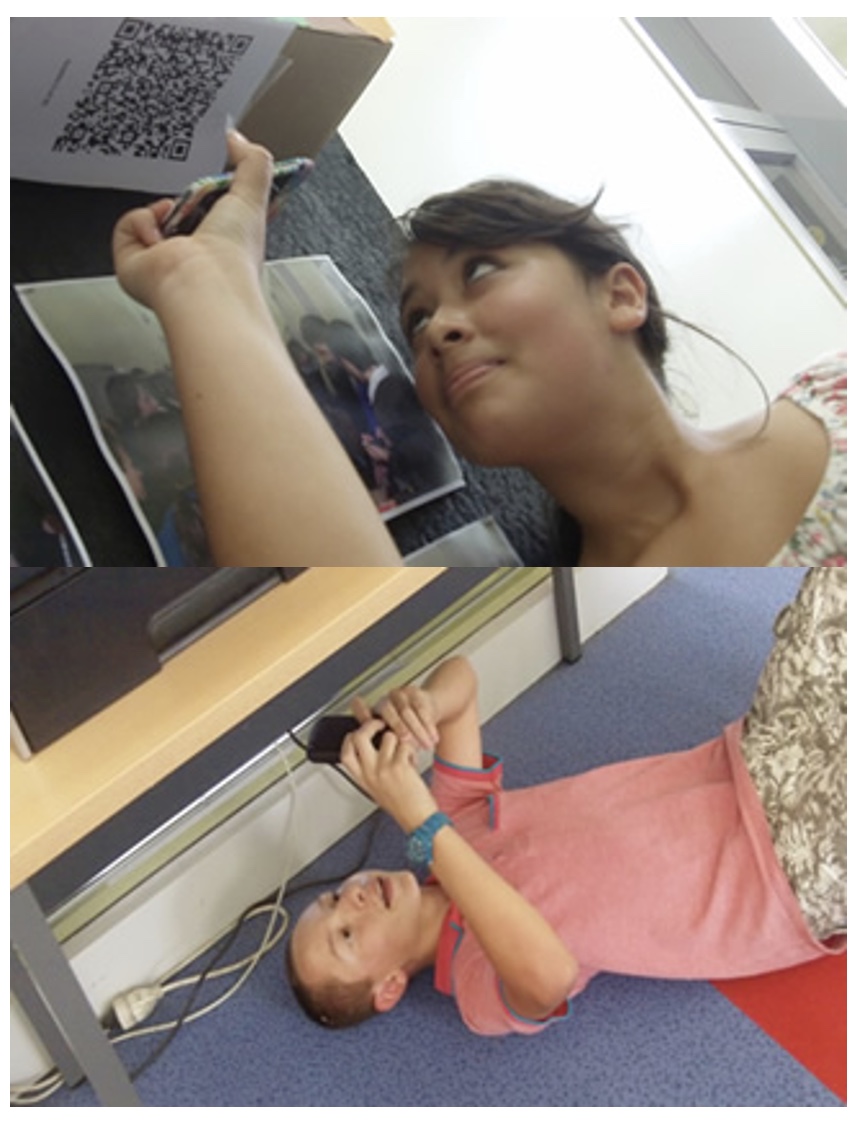
1. Arrange students into groups. Each group needs at least ONE person who has a mobile device.
2. If their phone camera doesn't automatically detect and decode QR codes, ask students to
4. Cut them out and place them around your class / school.
1. Give each group a clipboard and a piece of paper so they can write down the decoded questions and their answers to them.
2. Explain to the students that the codes are hidden around the school. Each team will get ONE point for each question they correctly decode and copy down onto their sheet, and a further TWO points if they can then provide the correct answer and write this down underneath the question.
3. Away they go! The winner is the first team to return with the most correct answers in the time available. This could be within a lesson, or during a lunchbreak, or even over several days!
4. A detailed case study in how to set up a successful QR Scavenger Hunt using this tool can be found here.
Question | Answer |
| 1. a set of features and ideas that customers connect in their minds with a particular product or brand | image | 2. a type of product made by a particular company | brand | 3. a design or symbol displayed on a company's products that makes it easy for customers to recognize and remember the company | logo | 4. to know what something is because you have seen it before, or because you have heard or read about it | recognise | 5. to find and be able to describe someone or something | identify | 6. to make something new, or invent something | create | 7. to encourage people to like, buy, use, do, or support something | promote | 8. a planned group of especially political, business, or military activities that are intended to achieve a particular aim | campaign | 9. a person who buys goods or a service | customer | 10. to interest or attract someone | appeal | 11. a level or situation that you intend to achieve | target | 12. the group of people that a company wants to sell its products or services to | target market | 13. popular at a particular time | fashionable | 14. a person who imagines how something could be made and draws plans for it | designer | 15. a piece of paper or other material that gives you information about the object that it is fixed to | label | 16. best or most expensive of a type | top-end | 17. not made especially to fit a particular person or suit a situation | off-the-peg | 18. a show for the public where models wear new styles of clothes | fashion show | 19. related to buying and selling things | commercial | 20. a product or service that is sold at a loss to attract customers for other products that are more expensive | loss leader | 21. made by someone using their hands rather than by using a machine | hand-made | 22. the attention that a person, product, or organization receives from the media | publicity | 23. to cause something to exist | generate | 24. successful or achieving the results that you want | effective | 25. a picture, short film, song, etc. that tries to persuade people to buy a product or service | advertisement | 26. a magazine printed on shiny, high-quality paper, containing a lot of colour photographs and advertisements, and usually about famous people, fashion, and beauty | glossy magazine | 27. a company that gives advice on a particular subject | consultancy | 28. something expensive which is pleasant to have but is not really necessary | luxury | 29. expensive things that are pleasant to have but are not necessary | luxury goods | 30. the companies and activities involved in the process of producing goods for sale, especially in a factory or special area | industry | 31. cloth or woven fabric | textile | 32. someone who is paid to work for someone else | employee | 33. the amount of goods and services that are produced by a particular company | output | 34. the process of making or growing goods to be sold | production | 35. the number of customers who buy or may buy products and services offered by companies within their own country | domestic market | 36. to judge the number or amount of something | calculate | 37. to try to be more successful than someone or something else | compete | 38. the way in which something is planned and made | design | 39. to send goods to another country for sale | export | 40. able to be bought or used | available | 41. a person or company that wants to be better than you | competitor | 42. to order, limit, or rule something | control | 43. relating to a large company | corporate | 44. a need for something to be sold or supplied | demand | 45. to spread or supply something | distribute | 46. somebody who starts their own business, especially when this involves seeing a new opportunity | entrepreneur | 47. a building where large amounts of goods are made using machines | factory | 48. the fact of somebody or something not succeeding | failure | 49. to provide the money needed for something to happen | finance | 50. pay particular attention to something | focus | 51. declare in law that one is unable to pay their debts | go bankrupt | 52. to complete school, college, or university | graduate | 53. to buy or bring in products from another country | import | 54. something worth buying because it may be profitable in the future | investments | 55. the company that sells most of a product or service in a particular market | market leader | 56. the number of products or services that a company sells compared to the number that other companies sell | market share | 57. an occasion or situation that makes it possible to do something | opportunity | 58. a very powerful feeling | passion | 59. money that is earned in trade or business | profit | 60. to pay or receive a fixed amount of money for the use of a room, car, etc. | rent | 61. a small business that has just been started | start-up | 62. a supply of something for use or sale | stock | 63. the achieving of the results wanted or hoped for | success | 64. to gradually become more successful | go from strength to strength | 65. a person or organization that supplies goods to shops and companies | distributor | 66. a principle or idea | concept | 67. satisfy demand | meet demand | 68. to be in charge of a group or organization | head | 69. a detailed plan describing the future plans of a business | business plan | 70. a collection or mass, especially of sth that cannot be counted | amount | 71. a set of covered wires or fibres that electrical or electronic signals travel through | cable | 72. money used for starting a new business | capital | 73. all the time or often | constantly | 74. the work of building or making sth | construction | 75. the amount of money needed to buy, do, or make sth | cost | 76. at the present time | currently | 77. to take goods, letters, parcels, etc. to people's houses or places of work | deliver | 78. to invent sth or bring sth into existence | develop | 79. the process of finding information, a place, or an object, especially for the first time, or the thing that is found | discovery | 80. a small room that carries people or goods up and down in tall buildings | elevator | 81. a person who is very interested in and involved with a particular subject or activity | enthusiast | 82. to think or believe sth will happen | expect | 83. to search and discover | explore | 84. repair | fix | 85. money given by an organization or a government for a particular purpose | funding | 86. extremely large | huge | 87. relating to the companies and activities involved in the production of goods | industrial | 88. an agreement in which you pay a company money and they pay your costs if you have an accident, injury, etc. | insurance | 89. to put money, effort, time, etc. into sth to make a profit or get an advantage | invest | 90. when a rocket is sent into space | launch a rocket | 91. to defeat or succeed in controlling sth | overcome | 92. a thing that may happen | possibility | 93. sb's or sth's ability to develop, achieve, or succeed | potential | 94. collect the money one needs | raise capital | 95. the profit from an activity compared with the amount invested in it | return on investment | 96. involving the possibility of sth bad happening | risky | 97. a large cylindrical object that moves very fast by forcing out burning gases | rocket | 98. an act of exchanging sth for money | sale | 99. a piece of equipment that is sent up into space to travel round the Earth, used for collecting information or communicating by radio, television, etc. | satellite | 100. give a particular form to sth | shape | 101. not believing that sth is true or useful | skeptical | 102. the area outside of the Earth | space | 103. a strong metal that is a mixture of iron and carbon | steel | 104. the practical, especially industrial, use of scientific discoveries | technology | 105. not having much money | tight budget | 106. a new activity, usually in business, which involves risk or uncertainty | venture |

Question 1 (of 106)
Question 2 (of 106)
Question 3 (of 106)
Question 4 (of 106)
Question 5 (of 106)
Question 6 (of 106)
Question 7 (of 106)
Question 8 (of 106)
Question 9 (of 106)
Question 10 (of 106)
Question 11 (of 106)
Question 12 (of 106)
Question 13 (of 106)
Question 14 (of 106)
Question 15 (of 106)
Question 16 (of 106)
Question 17 (of 106)
Question 18 (of 106)
Question 19 (of 106)
Question 20 (of 106)
Question 21 (of 106)
Question 22 (of 106)
Question 23 (of 106)
Question 24 (of 106)
Question 25 (of 106)
Question 26 (of 106)
Question 27 (of 106)
Question 28 (of 106)
Question 29 (of 106)
Question 30 (of 106)
Question 31 (of 106)
Question 32 (of 106)
Question 33 (of 106)
Question 34 (of 106)
Question 35 (of 106)
Question 36 (of 106)
Question 37 (of 106)
Question 38 (of 106)
Question 39 (of 106)
Question 40 (of 106)
Question 41 (of 106)
Question 42 (of 106)
Question 43 (of 106)
Question 44 (of 106)
Question 45 (of 106)
Question 46 (of 106)
Question 47 (of 106)
Question 48 (of 106)
Question 49 (of 106)
Question 50 (of 106)
Question 51 (of 106)
Question 52 (of 106)
Question 53 (of 106)
Question 54 (of 106)
Question 55 (of 106)
Question 56 (of 106)
Question 57 (of 106)
Question 58 (of 106)
Question 59 (of 106)
Question 60 (of 106)
Question 61 (of 106)
Question 62 (of 106)
Question 63 (of 106)
Question 64 (of 106)
Question 65 (of 106)
Question 66 (of 106)
Question 67 (of 106)
Question 68 (of 106)
Question 69 (of 106)
Question 70 (of 106)
Question 71 (of 106)
Question 72 (of 106)
Question 73 (of 106)
Question 74 (of 106)
Question 75 (of 106)
Question 76 (of 106)
Question 77 (of 106)
Question 78 (of 106)
Question 79 (of 106)
Question 80 (of 106)
Question 81 (of 106)
Question 82 (of 106)
Question 83 (of 106)
Question 84 (of 106)
Question 85 (of 106)
Question 86 (of 106)
Question 87 (of 106)
Question 88 (of 106)
Question 89 (of 106)
Question 90 (of 106)
Question 91 (of 106)
Question 92 (of 106)
Question 93 (of 106)
Question 94 (of 106)
Question 95 (of 106)
Question 96 (of 106)
Question 97 (of 106)
Question 98 (of 106)
Question 99 (of 106)
Question 100 (of 106)
Question 101 (of 106)
Question 102 (of 106)
Question 103 (of 106)
Question 104 (of 106)
Question 105 (of 106)
Question 106 (of 106)