
PREMIUM LOGIN
ClassTools Premium membership gives access to all templates, no advertisements, personal branding and many other benefits!
| Username: | ||
| Password: | ||
|
Submit
Cancel
|
||
| Not a member? | ||
PREMIUM LOGIN
ClassTools Premium membership gives access to all templates, no advertisements, personal branding and many other benefits!
| Username: | ||
| Password: | ||
|
Submit
Cancel
|
||
| Not a member? | ||
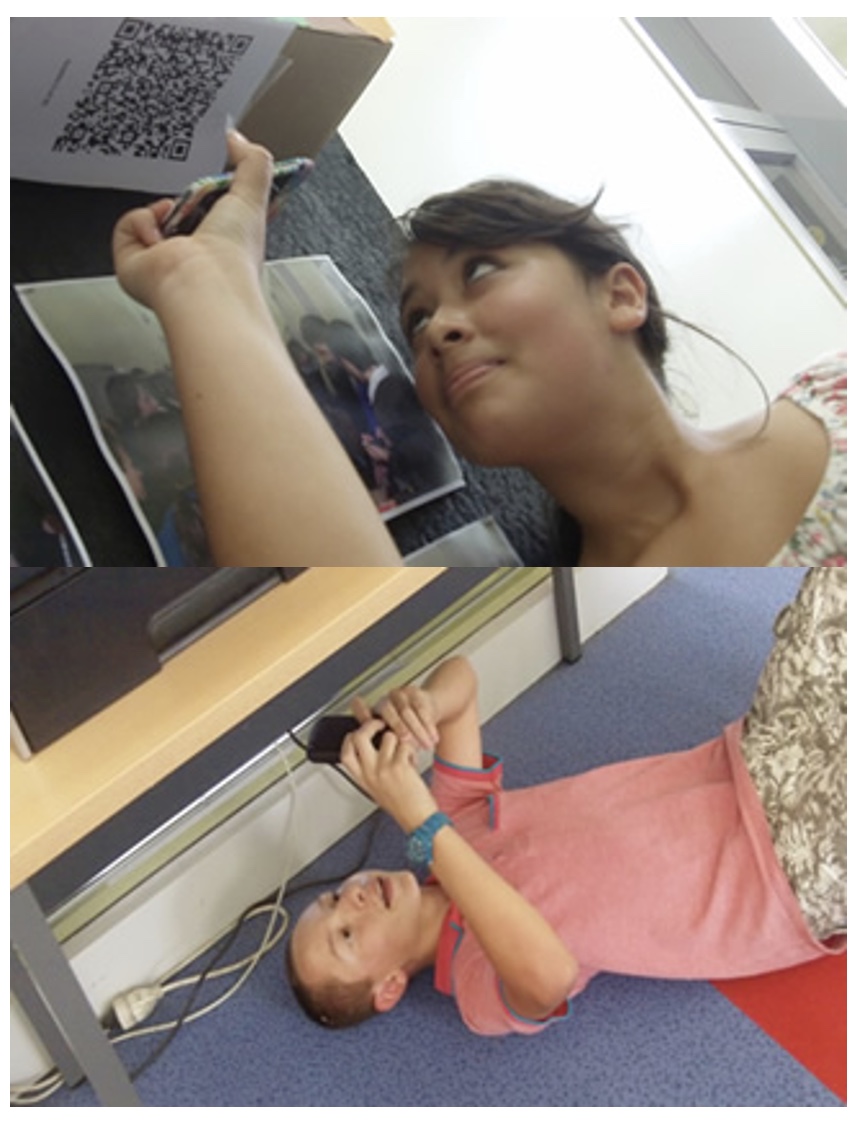
1. Arrange students into groups. Each group needs at least ONE person who has a mobile device.
2. If their phone camera doesn't automatically detect and decode QR codes, ask students to
4. Cut them out and place them around your class / school.
1. Give each group a clipboard and a piece of paper so they can write down the decoded questions and their answers to them.
2. Explain to the students that the codes are hidden around the school. Each team will get ONE point for each question they correctly decode and copy down onto their sheet, and a further TWO points if they can then provide the correct answer and write this down underneath the question.
3. Away they go! The winner is the first team to return with the most correct answers in the time available. This could be within a lesson, or during a lunchbreak, or even over several days!
4. A detailed case study in how to set up a successful QR Scavenger Hunt using this tool can be found here.
Question | Answer |
| 1. 1. What is an ectotherm? | An organism that uses the body to regulate their body temperature. | 2. 2. How do reptile eggs protect the young? | They are leathery, which keeps them from breaking or drying out. | 3. 3. Define herpetology. | the study of reptiles and amphibians. | 4. 4. Which word means "double life?" | amphibian | 5. 5. What do all vertebrates have in common? | A backbone | 6. 6. What is an endotherm? | An organism that internally regulates their body temperature | 7. 7. Why are amphibians sensitive to pollution? | They breathe through their skin so pollution can kill them. | 8. 8. Give an example of an ectotherm. | reptiles, fish, amphibians | 9. 9. How does sweating help humans? | Cools them off and helps regulate their internal body temperature | 10. 10. Give an example of an endotherm. | birds, mammals | 11. 11. How are humans different from mammals? | God created us in his image, we sin, we use written language | 12. 12. What is one thing you learned from the frog lab? | answers will vary | 13. 13. Who is Jane Goodall and why is she important? | Her work with chimpanzees | 14. 14. What are the three main groups of amphibians? | salamanders, frogs/toads, caecillians | 15. 15. What percentage of the organisms on earth are vertebrates? | About 97% |

Question 1 (of 15)
Question 2 (of 15)
Question 3 (of 15)
Question 4 (of 15)
Question 5 (of 15)
Question 6 (of 15)
Question 7 (of 15)
Question 8 (of 15)
Question 9 (of 15)
Question 10 (of 15)
Question 11 (of 15)
Question 12 (of 15)
Question 13 (of 15)
Question 14 (of 15)
Question 15 (of 15)