
PREMIUM LOGIN
ClassTools Premium membership gives access to all templates, no advertisements, personal branding and many other benefits!
| Username: | ||
| Password: | ||
|
Submit
Cancel
|
||
| Not a member? | ||
PREMIUM LOGIN
ClassTools Premium membership gives access to all templates, no advertisements, personal branding and many other benefits!
| Username: | ||
| Password: | ||
|
Submit
Cancel
|
||
| Not a member? | ||
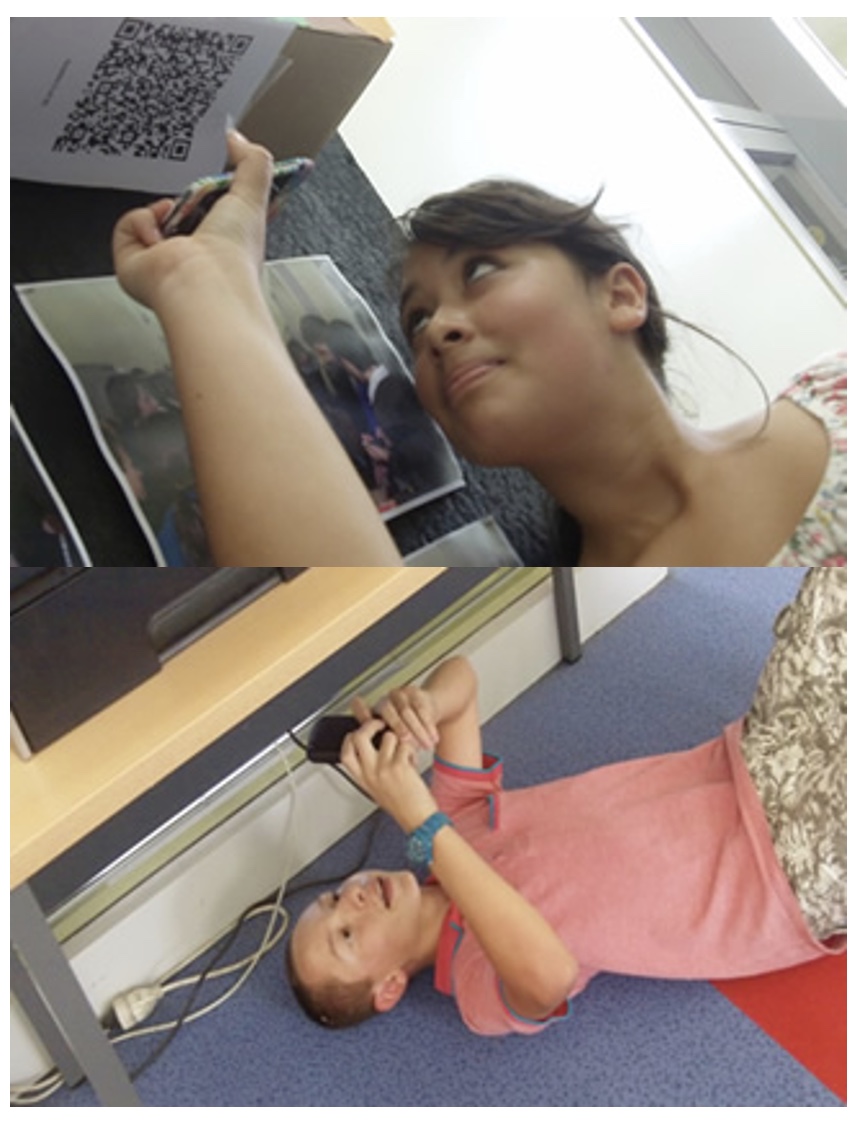
1. Arrange students into groups. Each group needs at least ONE person who has a mobile device.
2. If their phone camera doesn't automatically detect and decode QR codes, ask students to
4. Cut them out and place them around your class / school.
1. Give each group a clipboard and a piece of paper so they can write down the decoded questions and their answers to them.
2. Explain to the students that the codes are hidden around the school. Each team will get ONE point for each question they correctly decode and copy down onto their sheet, and a further TWO points if they can then provide the correct answer and write this down underneath the question.
3. Away they go! The winner is the first team to return with the most correct answers in the time available. This could be within a lesson, or during a lunchbreak, or even over several days!
4. A detailed case study in how to set up a successful QR Scavenger Hunt using this tool can be found here.
Question | Answer |
| 1. Many relationships end because people don’t _________________ and they _________________ in their relationships. | communicate well, mismanage conflicts | 2. Many problems can be avoided by ___________________. | active listening | 3. Name two skills that people can learn and practice to maintain a healthy relationship. | respect others, be comfortable with yourself, accept others, communication should be honest, manage a conflict without violence, trust each other, surround yourself with others that support you | 4. ______________ is a voluntary process that allows you the mediator to help disputants work to resolve their conflict. | Mediation | 5. The third neutral party in a mediation is the _____________. | mediator | 6. How do women and men handle conflict? | women like to talk it out, men will avoid conflict and not acknowledge their feelings | 7. Those that are in conflict are known as ________. | disputants | 8. ____________ and ___________ are skills that can be learned and practiced. | communication, conflict resolution | 9. The dispute between two or more people is known as ____________. | conflict | 10. When you have a problem, you should voice a _________ rather than a _________. | complaint, criticism | 11. Mediation is _____________. | voluntary | 12. What should you avoid when managing conflict? | name calling, put-downs, blaming and using words like never and always, being defensive | 13. Anything discussed during mediation is ______. | confidential | 14. When disputants have successfully resolved or worked out the conflict and have reached a solution/agreement is known as a _________. | resolution | 15. Name two ways you can tell when anger is getting out of hand. | either person gets overheated, argument is getting nowhere, getting angrier and louder by the minute, risk of getting physical | 16. What are the steps of problem solving? | find a good place and time to talk, set the ground rules, identify the issue, brainstorm for solutions, choose a solution |

Question 1 (of 16)
Question 2 (of 16)
Question 3 (of 16)
Question 4 (of 16)
Question 5 (of 16)
Question 6 (of 16)
Question 7 (of 16)
Question 8 (of 16)
Question 9 (of 16)
Question 10 (of 16)
Question 11 (of 16)
Question 12 (of 16)
Question 13 (of 16)
Question 14 (of 16)
Question 15 (of 16)
Question 16 (of 16)