
PREMIUM LOGIN
ClassTools Premium membership gives access to all templates, no advertisements, personal branding and many other benefits!
| Username: | ||
| Password: | ||
|
Submit
Cancel
|
||
| Not a member? | ||
PREMIUM LOGIN
ClassTools Premium membership gives access to all templates, no advertisements, personal branding and many other benefits!
| Username: | ||
| Password: | ||
|
Submit
Cancel
|
||
| Not a member? | ||
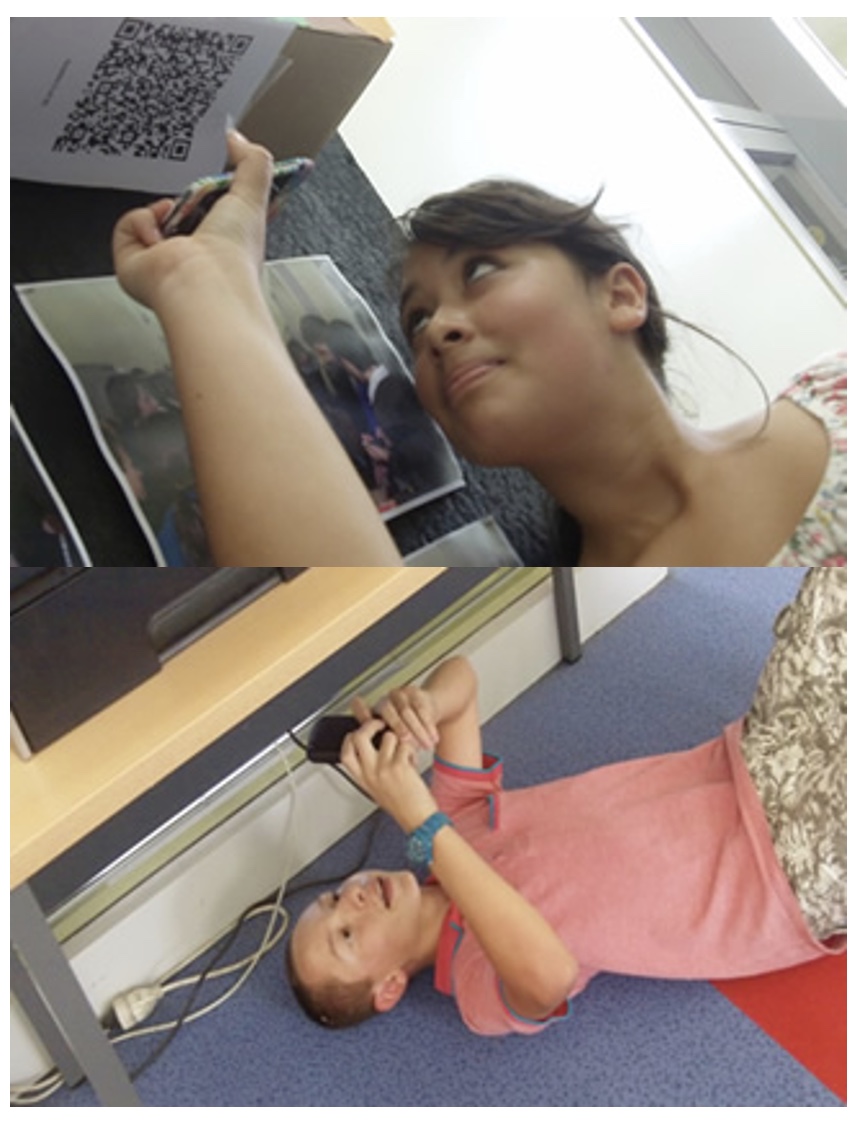
1. Arrange students into groups. Each group needs at least ONE person who has a mobile device.
2. If their phone camera doesn't automatically detect and decode QR codes, ask students to
4. Cut them out and place them around your class / school.
1. Give each group a clipboard and a piece of paper so they can write down the decoded questions and their answers to them.
2. Explain to the students that the codes are hidden around the school. Each team will get ONE point for each question they correctly decode and copy down onto their sheet, and a further TWO points if they can then provide the correct answer and write this down underneath the question.
3. Away they go! The winner is the first team to return with the most correct answers in the time available. This could be within a lesson, or during a lunchbreak, or even over several days!
4. A detailed case study in how to set up a successful QR Scavenger Hunt using this tool can be found here.
Question | Answer |
| 1. Give an example to demonstrate what a teacher can do with the proficiency assessment results. | Ans | 2. Come up with 2 suggestions for how one can make adaptations at the activity level/unit level. | Ans | 3. Explain what the author of the textbook means by “A textbook does not teach language”. | Ans | 4. For a “English Reading and Writing” course, come up with an example for how a teacher can use a reading task to (1) assess proficiency and (2) diagnose ability/needs. | Ans | 5. Explain why the processes of organizing a course do not follow a specific order. | Ans |

Question 1 (of 5)
Question 2 (of 5)
Question 3 (of 5)
Question 4 (of 5)
Question 5 (of 5)