View Premium

PREMIUM LOGIN

ClassTools Premium membership gives access to all templates, no advertisements, personal branding and many other benefits!
 

Username:    
Password:    
Submit Cancel


Not a member?

JOIN NOW!


QR Challenge: STAAR SEM 2 REVIEW

Created using the ClassTools QR Treasure Hunt Generator

Teacher Notes

A. Prior to the lesson:

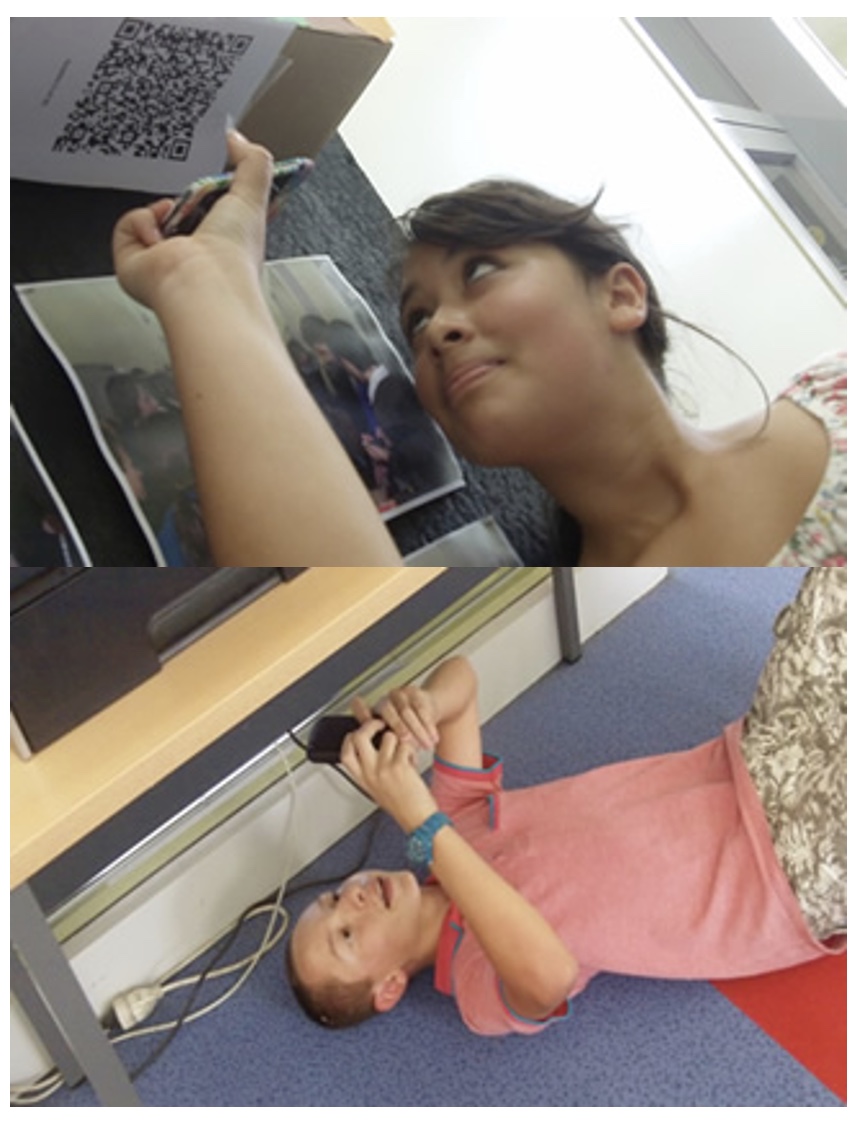
1. Arrange students into groups. Each group needs at least ONE person who has a mobile device.

2. If their phone camera doesn't automatically detect and decode QR codes, ask students to

3. Print out the QR codes.

4. Cut them out and place them around your class / school.


B. The lesson:

1. Give each group a clipboard and a piece of paper so they can write down the decoded questions and their answers to them.

2. Explain to the students that the codes are hidden around the school. Each team will get ONE point for each question they correctly decode and copy down onto their sheet, and a further TWO points if they can then provide the correct answer and write this down underneath the question.

3. Away they go! The winner is the first team to return with the most correct answers in the time available. This could be within a lesson, or during a lunchbreak, or even over several days!


C. TIPS / OTHER IDEAS

4. A detailed case study in how to set up a successful QR Scavenger Hunt using this tool can be found here.


Questions / Answers (teacher reference)

Question

Answer

1. Look at the diagram. What causes the change of seasons throughout a year?C
2. Look at the map. Which entire continent lies roughly between latitude 15° south and 45° south?C
3. Look at the illustration of Earth. Note that half of the planet is bright and the other half is dark. Why is the planet drawn this way?D
4. Look at the diagram of Earth orbiting the Sun. At position A, which part of Earth is experiencing summer?A
5. Notice that Earth is actually closer to the sun in winter. Then why is it colder during this time of year in Texas?A
6. Drawing A and drawing B show the same mountain at different times. Why do the drawings look so different?D
7. Look at the diagram of moving tectonic plates. How is the Oceanic Plate changing the Continental Plate?A
8. Look at the diagram above showing the position of the moon at various points in its orbit around Earth. At which point in its orbit is the moon in its last quarter phase?C
9. Look at the diagram. Day 28 represents the new moon. Which of the following is true about the new moon?C
10. Which of the following best describes what causes tides to occur?C
11. Look at the diagram again. What unusual kind of tide can you expect to occur in Earth’s oceans with the Sun, Earth, and Moon in these positions?D
12. What force keeps the planets and moons in orbit?D
13. Look at the diagram. According to the diagram, what kinds of stars can become supernovas?C
14. Distances between stars are most often measured in —A
15. Look at the table. The distance between which two objects would best be measured in light years?C
16. According to the Big Bang theory, which of the following is occurring?B
17. Alfred Wegener's Theory of Continental Drift states that the continents were once joined together in a giant landmass that broke apart and that the continents then drifted to their current locations. One piece of evidence supporting this theory is the shapes of the continents, which seem to fit together like pieces of a puzzle. The map shows evidence supporting Wegener's ideas. The shape of the eastern coast of South America appears to fit together with —D
18. What are the two main types of crust on Earth's surface?B
19. Which of the following is illustrated by the map?A
20. A deep ocean trench lies off the west coast of the United States. On the east coast, however, the ocean is shallower and the ocean floor slopes away gradually. Why are the water depths so different on the two coasts?D
21. Mid-ocean ridges are the most common example ofB
22. At what kind of boundary do plates slide past one another?C
23. Iceland is an island country found in the middle of the North Atlantic. Part of the island is on the North American Plate, and the other part is on the Eurasian Plate. Given this information which of the following is most likely?D
24. The Hawaiian islands are a chain of volcanic islands in the middle of the Pacific Ocean. Examining them from northwest to southeast, each island is progressively newer than the last. Which of the following best explains how these islands might have formed?D
25. Where two tectonic plates move apart from one another, — B
26. What is the difference in elevation between two contour lines on this topographic map?B
27. How can you identify a steep area on a topographic map?A
28. Examine the picture above. Over time, the waves will — C
29. On a topographic map, what do the contour lines indicate? C
30. The Grand Canyon was formed by — D
31. Organisms in an ecosystem can often be classified according to the types of foods they eat. The diagram above shows a very simple food chain. According to this food chain, which of the following identifies a correct classification for the mouse?B
32. What is mutualism?B
33. Which of the following kinds of organisms has the greatest biomass in a food chain?A
34. What type of interaction does this picture show?B
35. What is the primary source of energy in the system shown in the diagram?A
36. Which animal in this diagram is the top predator?C
37. A forest contains populations of squirrels, deer, and rabbits. The squirrels feed on acorns produced by the trees, while the rabbits feed on grasses. The deer browse on leaves that grow on the trees. Which of the following environmental factors is not shared by these populations?B
38. Scientists have discovered communities of organisms living deep in the ocean, near thermal vents. Studies have shown that specialized bacteria are able to make food for the community using chemicals that come from the vents. Because they make food for the community, the bacteria in this ecosystem are examples of —C
39. Animals compete for many resources. Which of the following is not something for which animals compete?D
40. A peacock's feathers help the peacockC
41. Which of the following describes a stage in ecological succession that results in the most stable community?A
42. The job of the circulatory system is to move blood throughout the body. What organ provides the force needed to move the blood?C
43. Which of the following is not an inherited trait in an organism?D
44. The feet in the picture above are from four different kinds of birds. Suppose that an environmental change caused mice, snakes, and other small prey animals to die out. Which bird would be most affected as a result of natural selection?B
45. This seal has warm fur and a lot of fat, making it well-adapted to a cold climate. If the climate continues to become warmer and this species survives, what change might you expect to find in later generations?C
46. Of the following, the condition that is most likely to cause harmful changes in the environmental conditions of a pond ecosystem in the shortest period of time is —B
47. An increase in global temperatures has caused ocean levels to rise. What are the two main reasons why increased temperatures cause increased water levels?A
48. Which is least likely to pollute the ocean?D
49. What period of time is determined by one complete rotation of Earth around its axis?B
50. When does Earth's tilt allow for the least amount of solar energy to reach Texas?C
51.
52. Because Earth rotates on its axis, —B
53. Tides are caused byA
54. Tides are strongestD
55. All of space and the matter it contains make up —C
56. The Moon exerts less gravity on an object than Earth does. Which statement is true?C
57. A cloud of gas and dust in interstellar space is called a(n) —C
58. On a traditional Hertzsprung-Russell diagram, the stars shown on the left side are blue, while those on the right are red. This indicates that —C
59. A light year is the distance that a ray or pulse of light travels in one Earth year, about 9.46 trillion kilometers (5.88 trillion miles). A light year would be most useful in measuring what kind of distance?D
60. Look at the chart. It shows the distance in light years between Earth and other objects in the universe. It took light from which object the most time to reach Earth?C
61. Quasars are the most distant objects that have been observed from Earth. What can you conclude about the age of quasars?A
62. What is ecology?D
63. The common clownfish makes its home in the Ritteri sea anemone. The clownfish protects its home from anemone-eating fish and the anemone protects the clownfish using its venomous tentacles. Who is benefiting in this interaction?C
64. What type of interaction is pollination?B
65. What does a food web show us?B
66. Viruses, fungi, fleas, and mites are all —C
67. What process do plants use to convert radiant energy from the Sun into chemical energy?C
68. Reptiles are ecothermic, so they rely on the environment to control their body temperature. In which of the following environments are reptiles least likely to live?A
69. The finches on the Galapagos Islands have developed specialized beaks to eat the different types of seeds found on the islands. This has reduced the amount of competition for food among the finches. This is an example ofC
70. The smallest unit of life that carries out all the functions to sustain life is the —B
71. The cells shown above are nerve cells, or neurons. Neurons are among the largest cells of the human body. What is the specialized function of nerve cells?C
72. A volcanic eruption releases a large amount of lava that destroys all the plants and animals living in an area. In time, new populations of organisms begin returning to the area that was destroyed by the lava. These organisms are known as —C
73. To which two body systems does the heart belong?C
74. Which factor does not affect the process of natural selection?B
75. Pollution of the ocean has the most negative impact on which of the following human uses of the ocean?A
76. What are tectonic plates?C


STAAR SEM 2 REVIEW: QR Challenge

https://www.classtools.net/QR/decode.php?text=Look_at_the_diagram._What_causes_the_change_of_seasons_throughout_a_year?

Question 1 (of 76)


STAAR SEM 2 REVIEW: QR Challenge

https://www.classtools.net/QR/decode.php?text=Look_at_the_map._Which_entire_continent_lies_roughly_between_latitude_15°_south_and_45°_south?

Question 2 (of 76)


STAAR SEM 2 REVIEW: QR Challenge

https://www.classtools.net/QR/decode.php?text=Look_at_the_illustration_of_Earth._Note_that_half_of_the_planet_is_bright_and_the_other_half_is_dark._Why_is_the_planet_drawn_this_way?

Question 3 (of 76)


STAAR SEM 2 REVIEW: QR Challenge

https://www.classtools.net/QR/decode.php?text=Look_at_the_diagram_of_Earth_orbiting_the_Sun._At_position_A,_which_part_of_Earth_is_experiencing_summer?

Question 4 (of 76)


STAAR SEM 2 REVIEW: QR Challenge

https://www.classtools.net/QR/decode.php?text=Notice_that_Earth_is_actually_closer_to_the_sun_in_winter._Then_why_is_it_colder_during_this_time_of_year_in_Texas?

Question 5 (of 76)


STAAR SEM 2 REVIEW: QR Challenge

https://www.classtools.net/QR/decode.php?text=Drawing_A_and_drawing_B_show_the_same_mountain_at_different_times._Why_do_the_drawings_look_so_different?

Question 6 (of 76)


STAAR SEM 2 REVIEW: QR Challenge

https://www.classtools.net/QR/decode.php?text=Look_at_the_diagram_of_moving_tectonic_plates._How_is_the_Oceanic_Plate_changing_the_Continental_Plate?

Question 7 (of 76)


STAAR SEM 2 REVIEW: QR Challenge

https://www.classtools.net/QR/decode.php?text=Look_at_the_diagram_above_showing_the_position_of_the_moon_at_various_points_in_its_orbit_around_Earth._At_which_point_in_its_orbit_is_the_moon_in_its_last_quarter_phase?

Question 8 (of 76)


STAAR SEM 2 REVIEW: QR Challenge

https://www.classtools.net/QR/decode.php?text=Look_at_the_diagram._Day_28_represents_the_new_moon._Which_of_the_following_is_true_about_the_new_moon?

Question 9 (of 76)


STAAR SEM 2 REVIEW: QR Challenge

https://www.classtools.net/QR/decode.php?text=Which_of_the_following_best_describes_what_causes_tides_to_occur?

Question 10 (of 76)


STAAR SEM 2 REVIEW: QR Challenge

https://www.classtools.net/QR/decode.php?text=Look_at_the_diagram_again._What_unusual_kind_of_tide_can_you_expect_to_occur_in_Earth’s_oceans_with_the_Sun,_Earth,_and_Moon_in_these_positions?

Question 11 (of 76)


STAAR SEM 2 REVIEW: QR Challenge

https://www.classtools.net/QR/decode.php?text=What_force_keeps_the_planets_and_moons_in_orbit?

Question 12 (of 76)


STAAR SEM 2 REVIEW: QR Challenge

https://www.classtools.net/QR/decode.php?text=Look_at_the_diagram._According_to_the_diagram,_what_kinds_of_stars_can_become_supernovas?

Question 13 (of 76)


STAAR SEM 2 REVIEW: QR Challenge

https://www.classtools.net/QR/decode.php?text=Distances_between_stars_are_most_often_measured_in_—

Question 14 (of 76)


STAAR SEM 2 REVIEW: QR Challenge

https://www.classtools.net/QR/decode.php?text=Look_at_the_table._The_distance_between_which_two_objects_would_best_be_measured_in_light_years?

Question 15 (of 76)


STAAR SEM 2 REVIEW: QR Challenge

https://www.classtools.net/QR/decode.php?text=According_to_the_Big_Bang_theory,_which_of_the_following_is_occurring?

Question 16 (of 76)


STAAR SEM 2 REVIEW: QR Challenge

https://www.classtools.net/QR/decode.php?text=Alfred_Wegener's_Theory_of_Continental_Drift_states_that_the_continents_were_once_joined_together_in_a_giant_landmass_that_broke_apart_and_that_the_continents_then_drifted_to_their_current_locations._One_piece_of_evidence_supporting_this_theory_is_the_shapes_of_the_continents,_which_seem_to_fit_together_like_pieces_of_a_puzzle._The_map_shows_evidence_supporting_Wegener's_ideas._The_shape_of_the_eastern_coast_of_South_America_appears_to_fit_together_with_—

Question 17 (of 76)


STAAR SEM 2 REVIEW: QR Challenge

https://www.classtools.net/QR/decode.php?text=What_are_the_two_main_types_of_crust_on_Earth's_surface?

Question 18 (of 76)


STAAR SEM 2 REVIEW: QR Challenge

https://www.classtools.net/QR/decode.php?text=Which_of_the_following_is_illustrated_by_the_map?

Question 19 (of 76)


STAAR SEM 2 REVIEW: QR Challenge

https://www.classtools.net/QR/decode.php?text=A_deep_ocean_trench_lies_off_the_west_coast_of_the_United_States._On_the_east_coast,_however,_the_ocean_is_shallower_and_the_ocean_floor_slopes_away_gradually._Why_are_the_water_depths_so_different_on_the_two_coasts?

Question 20 (of 76)


STAAR SEM 2 REVIEW: QR Challenge

https://www.classtools.net/QR/decode.php?text=Mid-ocean_ridges_are_the_most_common_example_of

Question 21 (of 76)


STAAR SEM 2 REVIEW: QR Challenge

https://www.classtools.net/QR/decode.php?text=At_what_kind_of_boundary_do_plates_slide_past_one_another?

Question 22 (of 76)


STAAR SEM 2 REVIEW: QR Challenge

https://www.classtools.net/QR/decode.php?text=Iceland_is_an_island_country_found_in_the_middle_of_the_North_Atlantic._Part_of_the_island_is_on_the_North_American_Plate,_and_the_other_part_is_on_the_Eurasian_Plate._Given_this_information_which_of_the_following_is_most_likely?

Question 23 (of 76)


STAAR SEM 2 REVIEW: QR Challenge

https://www.classtools.net/QR/decode.php?text=The_Hawaiian_islands_are_a_chain_of_volcanic_islands_in_the_middle_of_the_Pacific_Ocean._Examining_them_from_northwest_to_southeast,_each_island_is_progressively_newer_than_the_last._Which_of_the_following_best_explains_how_these_islands_might_have_formed?

Question 24 (of 76)


STAAR SEM 2 REVIEW: QR Challenge

https://www.classtools.net/QR/decode.php?text=Where_two_tectonic_plates_move_apart_from_one_another,_—

Question 25 (of 76)


STAAR SEM 2 REVIEW: QR Challenge

https://www.classtools.net/QR/decode.php?text=What_is_the_difference_in_elevation_between_two_contour_lines_on_this_topographic_map?

Question 26 (of 76)


STAAR SEM 2 REVIEW: QR Challenge

https://www.classtools.net/QR/decode.php?text=How_can_you_identify_a_steep_area_on_a_topographic_map?

Question 27 (of 76)


STAAR SEM 2 REVIEW: QR Challenge

https://www.classtools.net/QR/decode.php?text=Examine_the_picture_above._Over_time,_the_waves_will_—

Question 28 (of 76)


STAAR SEM 2 REVIEW: QR Challenge

https://www.classtools.net/QR/decode.php?text=On_a_topographic_map,_what_do_the_contour_lines_indicate?

Question 29 (of 76)


STAAR SEM 2 REVIEW: QR Challenge

https://www.classtools.net/QR/decode.php?text=The_Grand_Canyon_was_formed_by_—

Question 30 (of 76)


STAAR SEM 2 REVIEW: QR Challenge

https://www.classtools.net/QR/decode.php?text=Organisms_in_an_ecosystem_can_often_be_classified_according_to_the_types_of_foods_they_eat._The_diagram_above_shows_a_very_simple_food_chain._According_to_this_food_chain,_which_of_the_following_identifies_a_correct_classification_for_the_mouse?

Question 31 (of 76)


STAAR SEM 2 REVIEW: QR Challenge

https://www.classtools.net/QR/decode.php?text=What_is_mutualism?

Question 32 (of 76)


STAAR SEM 2 REVIEW: QR Challenge

https://www.classtools.net/QR/decode.php?text=Which_of_the_following_kinds_of_organisms_has_the_greatest_biomass_in_a_food_chain?

Question 33 (of 76)


STAAR SEM 2 REVIEW: QR Challenge

https://www.classtools.net/QR/decode.php?text=What_type_of_interaction_does_this_picture_show?

Question 34 (of 76)


STAAR SEM 2 REVIEW: QR Challenge

https://www.classtools.net/QR/decode.php?text=What_is_the_primary_source_of_energy_in_the_system_shown_in_the_diagram?

Question 35 (of 76)


STAAR SEM 2 REVIEW: QR Challenge

https://www.classtools.net/QR/decode.php?text=Which_animal_in_this_diagram_is_the_top_predator?

Question 36 (of 76)


STAAR SEM 2 REVIEW: QR Challenge

https://www.classtools.net/QR/decode.php?text=A_forest_contains_populations_of_squirrels,_deer,_and_rabbits._The_squirrels_feed_on_acorns_produced_by_the_trees,_while_the_rabbits_feed_on_grasses._The_deer_browse_on_leaves_that_grow_on_the_trees._Which_of_the_following_environmental_factors_is_not_shared_by_these_populations?

Question 37 (of 76)


STAAR SEM 2 REVIEW: QR Challenge

https://www.classtools.net/QR/decode.php?text=Scientists_have_discovered_communities_of_organisms_living_deep_in_the_ocean,_near_thermal_vents._Studies_have_shown_that_specialized_bacteria_are_able_to_make_food_for_the_community_using_chemicals_that_come_from_the_vents._Because_they_make_food_for_the_community,_the_bacteria_in_this_ecosystem_are_examples_of_—

Question 38 (of 76)


STAAR SEM 2 REVIEW: QR Challenge

https://www.classtools.net/QR/decode.php?text=Animals_compete_for_many_resources._Which_of_the_following_is_not_something_for_which_animals_compete?

Question 39 (of 76)


STAAR SEM 2 REVIEW: QR Challenge

https://www.classtools.net/QR/decode.php?text=A_peacock's_feathers_help_the_peacock

Question 40 (of 76)


STAAR SEM 2 REVIEW: QR Challenge

https://www.classtools.net/QR/decode.php?text=Which_of_the_following_describes_a_stage_in_ecological_succession_that_results_in_the_most_stable_community?

Question 41 (of 76)


STAAR SEM 2 REVIEW: QR Challenge

https://www.classtools.net/QR/decode.php?text=The_job_of_the_circulatory_system_is_to_move_blood_throughout_the_body._What_organ_provides_the_force_needed_to_move_the_blood?

Question 42 (of 76)


STAAR SEM 2 REVIEW: QR Challenge

https://www.classtools.net/QR/decode.php?text=Which_of_the_following_is_not_an_inherited_trait_in_an_organism?

Question 43 (of 76)


STAAR SEM 2 REVIEW: QR Challenge

https://www.classtools.net/QR/decode.php?text=The_feet_in_the_picture_above_are_from_four_different_kinds_of_birds._Suppose_that_an_environmental_change_caused_mice,_snakes,_and_other_small_prey_animals_to_die_out._Which_bird_would_be_most_affected_as_a_result_of_natural_selection?

Question 44 (of 76)


STAAR SEM 2 REVIEW: QR Challenge

https://www.classtools.net/QR/decode.php?text=This_seal_has_warm_fur_and_a_lot_of_fat,_making_it_well-adapted_to_a_cold_climate._If_the_climate_continues_to_become_warmer_and_this_species_survives,_what_change_might_you_expect_to_find_in_later_generations?

Question 45 (of 76)


STAAR SEM 2 REVIEW: QR Challenge

https://www.classtools.net/QR/decode.php?text=Of_the_following,_the_condition_that_is_most_likely_to_cause_harmful_changes_in_the_environmental_conditions_of_a_pond_ecosystem_in_the_shortest_period_of_time_is_—

Question 46 (of 76)


STAAR SEM 2 REVIEW: QR Challenge

https://www.classtools.net/QR/decode.php?text=An_increase_in_global_temperatures_has_caused_ocean_levels_to_rise._What_are_the_two_main_reasons_why_increased_temperatures_cause_increased_water_levels?

Question 47 (of 76)


STAAR SEM 2 REVIEW: QR Challenge

https://www.classtools.net/QR/decode.php?text=Which_is_least_likely_to_pollute_the_ocean?

Question 48 (of 76)


STAAR SEM 2 REVIEW: QR Challenge

https://www.classtools.net/QR/decode.php?text=What_period_of_time_is_determined_by_one_complete_rotation_of_Earth_around_its_axis?

Question 49 (of 76)


STAAR SEM 2 REVIEW: QR Challenge

https://www.classtools.net/QR/decode.php?text=When_does_Earth's_tilt_allow_for_the_least_amount_of_solar_energy_to_reach_Texas?

Question 50 (of 76)


STAAR SEM 2 REVIEW: QR Challenge

https://www.classtools.net/QR/decode.php?text=

Question 51 (of 76)


STAAR SEM 2 REVIEW: QR Challenge

https://www.classtools.net/QR/decode.php?text=Because_Earth_rotates_on_its_axis,_—

Question 52 (of 76)


STAAR SEM 2 REVIEW: QR Challenge

https://www.classtools.net/QR/decode.php?text=Tides_are_caused_by

Question 53 (of 76)


STAAR SEM 2 REVIEW: QR Challenge

https://www.classtools.net/QR/decode.php?text=Tides_are_strongest

Question 54 (of 76)


STAAR SEM 2 REVIEW: QR Challenge

https://www.classtools.net/QR/decode.php?text=All_of_space_and_the_matter_it_contains_make_up_—

Question 55 (of 76)


STAAR SEM 2 REVIEW: QR Challenge

https://www.classtools.net/QR/decode.php?text=The_Moon_exerts_less_gravity_on_an_object_than_Earth_does._Which_statement_is_true?

Question 56 (of 76)


STAAR SEM 2 REVIEW: QR Challenge

https://www.classtools.net/QR/decode.php?text=A_cloud_of_gas_and_dust_in_interstellar_space_is_called_a(n)_—

Question 57 (of 76)


STAAR SEM 2 REVIEW: QR Challenge

https://www.classtools.net/QR/decode.php?text=On_a_traditional_Hertzsprung-Russell_diagram,_the_stars_shown_on_the_left_side_are_blue,_while_those_on_the_right_are_red._This_indicates_that_—

Question 58 (of 76)


STAAR SEM 2 REVIEW: QR Challenge

https://www.classtools.net/QR/decode.php?text=A_light_year_is_the_distance_that_a_ray_or_pulse_of_light_travels_in_one_Earth_year,_about_9.46_trillion_kilometers_(5.88_trillion_miles)._A_light_year_would_be_most_useful_in_measuring_what_kind_of_distance?

Question 59 (of 76)


STAAR SEM 2 REVIEW: QR Challenge

https://www.classtools.net/QR/decode.php?text=Look_at_the_chart._It_shows_the_distance_in_light_years_between_Earth_and_other_objects_in_the_universe._It_took_light_from_which_object_the_most_time_to_reach_Earth?

Question 60 (of 76)


STAAR SEM 2 REVIEW: QR Challenge

https://www.classtools.net/QR/decode.php?text=Quasars_are_the_most_distant_objects_that_have_been_observed_from_Earth._What_can_you_conclude_about_the_age_of_quasars?

Question 61 (of 76)


STAAR SEM 2 REVIEW: QR Challenge

https://www.classtools.net/QR/decode.php?text=What_is_ecology?

Question 62 (of 76)


STAAR SEM 2 REVIEW: QR Challenge

https://www.classtools.net/QR/decode.php?text=The_common_clownfish_makes_its_home_in_the_Ritteri_sea_anemone._The_clownfish_protects_its_home_from_anemone-eating_fish_and_the_anemone_protects_the_clownfish_using_its_venomous_tentacles._Who_is_benefiting_in_this_interaction?

Question 63 (of 76)


STAAR SEM 2 REVIEW: QR Challenge

https://www.classtools.net/QR/decode.php?text=What_type_of_interaction_is_pollination?

Question 64 (of 76)


STAAR SEM 2 REVIEW: QR Challenge

https://www.classtools.net/QR/decode.php?text=What_does_a_food_web_show_us?

Question 65 (of 76)


STAAR SEM 2 REVIEW: QR Challenge

https://www.classtools.net/QR/decode.php?text=Viruses,_fungi,_fleas,_and_mites_are_all_—

Question 66 (of 76)


STAAR SEM 2 REVIEW: QR Challenge

https://www.classtools.net/QR/decode.php?text=What_process_do_plants_use_to_convert_radiant_energy_from_the_Sun_into_chemical_energy?

Question 67 (of 76)


STAAR SEM 2 REVIEW: QR Challenge

https://www.classtools.net/QR/decode.php?text=Reptiles_are_ecothermic,_so_they_rely_on_the_environment_to_control_their_body_temperature._In_which_of_the_following_environments_are_reptiles_least_likely_to_live?

Question 68 (of 76)


STAAR SEM 2 REVIEW: QR Challenge

https://www.classtools.net/QR/decode.php?text=The_finches_on_the_Galapagos_Islands_have_developed_specialized_beaks_to_eat_the_different_types_of_seeds_found_on_the_islands._This_has_reduced_the_amount_of_competition_for_food_among_the_finches._This_is_an_example_of

Question 69 (of 76)


STAAR SEM 2 REVIEW: QR Challenge

https://www.classtools.net/QR/decode.php?text=The_smallest_unit_of_life_that_carries_out_all_the_functions_to_sustain_life_is_the_—

Question 70 (of 76)


STAAR SEM 2 REVIEW: QR Challenge

https://www.classtools.net/QR/decode.php?text=The_cells_shown_above_are_nerve_cells,_or_neurons._Neurons_are_among_the_largest_cells_of_the_human_body._What_is_the_specialized_function_of_nerve_cells?

Question 71 (of 76)


STAAR SEM 2 REVIEW: QR Challenge

https://www.classtools.net/QR/decode.php?text=A_volcanic_eruption_releases_a_large_amount_of_lava_that_destroys_all_the_plants_and_animals_living_in_an_area._In_time,_new_populations_of_organisms_begin_returning_to_the_area_that_was_destroyed_by_the_lava._These_organisms_are_known_as_—

Question 72 (of 76)


STAAR SEM 2 REVIEW: QR Challenge

https://www.classtools.net/QR/decode.php?text=To_which_two_body_systems_does_the_heart_belong?

Question 73 (of 76)


STAAR SEM 2 REVIEW: QR Challenge

https://www.classtools.net/QR/decode.php?text=Which_factor_does_not_affect_the_process_of_natural_selection?

Question 74 (of 76)


STAAR SEM 2 REVIEW: QR Challenge

https://www.classtools.net/QR/decode.php?text=Pollution_of_the_ocean_has_the_most_negative_impact_on_which_of_the_following_human_uses_of_the_ocean?

Question 75 (of 76)


STAAR SEM 2 REVIEW: QR Challenge

https://www.classtools.net/QR/decode.php?text=What_are_tectonic_plates?

Question 76 (of 76)