
PREMIUM LOGIN
ClassTools Premium membership gives access to all templates, no advertisements, personal branding and many other benefits!
| Username: | ||
| Password: | ||
|
Submit
Cancel
|
||
| Not a member? | ||
PREMIUM LOGIN
ClassTools Premium membership gives access to all templates, no advertisements, personal branding and many other benefits!
| Username: | ||
| Password: | ||
|
Submit
Cancel
|
||
| Not a member? | ||
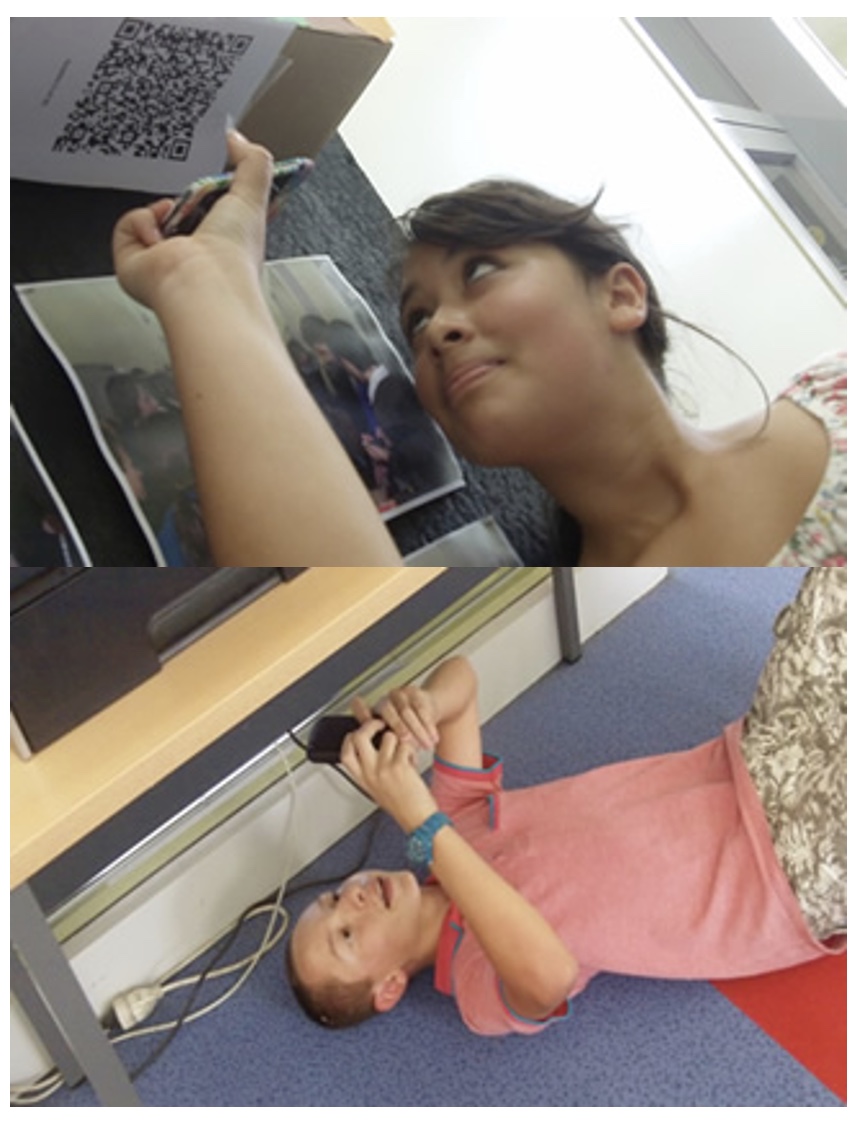
1. Arrange students into groups. Each group needs at least ONE person who has a mobile device.
2. If their phone camera doesn't automatically detect and decode QR codes, ask students to
4. Cut them out and place them around your class / school.
1. Give each group a clipboard and a piece of paper so they can write down the decoded questions and their answers to them.
2. Explain to the students that the codes are hidden around the school. Each team will get ONE point for each question they correctly decode and copy down onto their sheet, and a further TWO points if they can then provide the correct answer and write this down underneath the question.
3. Away they go! The winner is the first team to return with the most correct answers in the time available. This could be within a lesson, or during a lunchbreak, or even over several days!
4. A detailed case study in how to set up a successful QR Scavenger Hunt using this tool can be found here.
Question | Answer |
| 1. What percentage of the earth is covered in water? | 74% | 2. What forms does water exist in on earth? | Solid, liquid, gas | 3. Water that is safe to drink is known as this | Potable | 4. An artificial lake is also known as | Reservoir | 5. The total amount of salt dissolved in water is known as | Salinity | 6. A type of microscopic bacteria that can cause sickness and even death | E-coli | 7. List the 9 water testing criteria found in 1.2 | taste/odour, turbidity, pollutants, hardness, pH, O2 | 8. A process by which a liquid or vapour mixture are separated into its parts(topic 1.2) | Distillation | 9. Salt water is forced through a filter, allowing water to pass but not salt | Reverse Osmosis | 10. Movement of surface water is known as this | waves | 11. The rising and falling of very large bodies of water is known as this | Tides | 12. Large waves wear away shores, this wearing away is known as | Erosion | 13. Tsunami means | Harbour wave | 14. What causes tides? | gravitational force of the moon and the Earth’s rotation | 15. A description of a streams characteristics is known as this | stream profile | 16. As a river reaches lower elevations it begins to curve, this is known as | meandering | 17. Fan shaped deposit at the bottom of a stream | Delta | 18. A river may start in the mountains where a glacier is melting, this is called the | Source | 19. The continental divide in North America is called | The Rocky Mountains | 20. When two tectonic plates move towards each other | converging | 21. When two tectonic plates move away from each other | diverging plates | 22. Large bodies of moving ice are called | Glaciers | 23. Glaciers that are continuing to grow and move forward are known as | advancing | 24. A large rock left behind from a glacier is called | An erratic | 25. Small hills with distinctive tear drop shape | drumlins | 26. Ocean currents are caused by what 4 things? | wind, temp, salinity, earth’s rotation | 27. If an ocean current starts near the equator, what happens to the climate? | warmer | 28. The variety of different species living in an ecosystem | Diversity | 29. What are the top two most diverse ecosystems? | coral reef, rainforests | 30. In a lake, from the shore to where the plants stop growing is which zone? | one | 31. The deepest water in a lake where no light gets to | zone 3 | 32. Where river and fresh water mixes with ocean water | Estuaries | 33. What are the 5 main environmental factors that aquatic organisms have adapted to? | 34. A group of organisms of the same species in an area | population | 35. What are the 3 major types of changes to populations in an area? | seasonal, short, long | 36. What is an example of a long term change? | zebra mussels | 37. When fertilizers from farmer’s fields run into bodies of water this happens | algae bloom | 38. Draw a simple sketch of the water cycle | 39. Give an example of an indirect and direct use of water | domestic, industrial | 40. What industry uses the largest amount of water? | agriculture |

Question 1 (of 40)
Question 2 (of 40)
Question 3 (of 40)
Question 4 (of 40)
Question 5 (of 40)
Question 6 (of 40)
Question 7 (of 40)
Question 8 (of 40)
Question 9 (of 40)
Question 10 (of 40)
Question 11 (of 40)
Question 12 (of 40)
Question 13 (of 40)
Question 14 (of 40)
Question 15 (of 40)
Question 16 (of 40)
Question 17 (of 40)
Question 18 (of 40)
Question 19 (of 40)
Question 20 (of 40)
Question 21 (of 40)
Question 22 (of 40)
Question 23 (of 40)
Question 24 (of 40)
Question 25 (of 40)
Question 26 (of 40)
Question 27 (of 40)
Question 28 (of 40)
Question 29 (of 40)
Question 30 (of 40)
Question 31 (of 40)
Question 32 (of 40)
Question 33 (of 40)
Question 34 (of 40)
Question 35 (of 40)
Question 36 (of 40)
Question 37 (of 40)
Question 38 (of 40)
Question 39 (of 40)
Question 40 (of 40)