View Premium →

PREMIUM LOGIN

ClassTools Premium membership gives access to all templates, no advertisements, personal branding and many other benefits!
 

Username:    
Password:    
Submit Cancel


Not a member?

JOIN NOW!


QR Challenge: Science QR Code Hunt

Created using the ClassTools QR Treasure Hunt Generator

Teacher Notes

A. Prior to the lesson:

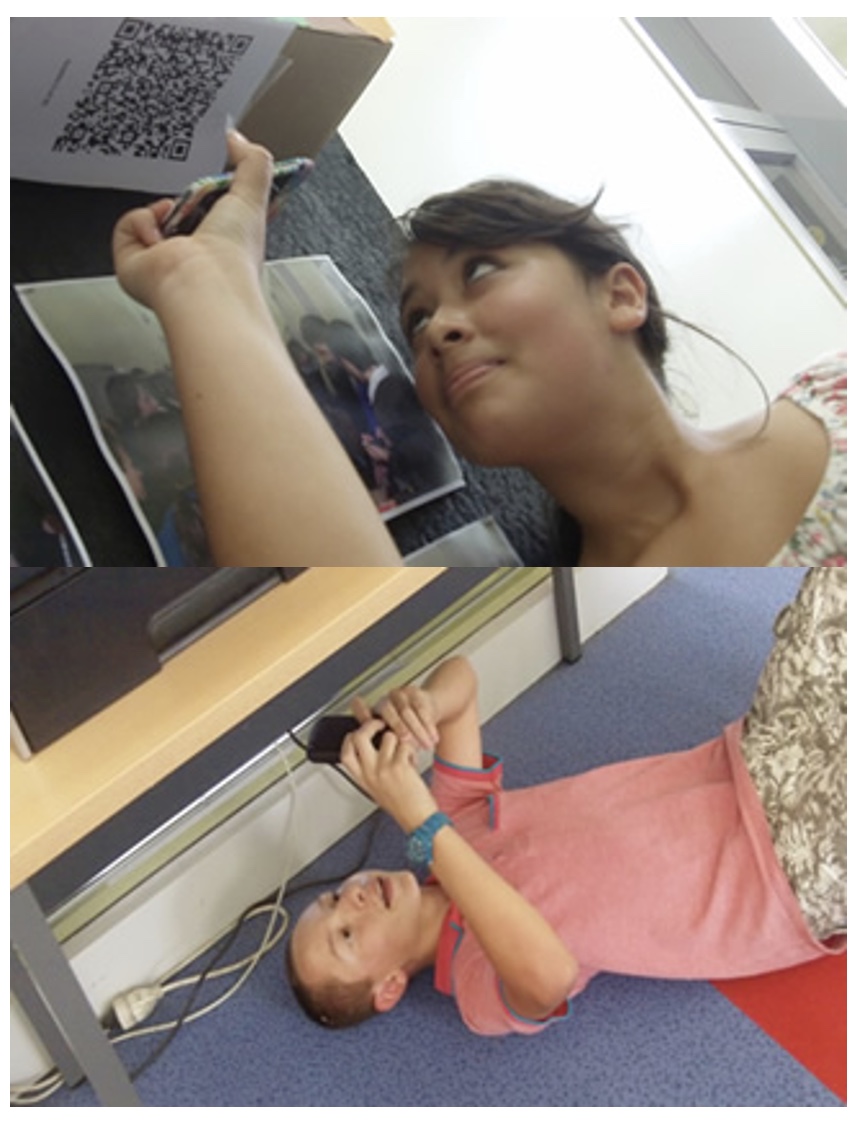
1. Arrange students into groups. Each group needs at least ONE person who has a mobile device.

2. If their phone camera doesn't automatically detect and decode QR codes, ask students to

3. Print out the QR codes.

4. Cut them out and place them around your class / school.


B. The lesson:

1. Give each group a clipboard and a piece of paper so they can write down the decoded questions and their answers to them.

2. Explain to the students that the codes are hidden around the school. Each team will get ONE point for each question they correctly decode and copy down onto their sheet, and a further TWO points if they can then provide the correct answer and write this down underneath the question.

3. Away they go! The winner is the first team to return with the most correct answers in the time available. This could be within a lesson, or during a lunchbreak, or even over several days!


C. TIPS / OTHER IDEAS

4. A detailed case study in how to set up a successful QR Scavenger Hunt using this tool can be found here.


Questions / Answers (teacher reference)

Question

Answer

1. 1) Tobacco has been linked to many health problems. What is the most complete list of forms of tobacco that cause cancer? a) cigarettes and snuff B) chewing tobacco and snuff C)cigarettes and chewing tobacco D)cigarettes, chewing tobacco, and snuffD
2. 2) Which food provides the most energy for the body in the shortest amount of time? A) potato B) meat C) milk D) fruitD
3. 3) Crystal is trying to increase the protein in her diet. Which foods will best satisfy this nutritional need? A)peas, fish, milk, and beans B) apples, carrots, juice, and rice C) kiwi, lettuce, tea, and strawberries D) watermelon, spinach, coffee, and pastaA
4. 4) Which best describes the purpose of food? A) to kill bacteria B) to prevent disease C) to eliminate waste material D)to provide fuel for cell processesD
5. 5) Which type of diet best contributes to a healthy lifestyle? A) a diet high in protein and fat B)a diet high in fruits, vegetables, and fats C)a diet high in carbohydrates, fruits, and vegetables D) a diet high in fruits, vegetables, and lean proteinD
6. 6) Which is necessary for a plant to convert the energy of the sun into energy it can use? A) calcium chloride B) chlorophyll C) glucose D) oxygenB
7. 7) Which nutrient, released when fertilizer decomposes, aids in the growth of tissues in plants? A) nitrogen B) sodium C) oxygen D) sulfurA
8. 8) What process uses oxygen and food molecules to produce energy for animal cells? A) digestion B) glycolysis C) respiration D) photosynthesisC
9. 9) Which is likely to occur if an individual consumes an abundance of carbohydrates but remains very inactive? A) less energy is produced, causing fatigue B) blood glucose and energy levels are both decreased C) blood glucose and energy levels are both decreased D) extra glucose is stored as body fat, causing weight gainD
10. 10) What are the products of cellular respiration?A) oxygen and sugar B) oxygen and water C) carbon dioxide and sugar D) carbon dioxide and waterD
11. 11) A fossil discovered in Colorado dates from the early Mesozoic era. A year later a similar fossil is found in Wyoming that also dates from the early Mesozoic era. These two organisms most likely lived in: A) the same environment at about the same time B) the same environment at different times C) different environments at about the same time D) different environments at different timesA
12. 12) Which method can best be used to determine the relative age of layers? A) radiometric dating B) rock type evaluation C) law of superposition D) principle of uniformitarianismC
13. 13) Certain fossils can be used to help determine the age of the rock layer in which the fossils are found. Which type of fossil is best to use when making this determination? A) marine mammal fossil B) swamp fern fossil C) trace fossil D) index fossilD
14. 14) Which of these provides the best evidence that an environmental change has occurred? A) a freshwater lake in the mountains B) marine fossils in a freshwater lake C) saltwater clams in the ocean D) a sandy beach next to the oceanB
15. 15) The ichthyornis was a type of bird that lived over 65 million years ago. It lived near the sea and hunted for fish over the water. Fossils have been found in Kansas, many miles from the present-day ocean. Which cause of extinction is most likely to be found in the fossil record along with ichthyornis fossils? A) changes in the environment B) disease causing illness C) changes in the weather D) predator animalsA
16. 16) Which best describes how ice cores are important to the study of geologic history? A) they show unconformities, which signal changes in deposition B) they hold index fossils, which are used to date the different ice cores C) they contain evidence showing changes in the atmospheric composition D) they follow the Law of Superposition, which gives reasons for extinctions of speciesC
17. 17) Which statement best describes the Law of Superposition? A) each sedimentary layer of rock represents 1,000 years of Earth’s age, much like the rings of a tree B) in undisturbed layers of sedimentary rock, the upper rock layers are older than the lower rock layers C) in undisturbed layers of sedimentary rock, the lowest layers contain the older rocks D) rocks that form near volcanoes are older than surrounding rockC
18. 18) Scientists find dinosaur fossils in the bottom rock layers of a cliff and mammal fossils in the middle rock layer of the cliff. Which could best be concluded from this evidence? A) dinosaurs ate plants B) dinosaurs were eaten by the mammals C) dinosaurs lived on Earth before the mammals D) dinosaurs and mammals lived at the same timeC
19. 19) Which are most closely associated with volcanic activity, plate tectonics, and seafloor spreading? A) fossils B) mountains C) igneous rocks D) sedimentary rocksC
20. 20) A fault is found that cuts through lower rock layers but not those above it. What can most likely be concluded? A) the fault is the same age as the layers it cuts through, and the same age as the layers above it B) the fault is younger than the layers it cuts through, and younger than the layers above it. C) the fault is younger than the layers it cuts through, but older than the layers above it D) the fault is older than the layers it cuts through, but younger than the layers above itC
21. 21) Which relationship shows how terrestrial and aquatic food webs are interconnected? A) a bird eats a fish B) a cow eats grass C) a shark eats a fish D) a grasshopper eats grassA
22. 22) Which pair of organisms would most likely demonstrate mutualism in an ecosystem? A) tapeworm and dog B) rabbit and grass C) tick and human D) bee and flowerD
23. 23) Which provides most of the carbon dioxide that algae need to make food? A) fungi B) plants C) animals D) bacteriaC
24. 24) Which is an effect of replanting trees in local communities? A) more carbon dioxide will be removed, and more oxygen will be produced B) more oxygen will be removed, and more carbon dioxide will be produced C) more oxygen and carbon dioxide will be produced D) less carbon dioxide and oxygen will be producedA
25. 25) In a beehive, different bees have different jobs within the hive, but all must work together in order for the hive to survive. Which is most likely being demonstrated? A) competition B) cooperation C) mutualism D) commensalismB
26. 26) Which best describes how energy from the sun relates to the energy a cow gets from eating grass in a field? A) the cow absorbs energy from the sun, and stores the energy in its body B) the cow absorbs energy from the sun, and uses this energy to break down the grass it eats C) the grass absorbs energy from the sun; the cow eats the grass and releases additional energy to the grass D) the grass uses energy from the sun to make food; the cow eats the grass and breaks it down to release energy for the cow to useD
27. 27) Which represents a positive consequence of competition within an ecosystem? A) decreased rate of reproduction B) elimination of inferior organisms C) increased need for natural resources D) elimination of entire species of organismsB
28. 28) When would water be a limiting factor in an ecosystem? A) when a population is small B) when a population is decreasing C) when a population is approaching the carrying capacity D) when a population contains many predatorsC
29. 29) As an insect population decreases, which would most likely also decrease? A) hawk population B) vulture population C) sparrow population D) hummingbird populationC
30. 30) Which is the most significant limiting factor in a desert ecosystem? A) nutrients B) water C) predators D) sunlightB
31. 31) Which would best allow a species to survive environmental changes? A) similar physical features B) genetic diversity C) low mutation rate D) small populationB
32. 32) Which most likely led to major changes in biological evolution? A) separation of land masses B) short time periods of drought conditions C) long time periods with no volcanic eruptions D) migration of animals from one area to anotherA
33. 33) A new type of plant was discovered on a newly-formed volcanic island. The island is hundreds of miles away from the mainland. Which hypothesis best explains how the plant arrived? A) it spontaneously generated B) it was carried there by humans C )it was carried there by wind or waves D) it was already present in volcanic materialsC
34. 34) Which adaptation has occurred due to genetic variation allowing some species to seem invisible to predators? A) bluffing B) mimicry C) camouflage D) armorC
35. 35) Which best helps scientists explore the relationship between modern organisms and ancestral species to create a system of biological classification? A) fossils B) binomial nomenclature C) DNA evidence D) volcanic ashA
36. 36) Which evidence would best support the extinction of a past species? A) the loss of a species’ habitat B) the evolution of a new species C) the disappearance of a species’ fossils D) the increase in predators of the speciesC
37. 37) Which demonstrates genetic variation resulting in a protective adaptation? A) a butterfly changes colors to look like its poisonous relatives B) a bird in the desert breeds at night to avoid the heat C) a groundhog runs into a burrow to avoid a predator D) a beaver builds a dam to protect its familyA
38. 38) Which best explains the gaps in the evolutionary history of Earth’s life forms? A) the soft parts of organisms are the only parts preserved as fossils B) environmental changes prevented the formation of fossils C) many organisms died without leaving behind fossil remains D) extinct organisms did not form fossilsC
39. 39) Which best describes the relationship between genetic variation and the ability to adapt to one’s environment? A) genetic variation has no effect on the ability to adapt B) as genetic variation increases, the ability to adapt increases C) as genetic variation decreases, the ability to adapt increases D )as genetic variation increases, the ability to adapt decreasesB
40. 40) Why are fat layers and thick white fur advantageous for polar bears? A) they help the bears catch more food B) they help the bears get rid of excess body heat more easily C) they allow the bears to run and swim faster to escape predators D) they insulate the bears and allow them to blend in with their environmentD


Science QR Code Hunt: QR Challenge

https://www.classtools.net/QR/decode.php?text=1)_Tobacco_has_been_linked_to_many_health_problems._What_is_the_most_complete_list_of_forms_of_tobacco_that_cause_cancer?_a)_cigarettes_and_snuff_B)_chewing_tobacco_and_snuff_C)cigarettes_and_chewing_tobacco_D)cigarettes,_chewing_tobacco,_and_snuff

Question 1 (of 40)


Science QR Code Hunt: QR Challenge

https://www.classtools.net/QR/decode.php?text=2)_Which_food_provides_the_most_energy_for_the_body_in_the_shortest_amount_of_time?_A)_potato_B)_meat_C)_milk_D)_fruit

Question 2 (of 40)


Science QR Code Hunt: QR Challenge

https://www.classtools.net/QR/decode.php?text=3)_Crystal_is_trying_to_increase_the_protein_in_her_diet._Which_foods_will_best_satisfy_this_nutritional_need?_A)peas,_fish,_milk,_and_beans_B) apples,_carrots,_juice,_and_rice_C)_kiwi,_lettuce,_tea,_and_strawberries_D)_watermelon,_spinach,_coffee,_and_pasta

Question 3 (of 40)


Science QR Code Hunt: QR Challenge

https://www.classtools.net/QR/decode.php?text=4)_Which_best_describes_the_purpose_of_food?_A)_to_kill_bacteria_B)_to_prevent_disease_C)_to_eliminate_waste_material_D)to_provide_fuel_for_cell_processes

Question 4 (of 40)


Science QR Code Hunt: QR Challenge

https://www.classtools.net/QR/decode.php?text=5)_Which_type_of_diet_best_contributes_to_a_healthy_lifestyle?_A)_a_diet_high_in_protein_and_fat_B)a_diet_high_in_fruits,_vegetables,_and_fats_C)a_diet_high_in_carbohydrates,_fruits,_and_vegetables_D)_a_diet_high_in_fruits,_vegetables,_and_lean_protein

Question 5 (of 40)


Science QR Code Hunt: QR Challenge

https://www.classtools.net/QR/decode.php?text=6)_Which_is_necessary_for_a_plant_to_convert_the_energy_of_the_sun_into_energy_it_can_use?_A)_calcium_chloride_B)_chlorophyll_C)_glucose_D)_oxygen

Question 6 (of 40)


Science QR Code Hunt: QR Challenge

https://www.classtools.net/QR/decode.php?text=7)_Which_nutrient,_released_when_fertilizer_decomposes,_aids_in_the_growth_of_tissues_in_plants?_A)_nitrogen_B)_sodium_C) oxygen_D)_sulfur

Question 7 (of 40)


Science QR Code Hunt: QR Challenge

https://www.classtools.net/QR/decode.php?text=8)_What_process_uses_oxygen_and_food_molecules_to_produce_energy_for_animal_cells?_A)_digestion_B)_glycolysis_C)_respiration_D)_photosynthesis

Question 8 (of 40)


Science QR Code Hunt: QR Challenge

https://www.classtools.net/QR/decode.php?text=9)_Which_is_likely_to_occur_if_an_individual_consumes_an_abundance_of_carbohydrates_but_remains_very_inactive?_A)__less_energy_is_produced,_causing_fatigue_B)__blood_glucose_and_energy_levels_are_both_decreased_C)__blood_glucose_and_energy_levels_are_both_decreased_D)_extra_glucose_is_stored_as_body_fat,_causing_weight_gain

Question 9 (of 40)


Science QR Code Hunt: QR Challenge

https://www.classtools.net/QR/decode.php?text=10)_What_are_the_products_of_cellular_respiration?A)_oxygen_and_sugar_B)_oxygen_and_water_C)_carbon_dioxide_and_sugar_D)_carbon_dioxide_and_water

Question 10 (of 40)


Science QR Code Hunt: QR Challenge

https://www.classtools.net/QR/decode.php?text=11)_A_fossil_discovered_in_Colorado_dates_from_the_early_Mesozoic_era._A_year_later_a_similar_fossil_is_found_in_Wyoming_that_also_dates_from_the_early_Mesozoic_era._These_two_organisms_most_likely_lived_in:_A)_the_same_environment_at_about_the_same_time_B)_the_same_environment_at_different_times_C)_different_environments_at_about_the_same_time_D)_different_environments_at_different_times

Question 11 (of 40)


Science QR Code Hunt: QR Challenge

https://www.classtools.net/QR/decode.php?text=12)_Which_method_can_best_be_used_to_determine_the_relative_age_of_layers?_A)_radiometric_dating_B)_rock_type_evaluation_C)_law_of_superposition_D)_principle_of_uniformitarianism

Question 12 (of 40)


Science QR Code Hunt: QR Challenge

https://www.classtools.net/QR/decode.php?text=13)_Certain_fossils_can_be_used_to_help_determine_the_age_of_the_rock_layer_in_which_the_fossils_are_found._Which_type_of_fossil_is_best_to_use_when_making_this_determination?_A)_marine_mammal_fossil_B)_swamp_fern_fossil_C)_trace_fossil_D)_index_fossil

Question 13 (of 40)


Science QR Code Hunt: QR Challenge

https://www.classtools.net/QR/decode.php?text=14)_Which_of_these_provides_the_best_evidence_that_an_environmental_change_has_occurred?_A)_ a_freshwater_lake_in_the_mountains_B)_marine_fossils_in_a_freshwater_lake_C) saltwater_clams_in_the_ocean_D)_a_sandy_beach_next_to_the_ocean

Question 14 (of 40)


Science QR Code Hunt: QR Challenge

https://www.classtools.net/QR/decode.php?text=15)_The_ichthyornis_was_a_type_of_bird_that_lived_over_65_million_years_ago._It_lived_near_the_sea_and_hunted_for_fish_over_the_water._Fossils_have_been_found_in_Kansas,_many_miles_from_the_present-day_ocean._Which_cause_of_extinction_is_most_likely_to_be_found_in_the_fossil_record_along_with_ichthyornis_fossils?_A)_changes_in_the_environment_B)_disease_causing_illness_C)_ changes_in_the_weather_D)_ predator_animals

Question 15 (of 40)


Science QR Code Hunt: QR Challenge

https://www.classtools.net/QR/decode.php?text=16)__Which_best_describes_how_ice_cores_are_important_to_the_study_of_geologic_history?_A)_they_show_unconformities,_which_signal_changes_in_deposition_B)_they_hold_index_fossils,_which_are_used_to_date_the_different_ice_cores_C)_they_contain_evidence_showing_changes_in_the_atmospheric_composition_D)_they_follow_the_Law_of_Superposition,_which_gives_reasons_for_extinctions_of_species

Question 16 (of 40)


Science QR Code Hunt: QR Challenge

https://www.classtools.net/QR/decode.php?text=17)_Which_statement_best_describes_the_Law_of_Superposition?_A)__each_sedimentary_layer_of_rock_represents_1,000_years_of_Earth’s_age,_much_like_the_rings_of_a_tree_B)_ in_undisturbed_layers_of_sedimentary_rock,_the_upper_rock_layers_are_older_than_the_lower_rock_layers_C)_in_undisturbed_layers_of_sedimentary_rock,_the_lowest_layers_contain_the_older_rocks_D)_rocks_that_form_near_volcanoes_are_older_than_surrounding_rock

Question 17 (of 40)


Science QR Code Hunt: QR Challenge

https://www.classtools.net/QR/decode.php?text=18)_Scientists_find_dinosaur_fossils_in_the_bottom_rock_layers_of_a_cliff_and_mammal_fossils_in_the_middle_rock_layer_of_the_cliff._Which_could_best_be_concluded_from_this_evidence?_A)_dinosaurs_ate_plants_B)_dinosaurs_were_eaten_by_the_mammals_C)_dinosaurs_lived_on_Earth_before_the_mammals_D)_dinosaurs_and_mammals_lived_at_the_same_time

Question 18 (of 40)


Science QR Code Hunt: QR Challenge

https://www.classtools.net/QR/decode.php?text=19)_Which_are_most_closely_associated_with_volcanic_activity,_plate_tectonics,_and_seafloor_spreading?_A)_fossils_B)_mountains_C)_ igneous_rocks_D)_sedimentary_rocks

Question 19 (of 40)


Science QR Code Hunt: QR Challenge

https://www.classtools.net/QR/decode.php?text=20)_A_fault_is_found_that_cuts_through_lower_rock_layers_but_not_those_above_it._What_can_most_likely_be_concluded? A)_the_fault_is_the_same_age_as_the_layers_it_cuts_through,_and_the_same_age_as_the_layers_above_it_B)_the_fault_is_younger_than_the_layers_it_cuts_through,_and_younger_than_the_layers_above_it._C)_the_fault_is_younger_than_the_layers_it_cuts_through,_but_older_than_the_layers_above_it_D)_the_fault_is_older_than_the_layers_it_cuts_through,_but_younger_than_the_layers_above_it

Question 20 (of 40)


Science QR Code Hunt: QR Challenge

https://www.classtools.net/QR/decode.php?text=21)_Which_relationship_shows_how_terrestrial_and_aquatic_food_webs_are_interconnected?_A)_a_bird_eats_a_fish_B)_a_cow_eats_grass_C)_a_shark_eats_a_fish_D)_a_grasshopper_eats_grass

Question 21 (of 40)


Science QR Code Hunt: QR Challenge

https://www.classtools.net/QR/decode.php?text=22)_Which_pair_of_organisms_would_most_likely_demonstrate_mutualism_in_an_ecosystem?_A)_tapeworm_and_dog_B)_rabbit_and_grass_C)_tick_and_human_D)_bee_and_flower

Question 22 (of 40)


Science QR Code Hunt: QR Challenge

https://www.classtools.net/QR/decode.php?text=23)_Which_provides_most_of_the_carbon_dioxide_that_algae_need_to_make_food?_A)_fungi_B)_plants_C)_animals_D)_bacteria

Question 23 (of 40)


Science QR Code Hunt: QR Challenge

https://www.classtools.net/QR/decode.php?text=24)_Which_is_an_effect_of_replanting_trees_in_local_communities?_A)_more_carbon_dioxide_will_be_removed,_and_more_oxygen_will_be_produced_B)_more_oxygen_will_be_removed,_and_more_carbon_dioxide_will_be_produced_C)_more_oxygen_and_carbon_dioxide_will_be_produced_D)_less_carbon_dioxide_and_oxygen_will_be_produced

Question 24 (of 40)


Science QR Code Hunt: QR Challenge

https://www.classtools.net/QR/decode.php?text=25)_In_a_beehive,_different_bees_have_different_jobs_within_the_hive,_but_all_must_work_together_in_order_for_the_hive_to_survive._Which_is_most_likely_being_demonstrated?_A)_ competition_B)_cooperation_C)_mutualism_D)_commensalism

Question 25 (of 40)


Science QR Code Hunt: QR Challenge

https://www.classtools.net/QR/decode.php?text=26)_Which_best_describes_how_energy_from_the_sun_relates_to_the_energy_a_cow_gets_from_eating_grass_in_a_field?_A)_the_cow_absorbs_energy_from_the_sun,_and_stores_the_energy_in_its_body_B)_the_cow_absorbs_energy_from_the_sun,_and_uses_this_energy_to_break_down_the_grass_it_eats_C)_the_grass_absorbs_energy_from_the_sun;_the_cow_eats_the_grass_and_releases_additional_energy_to_the_grass_D)_the_grass_uses_energy_from_the_sun_to_make_food;_the_cow_eats_the_grass_and_breaks_it_down_to_release_energy_for_the_cow_to_use

Question 26 (of 40)


Science QR Code Hunt: QR Challenge

https://www.classtools.net/QR/decode.php?text=27)_Which_represents_a_positive_consequence_of_competition_within_an_ecosystem?_A)_decreased_rate_of_reproduction_B)_elimination_of_inferior_organisms_C)_increased_need_for_natural_resources_D)_elimination_of_entire_species_of_organisms

Question 27 (of 40)


Science QR Code Hunt: QR Challenge

https://www.classtools.net/QR/decode.php?text=28)_When_would_water_be_a_limiting_factor_in_an_ecosystem?_A)_when_a_population_is_small_B)_when_a_population_is_decreasing_C)_when_a_population_is_approaching_the_carrying_capacity_D)_when_a_population_contains_many_predators

Question 28 (of 40)


Science QR Code Hunt: QR Challenge

https://www.classtools.net/QR/decode.php?text=29)_As_an_insect_population_decreases,_which_would_most_likely_also_decrease?_A)_hawk_population_B)_vulture_population_C)_sparrow_population_D)_hummingbird_population

Question 29 (of 40)


Science QR Code Hunt: QR Challenge

https://www.classtools.net/QR/decode.php?text=30)_Which_is_the_most_significant_limiting_factor_in_a_desert_ecosystem?_A)_nutrients_B)_water_C)_predators_D)_sunlight

Question 30 (of 40)


Science QR Code Hunt: QR Challenge

https://www.classtools.net/QR/decode.php?text=31)_Which_would_best_allow_a_species_to_survive_environmental_changes?_A)_similar_physical_features_B)_genetic_diversity_C)_low_mutation_rate_D)_small_population

Question 31 (of 40)


Science QR Code Hunt: QR Challenge

https://www.classtools.net/QR/decode.php?text=32)_Which_most_likely_led_to_major_changes_in_biological_evolution?_A)_separation_of_land_masses_B)_short_time_periods_of_drought_conditions_C)_ long_time_periods_with_no_volcanic_eruptions_D)_migration_of_animals_from_one_area_to_another

Question 32 (of 40)


Science QR Code Hunt: QR Challenge

https://www.classtools.net/QR/decode.php?text=33)_A_new_type_of_plant_was_discovered_on_a_newly-formed_volcanic_island._The_island_is_hundreds_of_miles_away_from_the_mainland._Which_hypothesis_best_explains_how_the_plant_arrived?_A)_it_spontaneously_generated_B)_it_was_carried_there_by_humans_C_)it_was_carried_there_by_wind_or_waves_D)_it_was_already_present_in_volcanic_materials

Question 33 (of 40)


Science QR Code Hunt: QR Challenge

https://www.classtools.net/QR/decode.php?text=34)_Which_adaptation_has_occurred_due_to_genetic_variation_allowing_some_species_to_seem_invisible_to_predators?_A)_bluffing_B)_mimicry_C)_camouflage_D)_armor

Question 34 (of 40)


Science QR Code Hunt: QR Challenge

https://www.classtools.net/QR/decode.php?text=35)_Which_best_helps_scientists_explore_the_relationship_between_modern_organisms_and_ancestral_species_to_create_a_system_of_biological_classification?_A)_fossils_B)_binomial_nomenclature_C)_DNA_evidence_D)_volcanic_ash

Question 35 (of 40)


Science QR Code Hunt: QR Challenge

https://www.classtools.net/QR/decode.php?text=36)_Which_evidence_would_best_support_the_extinction_of_a_past_species?_A)_the_loss_of_a_species’_habitat_B)_the_evolution_of_a_new_species_C)_the_disappearance_of_a_species’_fossils_D)_the_increase_in_predators_of_the_species

Question 36 (of 40)


Science QR Code Hunt: QR Challenge

https://www.classtools.net/QR/decode.php?text=37)_Which_demonstrates_genetic_variation_resulting_in_a_protective_adaptation?_A)_a_butterfly_changes_colors_to_look_like_its_poisonous_relatives_B)_a_bird_in_the_desert_breeds_at_night_to_avoid_the_heat_C)_a_groundhog_runs_into_a_burrow_to_avoid_a_predator_D)_a_beaver_builds_a_dam_to_protect_its_family

Question 37 (of 40)


Science QR Code Hunt: QR Challenge

https://www.classtools.net/QR/decode.php?text=38)_Which_best_explains_the_gaps_in_the_evolutionary_history_of_Earth’s_life_forms?_A)_the_soft_parts_of_organisms_are_the_only_parts_preserved_as_fossils_B)_environmental_changes_prevented_the_formation_of_fossils_C)_many_organisms_died_without_leaving_behind_fossil_remains_D)_extinct_organisms_did_not_form_fossils

Question 38 (of 40)


Science QR Code Hunt: QR Challenge

https://www.classtools.net/QR/decode.php?text=39)_Which_best_describes_the_relationship_between_genetic_variation_and_the_ability_to_adapt_to_one’s_environment?_A)_genetic_variation_has_no_effect_on_the_ability_to_adapt_B)_as_genetic_variation_increases,_the_ability_to_adapt_increases_C)_as_genetic_variation_decreases,_the_ability_to_adapt_increases_D_)as_genetic_variation_increases,_the_ability_to_adapt_decreases

Question 39 (of 40)


Science QR Code Hunt: QR Challenge

https://www.classtools.net/QR/decode.php?text=40)_Why_are_fat_layers_and_thick_white_fur_advantageous_for_polar_bears?_A)__they_help_the_bears_catch_more_food_B)_they_help_the_bears_get_rid_of_excess_body_heat_more_easily_C)_they_allow_the_bears_to_run_and_swim_faster_to_escape_predators_D)_they_insulate_the_bears_and_allow_them_to_blend_in_with_their_environment

Question 40 (of 40)