
PREMIUM LOGIN
ClassTools Premium membership gives access to all templates, no advertisements, personal branding and many other benefits!
| Username: | ||
| Password: | ||
|
Submit
Cancel
|
||
| Not a member? | ||
PREMIUM LOGIN
ClassTools Premium membership gives access to all templates, no advertisements, personal branding and many other benefits!
| Username: | ||
| Password: | ||
|
Submit
Cancel
|
||
| Not a member? | ||
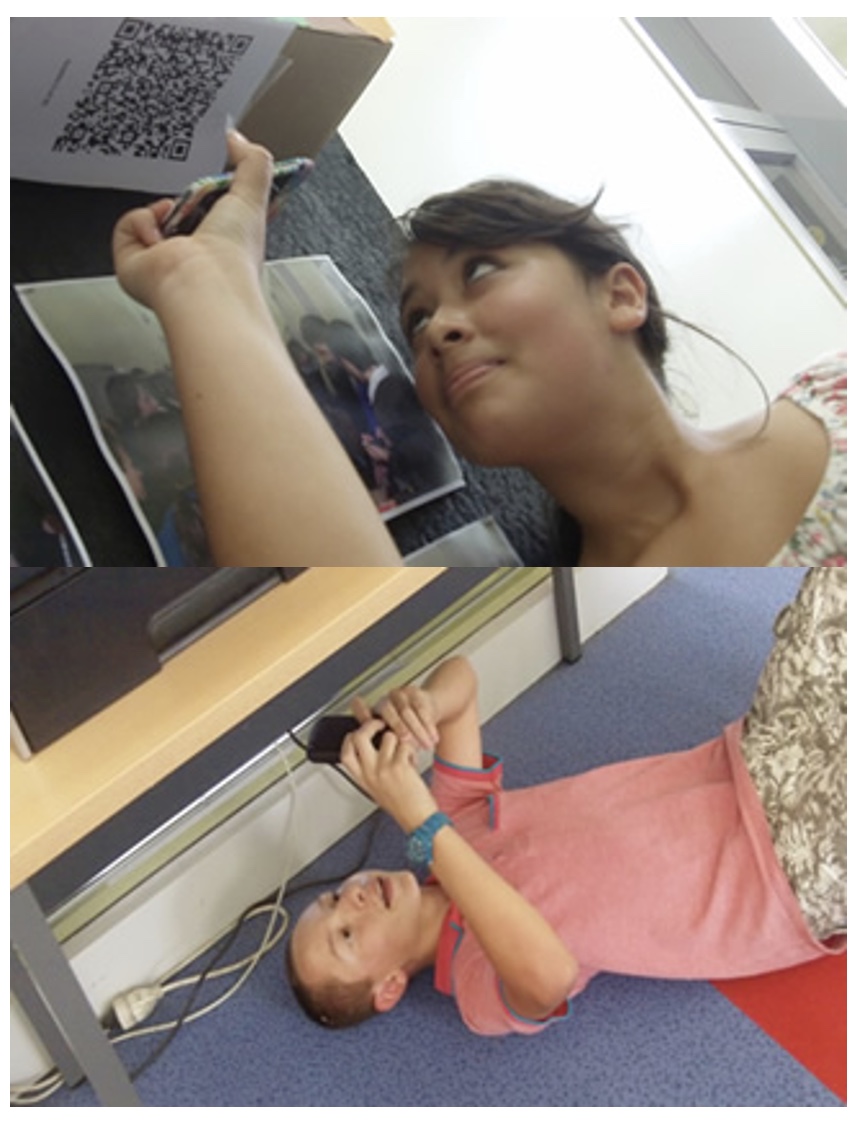
1. Arrange students into groups. Each group needs at least ONE person who has a mobile device.
2. If their phone camera doesn't automatically detect and decode QR codes, ask students to
4. Cut them out and place them around your class / school.
1. Give each group a clipboard and a piece of paper so they can write down the decoded questions and their answers to them.
2. Explain to the students that the codes are hidden around the school. Each team will get ONE point for each question they correctly decode and copy down onto their sheet, and a further TWO points if they can then provide the correct answer and write this down underneath the question.
3. Away they go! The winner is the first team to return with the most correct answers in the time available. This could be within a lesson, or during a lunchbreak, or even over several days!
4. A detailed case study in how to set up a successful QR Scavenger Hunt using this tool can be found here.
Question | Answer |
| 1. Climax: The most significant moment of tension or conflict in a dramatic performance, often occurring towards the end of the plot. | Dramatic Element | 2. Conflict: Conflict generally occurs when a character cannot achieve an objective due to an obstacle. This obstacle may be internal or external – between characters or between characters and their environment. Conflict can be shown in a variety of ways, for example through physical, verbal or psychological means. | Dramatic Element | 3. Contrast: Contrast presents the dissimilar or opposite in order to highlight or emphasise difference. Contrast can be explored in many ways. Without the careful use of contrast a performance is boring and lacks tension. An obvious example of contrast is a sad scene followed by a happy one. | Dramatic Element | 4. Mood: Mood is the overall feeling or emotion that a performance can evoke. This may be achieved through manipulation of acting, conventions or stagecraft. | Dramatic Element | 5. Rhythm: Rhythm is a regular pattern of sounds, words or actions. Performances can also have their own rhythm that can be influenced by the emotional nature of the plot, the pace of line delivery, the pace of scene transitions, and the length of those scenes and the dialogue within them. | Dramatic Element | 6. Sound: Sound is created by the performer through the possible use of voice, body percussion and objects to create an effect in performance and enhance meaning. Sound may include silence or the deliberate absence of sound. | Dramatic Element | 7. Space: Space involves the way the actor uses the performance area to communicate meaning, to define settings, to represent status and to create actor–audience relationships. This may be achieved through the use of levels, proximity and depth. The use of space may be symbolic. | Dramatic Element | 8. Symbol: Symbol is used to create meaning that is not literal. Symbol allows performers to communicate ideas and themes through words, stagecraft and expressive skills. | Dramatic Element | 9. Tension: Tension is the suspense that holds an audience’s attention as a performance unfolds. The release of tension can have a comic or dramatic effect. | Dramatic Element | 10. Voice: Voice includes various vocal techniques including song, the use of pitch (high/low), pace (fast/slow), projection (low/soft), tone (diction or articulation) to create mood and rhythm. | Expressive Skill | 11. Movement: It is vital for actors to engage with their own physicality to embody their intended character. Physical techniques can occur when an actor isn't speaking and during regular conversation, as every movement must be calculated and deliberate as it communicates non-verbal meaning to the audience about character/plot. | Expressive Skill | 12. Facial Expression: Facial expression is the manipulation and control of facial muscles. Whilst performing an actor uses facial expression to heighten the development of their specific character. However, if one's facial expression is overdone characters may appear artificial or if under done characters lack substance and depth. | Expressive Skill | 13. Gesture: Gesture is a small unique movement of the body to signify non-verbal communication or a particular character's personality, such as waving or fidgeting. | Expressive Skill | 14. Body Language: Body language is the way an actor positions their body as means of non-verbal communication. It often shows emotion. For instance, a character might face themselves away from their enemy. | Expressive Skill |

Question 1 (of 14)
Question 2 (of 14)
Question 3 (of 14)
Question 4 (of 14)
Question 5 (of 14)
Question 6 (of 14)
Question 7 (of 14)
Question 8 (of 14)
Question 9 (of 14)
Question 10 (of 14)
Question 11 (of 14)
Question 12 (of 14)
Question 13 (of 14)
Question 14 (of 14)