
PREMIUM LOGIN
ClassTools Premium membership gives access to all templates, no advertisements, personal branding and many other benefits!
| Username: | ||
| Password: | ||
|
Submit
Cancel
|
||
| Not a member? | ||
PREMIUM LOGIN
ClassTools Premium membership gives access to all templates, no advertisements, personal branding and many other benefits!
| Username: | ||
| Password: | ||
|
Submit
Cancel
|
||
| Not a member? | ||
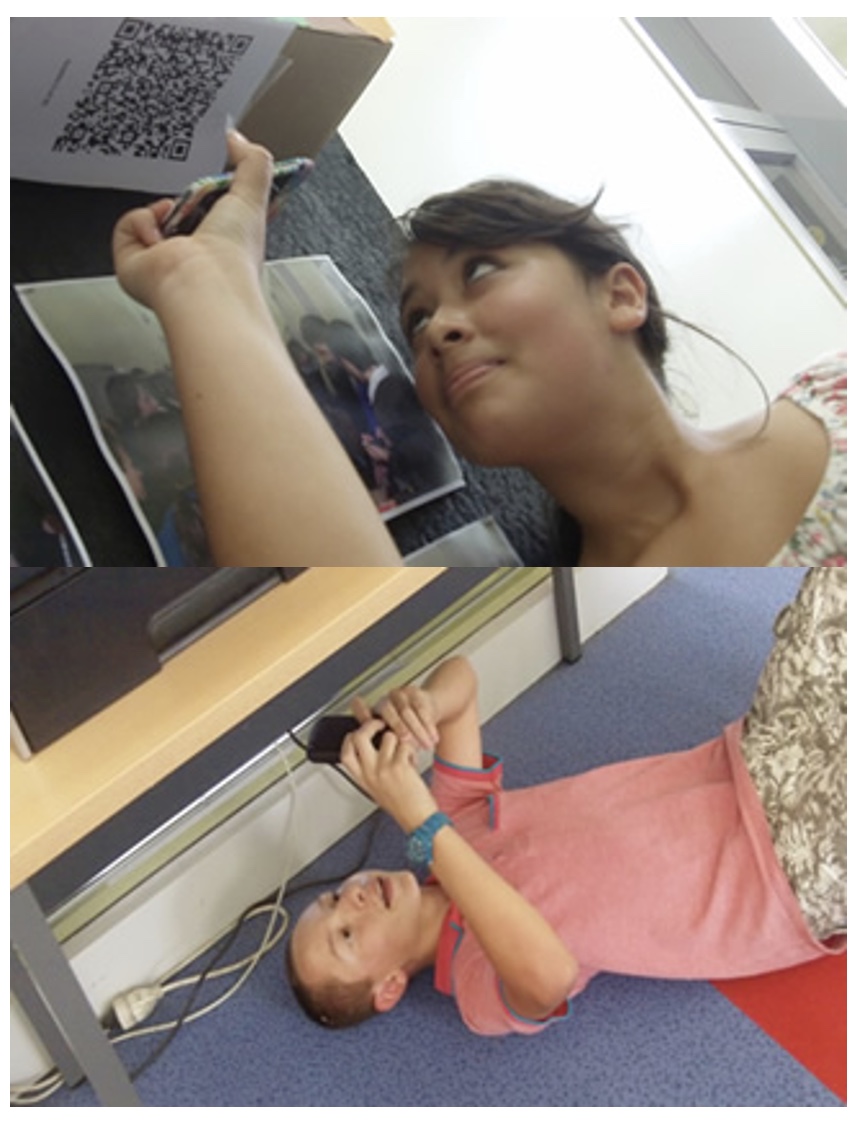
1. Arrange students into groups. Each group needs at least ONE person who has a mobile device.
2. If their phone camera doesn't automatically detect and decode QR codes, ask students to
4. Cut them out and place them around your class / school.
1. Give each group a clipboard and a piece of paper so they can write down the decoded questions and their answers to them.
2. Explain to the students that the codes are hidden around the school. Each team will get ONE point for each question they correctly decode and copy down onto their sheet, and a further TWO points if they can then provide the correct answer and write this down underneath the question.
3. Away they go! The winner is the first team to return with the most correct answers in the time available. This could be within a lesson, or during a lunchbreak, or even over several days!
4. A detailed case study in how to set up a successful QR Scavenger Hunt using this tool can be found here.
Question | Answer |
| 1. How many tablespoons are there in a stick of butter? | 8 | 2. What is the only dry ingredient you pack when measuring? | brown sugar | 3. What is it called when germs from one food are spread to another food? | cross contamination | 4. What are tiny organisms that can cause food spoilage or food borne illness? | bacteria | 5. What is the process of handling food in ways that are clean and healthy? | sanitation | 6. What is the result of harmful toxins produced by bacteria in food? | food borne illness | 7. What is the danger zone? | 40˚- 140˚ | 8. What is the safest method for thawing frozen food? | in the refrigerator | 9. If you eat raw or undercooked eggs you may get what bacteria? | salmonella | 10. How long can food be left in the danger zone? | two hours | 11. Besides a fire extinguisher, what is the best way to put out a grease fire? | baking soda | 12. What type of measuring cup do you use to measure peanut butter? | dry measuring cup | 13. What do you use to measure small amounts of liquid or dry ingredients? | measuring spoons | 14. What do you say in a kitchen when you are walking around others with a knife? | behind with knife | 15. What is the position of your hand that is holding the food when you are cutting something? | the claw | 16. What safety measure should you take with a cutting board before you begin cutting? | anchor the board with a wet towel | 17. List the four steps when measuring dry ingredients. | stir, scoop, heap and pack | 18. How do you measure liquid ingredients? | pour, place on flat surface and read at eye level | 19. What is the best method for washing your hands? | hot water and soap for 20 seconds | 20. What kitchen equipment is used to put air into eggs or cream? | wire whisk |

Question 1 (of 20)
Question 2 (of 20)
Question 3 (of 20)
Question 4 (of 20)
Question 5 (of 20)
Question 6 (of 20)
Question 7 (of 20)
Question 8 (of 20)
Question 9 (of 20)
Question 10 (of 20)
Question 11 (of 20)
Question 12 (of 20)
Question 13 (of 20)
Question 14 (of 20)
Question 15 (of 20)
Question 16 (of 20)
Question 17 (of 20)
Question 18 (of 20)
Question 19 (of 20)
Question 20 (of 20)