
PREMIUM LOGIN
ClassTools Premium membership gives access to all templates, no advertisements, personal branding and many other benefits!
| Username: | ||
| Password: | ||
|
Submit
Cancel
|
||
| Not a member? | ||
PREMIUM LOGIN
ClassTools Premium membership gives access to all templates, no advertisements, personal branding and many other benefits!
| Username: | ||
| Password: | ||
|
Submit
Cancel
|
||
| Not a member? | ||
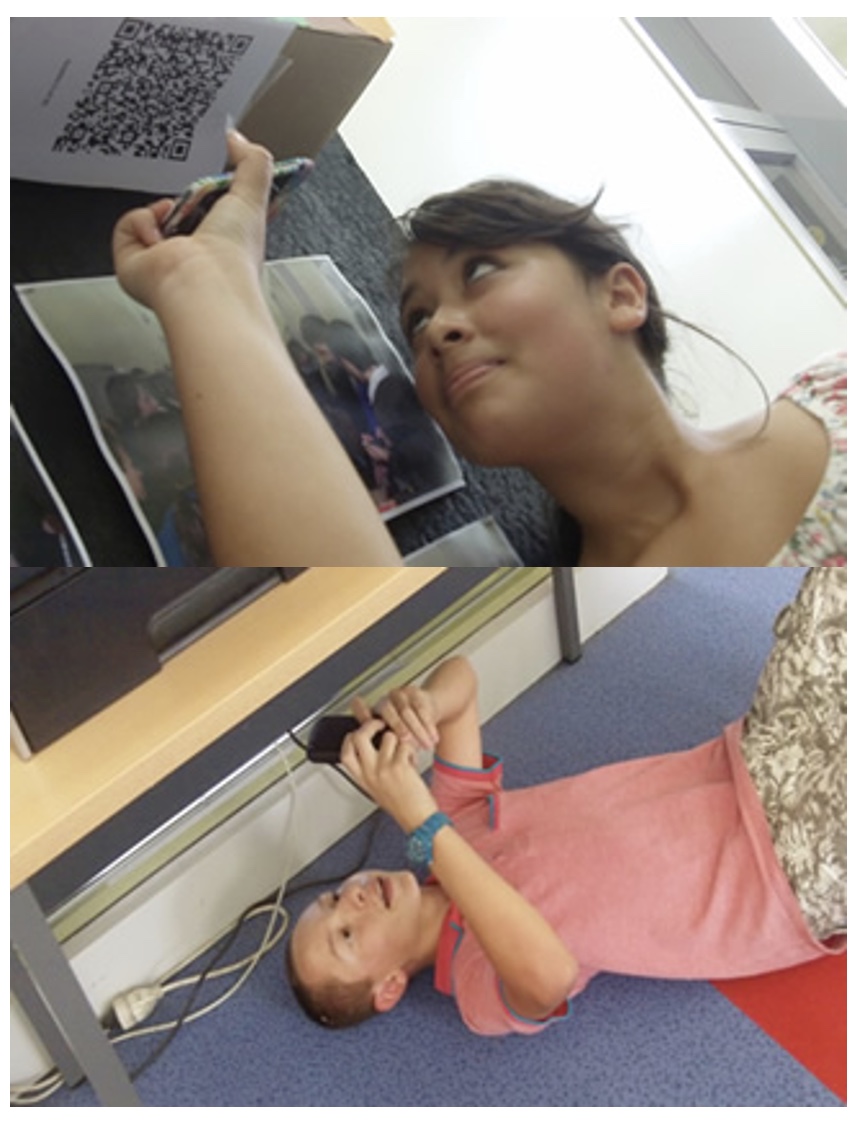
1. Arrange students into groups. Each group needs at least ONE person who has a mobile device.
2. If their phone camera doesn't automatically detect and decode QR codes, ask students to
4. Cut them out and place them around your class / school.
1. Give each group a clipboard and a piece of paper so they can write down the decoded questions and their answers to them.
2. Explain to the students that the codes are hidden around the school. Each team will get ONE point for each question they correctly decode and copy down onto their sheet, and a further TWO points if they can then provide the correct answer and write this down underneath the question.
3. Away they go! The winner is the first team to return with the most correct answers in the time available. This could be within a lesson, or during a lunchbreak, or even over several days!
4. A detailed case study in how to set up a successful QR Scavenger Hunt using this tool can be found here.
Question | Answer |
| 1. What document contains the First Amendment? | The Constitution | 2. What is the part of a news package where the reporter talks directly to the camera? | A Stand Up | 3. What type of news involves topics that are serious, including the economy, politics, and war? | Hard News | 4. What is the purpose of using news values? | To determine if something is newsworthy | 5. What is it called if you write something about someone that is not true and damage their reputation? | Libel | 6. What type of news involves topics that are not serious, including sports, entertainment, and celebrity gossip? | Soft News | 7. What is it called if you verbally say something about someone that is not true and damage their reputation? | Slander | 8. Which amendment protects your freedom of speech, press, and religion? | The First Amendment | 9. Which types of behaviors are not protected by the First Amendment? | Ones that could cause harm or danger | 10. What are the two types of defamation? | Libel and Slander | 11. What type of news value is based off of the fame level of the person featured? | Prominence | 12. What type of news value is based off of how many people are effected by the story being told? | Impact | 13. What type of news value focuses on how quickly or soon a news story is created about an event? | Timeliness | 14. What type of footage usually shows what an interview subject is talking about and keeps the viewer interested? | B-Roll | 15. What type of footage usually shows the interview subject answering questions? | A-Roll | 16. What are open-ended questions? | Questions that cannot be answered in one word responses | 17. If you are using a handheld microphone, who should be holding the microphone? | The Interviewer | 18. Why are Journalism Ethics considered important? | To maintain trust, credibility, etc. |

Question 1 (of 18)
Question 2 (of 18)
Question 3 (of 18)
Question 4 (of 18)
Question 5 (of 18)
Question 6 (of 18)
Question 7 (of 18)
Question 8 (of 18)
Question 9 (of 18)
Question 10 (of 18)
Question 11 (of 18)
Question 12 (of 18)
Question 13 (of 18)
Question 14 (of 18)
Question 15 (of 18)
Question 16 (of 18)
Question 17 (of 18)
Question 18 (of 18)