
PREMIUM LOGIN
ClassTools Premium membership gives access to all templates, no advertisements, personal branding and many other benefits!
| Username: | ||
| Password: | ||
|
Submit
Cancel
|
||
| Not a member? | ||
PREMIUM LOGIN
ClassTools Premium membership gives access to all templates, no advertisements, personal branding and many other benefits!
| Username: | ||
| Password: | ||
|
Submit
Cancel
|
||
| Not a member? | ||
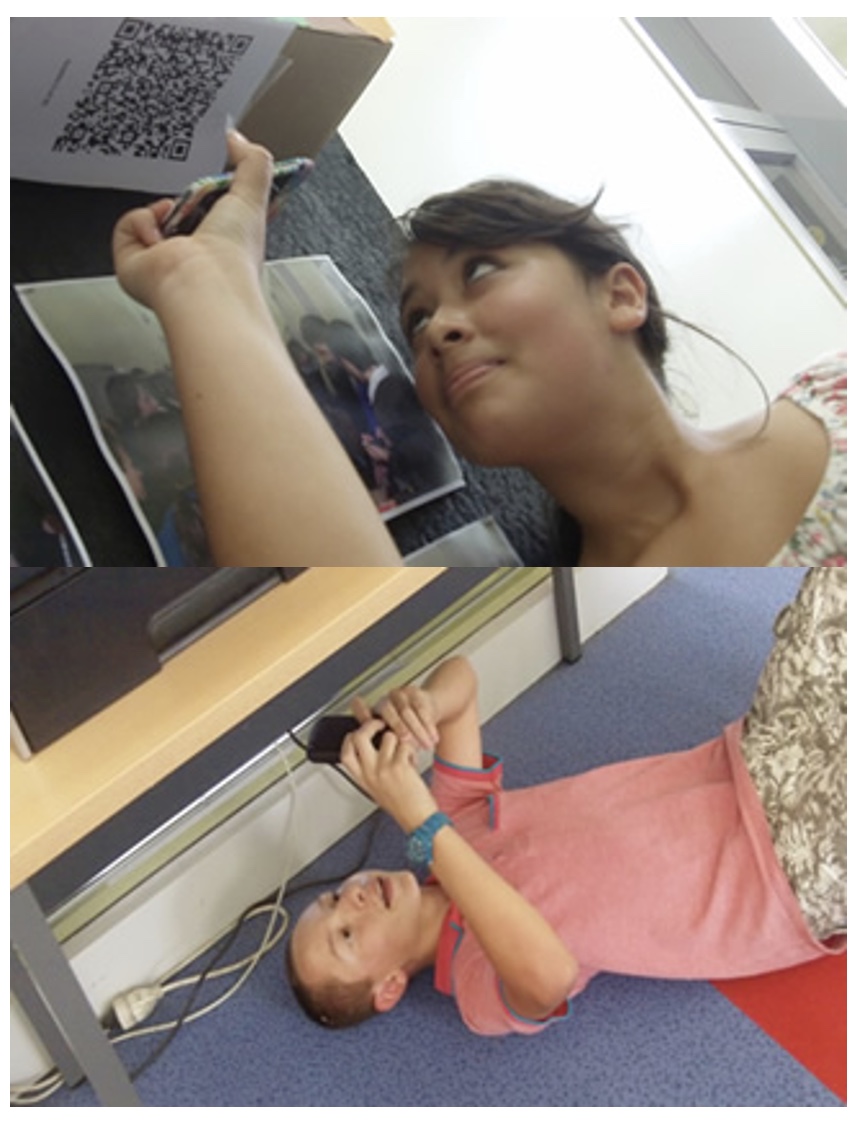
1. Arrange students into groups. Each group needs at least ONE person who has a mobile device.
2. If their phone camera doesn't automatically detect and decode QR codes, ask students to
4. Cut them out and place them around your class / school.
1. Give each group a clipboard and a piece of paper so they can write down the decoded questions and their answers to them.
2. Explain to the students that the codes are hidden around the school. Each team will get ONE point for each question they correctly decode and copy down onto their sheet, and a further TWO points if they can then provide the correct answer and write this down underneath the question.
3. Away they go! The winner is the first team to return with the most correct answers in the time available. This could be within a lesson, or during a lunchbreak, or even over several days!
4. A detailed case study in how to set up a successful QR Scavenger Hunt using this tool can be found here.
Question | Answer |
| 1. 1. ¿Cuál es la principal diferencia entre una célula procariota y una célula eucariota? | la presencia de un núcleo. | 2. 2. ¿Qué 4 estructuras aparecen en cualquier tipo de células? | Membrana plasmática, citoplasma, ribosomas y ADN. | 3. 3. ¿En qué orgánulo se sintetizan las proteínas? | Ribosomas | 4. 4. ¿Qué orgánulo produce energía? | Mitocondrias | 5. 5. ¿Qué orgánulo se encarga de la digestión celular en eucariotas animal? | Lisosomas | 6. 6. ¿Qué orgánulo recoge las sustancias que fabrica el retículo endoplasmático y las segrega fuera de la célula? | Aparato de Golgi | 7. 7. ¿Cuál es la función de la membrana plasmática? | Regula el paso de sustancias. | 8. 8. ¿En qué orgánulos se produce la fotosíntesis? | Cloroplastos | 9. 9. ¿Qué tres estructuras aparecen en la células eucariota vegetal pero no en la animal? | Pared celular, clorplastos y vacuola central. | 10. 10. Organiza de menor a mayor nivel de comlejidad: | azúcar, carbono, agua, glóbulo rojo, tejido muscular. | 11. 11. Organiza de menor a mayor nivel de comlejidad: | aparato digestivo, hidrógeno, agua, proteína, corazón, tejido óseo. | 12. 12. ¿Qué tres características debe cumplir un ser vivo? | Realizar las tres funciones vitales, estar formado por uno o más células y contener moléculas orgánicas. | 13. 13. ¿Para qué sirve el citoesqueleto? | Para organizar los orgánulos y dar forma a la célula. | 14. 14. ¿Cómo se llama el contenido interno de una célula? | Citoplasma | 15. 15. ¿De qué tipo de célula está formada una bacteria? | Procariota | 16. 16. Nombra 4 ejemplos de células eucariota animal? | glóbulorojo o blanco, óvulo, neurona... | 17. 17. ¿Dónde se sintetizan las sustancias que son recibidas y empaquetadas por el Aparato de Golgi? | Retículo endoplasmático. | 18. 18. ¿Qué diferencia hay entre el retículo endoplasmático rugoso y el liso? | El rugoso tiene ribosomas en su superficie. | 19. 19. ¿Cómo se llama el orgánulo que almacena agua y sales minerales en la célula eucariota vegetal y hace que esté turgente (hinchada)? | Vacuola | 20. 20. ¿Qué orgánulos se dedican al transporte de sustancias? | Vesículas | 21. 21. ¿Qué células forman organismos pluricelulas? | eucariotas | 22. 22. ¿Qué células forman organismos unicelulares? | procariotas (bacterias) y eucariotas (protozooz, hongos y algas unicelulares) | 23. 23. ¿Cómo se llama el proceso que genera energía dentro de una mitocondria? | Respiración celular. |

Question 1 (of 23)
Question 2 (of 23)
Question 3 (of 23)
Question 4 (of 23)
Question 5 (of 23)
Question 6 (of 23)
Question 7 (of 23)
Question 8 (of 23)
Question 9 (of 23)
Question 10 (of 23)
Question 11 (of 23)
Question 12 (of 23)
Question 13 (of 23)
Question 14 (of 23)
Question 15 (of 23)
Question 16 (of 23)
Question 17 (of 23)
Question 18 (of 23)
Question 19 (of 23)
Question 20 (of 23)
Question 21 (of 23)
Question 22 (of 23)
Question 23 (of 23)