
PREMIUM LOGIN
ClassTools Premium membership gives access to all templates, no advertisements, personal branding and many other benefits!
| Username: | ||
| Password: | ||
|
Submit
Cancel
|
||
| Not a member? | ||
PREMIUM LOGIN
ClassTools Premium membership gives access to all templates, no advertisements, personal branding and many other benefits!
| Username: | ||
| Password: | ||
|
Submit
Cancel
|
||
| Not a member? | ||
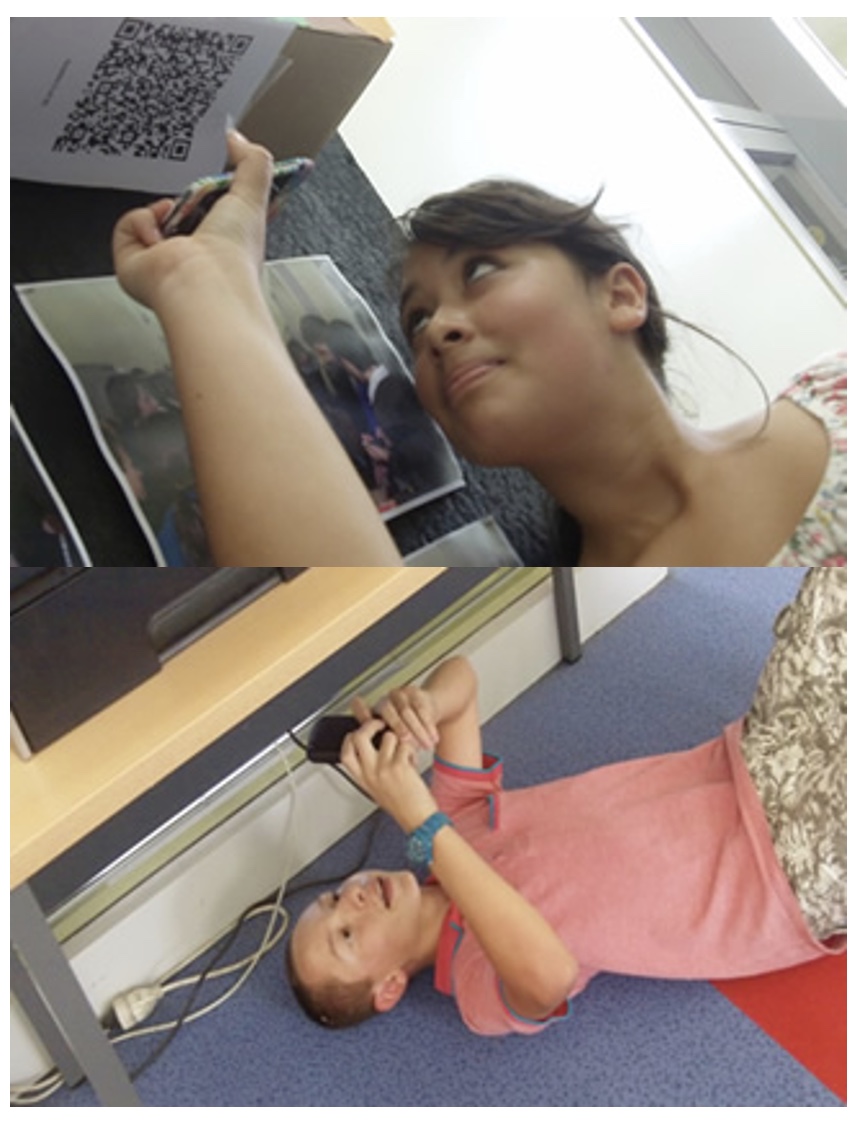
1. Arrange students into groups. Each group needs at least ONE person who has a mobile device.
2. If their phone camera doesn't automatically detect and decode QR codes, ask students to
4. Cut them out and place them around your class / school.
1. Give each group a clipboard and a piece of paper so they can write down the decoded questions and their answers to them.
2. Explain to the students that the codes are hidden around the school. Each team will get ONE point for each question they correctly decode and copy down onto their sheet, and a further TWO points if they can then provide the correct answer and write this down underneath the question.
3. Away they go! The winner is the first team to return with the most correct answers in the time available. This could be within a lesson, or during a lunchbreak, or even over several days!
4. A detailed case study in how to set up a successful QR Scavenger Hunt using this tool can be found here.
Question | Answer |
| 1. Which is the oldest set work? | Music For A While (Purcell) | 2. What does saudade mean and from which set work? | Melancholy (Samba em Preludio) | 3. Which of the following best describes the texture of Samba Em Preludio once all of the instruments have entered? | Contrapuntal/polyphonic | 4. What is the first chord of Killer Queen? | Cmin | 5. How many bars is Beethoven's introduction? | 10 | 6. The rapid 'shimmering/trembling' repetition of a note to make a magical/unsettled sound is called what? | Tremolo | 7. What does an 'accent' do to a note (Draw One!)? | Adds extra volume/dynamics/strength | 8. If a melody/motif is repeated but is higher/lower as it starts on a different note, what is this melodic device called? | Sequence | 9. What can we call a repeated pattern in music (e.g. rhythm or melody/motif)? | ostinato/riff/hook | 10. What is the opposite of pizzicato? | arco | 11. What is the musical term for a slide between notes? | Glissando | 12. What is the texture called when different parts/lines are moving at pretty much the same rhythm/same time? | Homophonic | 13. What is the 'home note' called? | Tonic | 14. The dominant chord is which number? | 5 | 15. Name the features of EDM/pop music found in 'Release'. | Sampler, drum machine, synth, reverb/FX, guitar pedals, loops | 16. What time signature can be described as 'compound-triple'? | 9/8 | 17. Describe the Unlimited Theme | Defying Gravity (expand) | 18. If a melody is said to be diatonic, which scale is it based on? | Major or minor scale | 19. What is the definition of a leitmotif? | A musical idea that represents a character, theme or mood | 20. Name two playing techniques used by the acoustic bass in Samba Em Preludio. | Harmonics, double-stopping, glissando, pull-offs and pizzicato | 21. What does the time signature change to in bar 101 of Defying Gravity? | 3/4 | 22. In Star Wars what is the name of the section that is a short ending section that is fast and drives the piece towards its climax? | Codetta | 23. Purcell uses word painting when giving "eternal" lots of notes per syllable. What is this type of text-setting called? | Melisma | 24. What word is used to describe the dynamics in Brandenburg Concerto No. 5 in D Major? | Terraced | 25. Name three celtic instruments that feature in Release. | Hurdy-gurdy, uileann pipes, tin whistle, fiddle, bodhran and accordion | 26. In Star Wars Episode IV: A New Hope, what does the tutti marking at bar 42 mean? | Everyone play | 27. In Sonata Pathetique, what is used to heighten the tension and highlight the idea of suffering? | chromaticism and dissonance | 28. In Bach's Brandenburg Concerto what is the musical term explaining when the subject is repeated in quick succession and 'on top of itself' by different players. | Stretto | 29. What mode is used in 'Release'? | Aeolian | 30. What is the name of the structure of a piece of music when a section is repeated but with different words though the melodic shape stays very similar? | Strophic | 31. Purcell uses a repeating bass line. This is a common feature of Baroque music - what is this called? | Ground Bass | 32. What is the name given the continuous bass line which plays through the entirety of Brandenburg Concerto No. 5 in D Major? | Basso Continuo | 33. Beethoven uses what type of diminished chords (which are chords made up of minor third intervals)? | Diminished 7ths | 34. What two main sections (other than the basso continuo) are in a Concerto Grosso? | Concertino and Ripieno | 35. Samba Em Preludio is a cover in what 'new' style? | Bossa nova | 36. Fill the gap: Brandenburg Concerto No. 5 in D Major starts with a monophonic passage and then becomes BLANK and fugal. | Contrapuntal | 37. Name an Italian term for a fast tempo. | Allegro, vivace, presto | 38. Bach was an impressive keyboard player and so the writing for this instrument was for an expert not beginner. What do we call this? | Virtuosic/virtuoso | 39. Freddie Mercury sings in his 'head voice' often. What is this called? | Falsetto | 40. Purcell's Music For A While is in what key mainly? | Amin | 41. Hints of two keys at once can create ambiguity, unease, conflict or other-worldly magic. What kind of tonality is this? | Bitonality | 42. A perfect cadence feels complete. What chords are used to make this happen? | 5-1 (V-I) | 43. What key does the B Section of Bach's Brandenburg Concerto No. 5 start in? | Bmin |

Question 1 (of 43)
Question 2 (of 43)
Question 3 (of 43)
Question 4 (of 43)
Question 5 (of 43)
Question 6 (of 43)
Question 7 (of 43)
Question 8 (of 43)
Question 9 (of 43)
Question 10 (of 43)
Question 11 (of 43)
Question 12 (of 43)
Question 13 (of 43)
Question 14 (of 43)
Question 15 (of 43)
Question 16 (of 43)
Question 17 (of 43)
Question 18 (of 43)
Question 19 (of 43)
Question 20 (of 43)
Question 21 (of 43)
Question 22 (of 43)
Question 23 (of 43)
Question 24 (of 43)
Question 25 (of 43)
Question 26 (of 43)
Question 27 (of 43)
Question 28 (of 43)
Question 29 (of 43)
Question 30 (of 43)
Question 31 (of 43)
Question 32 (of 43)
Question 33 (of 43)
Question 34 (of 43)
Question 35 (of 43)
Question 36 (of 43)
Question 37 (of 43)
Question 38 (of 43)
Question 39 (of 43)
Question 40 (of 43)
Question 41 (of 43)
Question 42 (of 43)
Question 43 (of 43)