
PREMIUM LOGIN
ClassTools Premium membership gives access to all templates, no advertisements, personal branding and many other benefits!
| Username: | ||
| Password: | ||
|
Submit
Cancel
|
||
| Not a member? | ||
PREMIUM LOGIN
ClassTools Premium membership gives access to all templates, no advertisements, personal branding and many other benefits!
| Username: | ||
| Password: | ||
|
Submit
Cancel
|
||
| Not a member? | ||
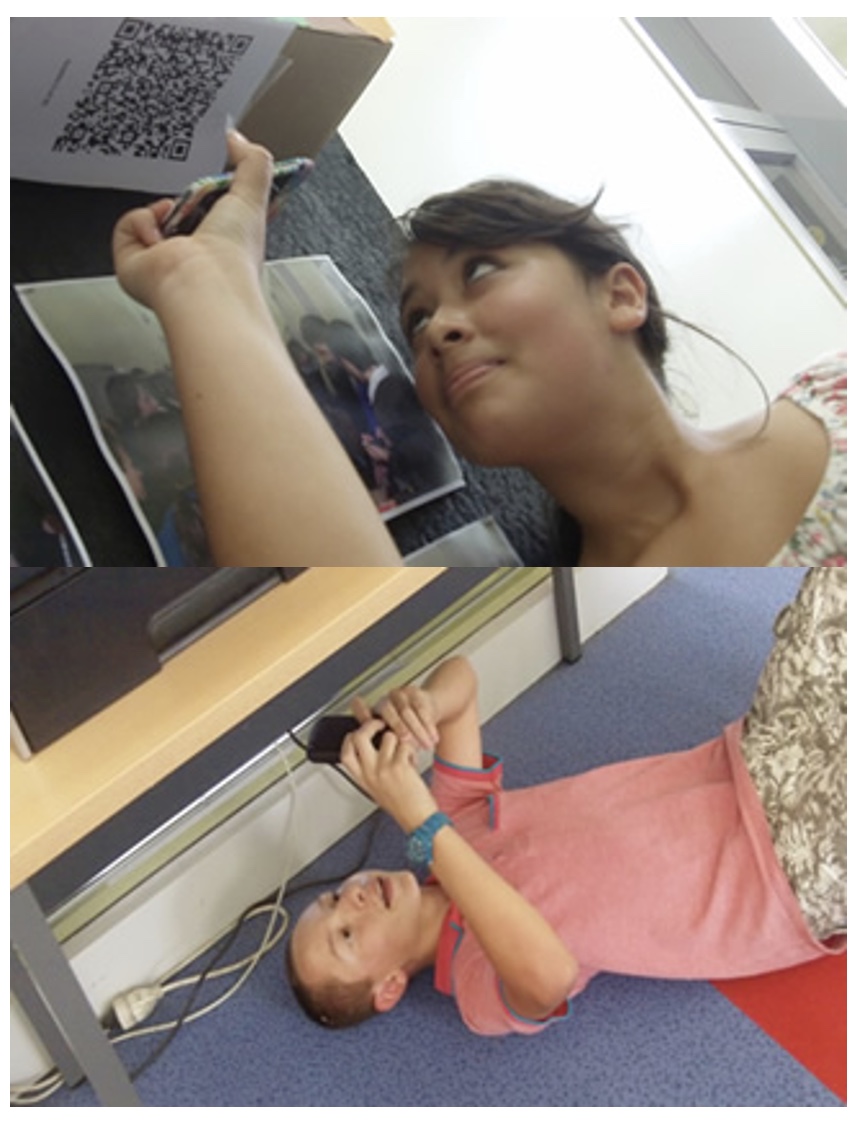
1. Arrange students into groups. Each group needs at least ONE person who has a mobile device.
2. If their phone camera doesn't automatically detect and decode QR codes, ask students to
4. Cut them out and place them around your class / school.
1. Give each group a clipboard and a piece of paper so they can write down the decoded questions and their answers to them.
2. Explain to the students that the codes are hidden around the school. Each team will get ONE point for each question they correctly decode and copy down onto their sheet, and a further TWO points if they can then provide the correct answer and write this down underneath the question.
3. Away they go! The winner is the first team to return with the most correct answers in the time available. This could be within a lesson, or during a lunchbreak, or even over several days!
4. A detailed case study in how to set up a successful QR Scavenger Hunt using this tool can be found here.
Question | Answer |
| 1. Combineer de juiste tijden met de juiste perioden: 500-1000/1000-1300/1300-1500 met: vroege, late en hoge middeleeuwen,hoge middeleeuwen. | 500-1000: vroege middeleeuwen, 1000-1300: hoge middeleeuwen, 1300-1500: late middeleeuwen | 2. Wat houdt 'Auxilium et consilium' in en in welke maatschappij was dit van toepassing? | Leenmannen/vazallen staan hun leenheer bij met raad en daad in ruil voor land. Dit is typisch voor het feodale stelsel. | 3. Waarom was het motto 'Memento mori' in de middeleeuwen? | De levensverwachting lag veel lager dan tegenwoordig: het hiernamaals was belangrijk. | 4. Waarom hebben ze zo weinig literatuur overgehouden uit de vroege en hoge middeleeuwen? | In eerste instantie werden verhalen mondeling overgeleverd en de verhalen op schrift werden vaak overgeschreven (perkament was kostbaar). | 5. Wat is een typisch kenmerk van het Diets? | Lange klinkers in woorden in plaats van de doffe -e (sjwa zoals in vogEl > vogAla). | 6. Wat is de oudst bewaarde geschreven Nederlandse zin? | 'Hebban olla vogala nestas hagunnan hinase hic anda thu, wat unbidan we nu?’ | 7. Waar, door wie en wanneer werd de boekdrukkunst uitgevonden? | 1455 (late middeleeuwen) in Mainz door Gutenberg. | 8. Hoe noemen we de eerste drukken die nog veel leken op handgeschreven stukken? | Wiegendrukken of incunabelen. |

Question 1 (of 8)
Question 2 (of 8)
Question 3 (of 8)
Question 4 (of 8)
Question 5 (of 8)
Question 6 (of 8)
Question 7 (of 8)
Question 8 (of 8)