
PREMIUM LOGIN
ClassTools Premium membership gives access to all templates, no advertisements, personal branding and many other benefits!
| Username: | ||
| Password: | ||
|
Submit
Cancel
|
||
| Not a member? | ||
PREMIUM LOGIN
ClassTools Premium membership gives access to all templates, no advertisements, personal branding and many other benefits!
| Username: | ||
| Password: | ||
|
Submit
Cancel
|
||
| Not a member? | ||
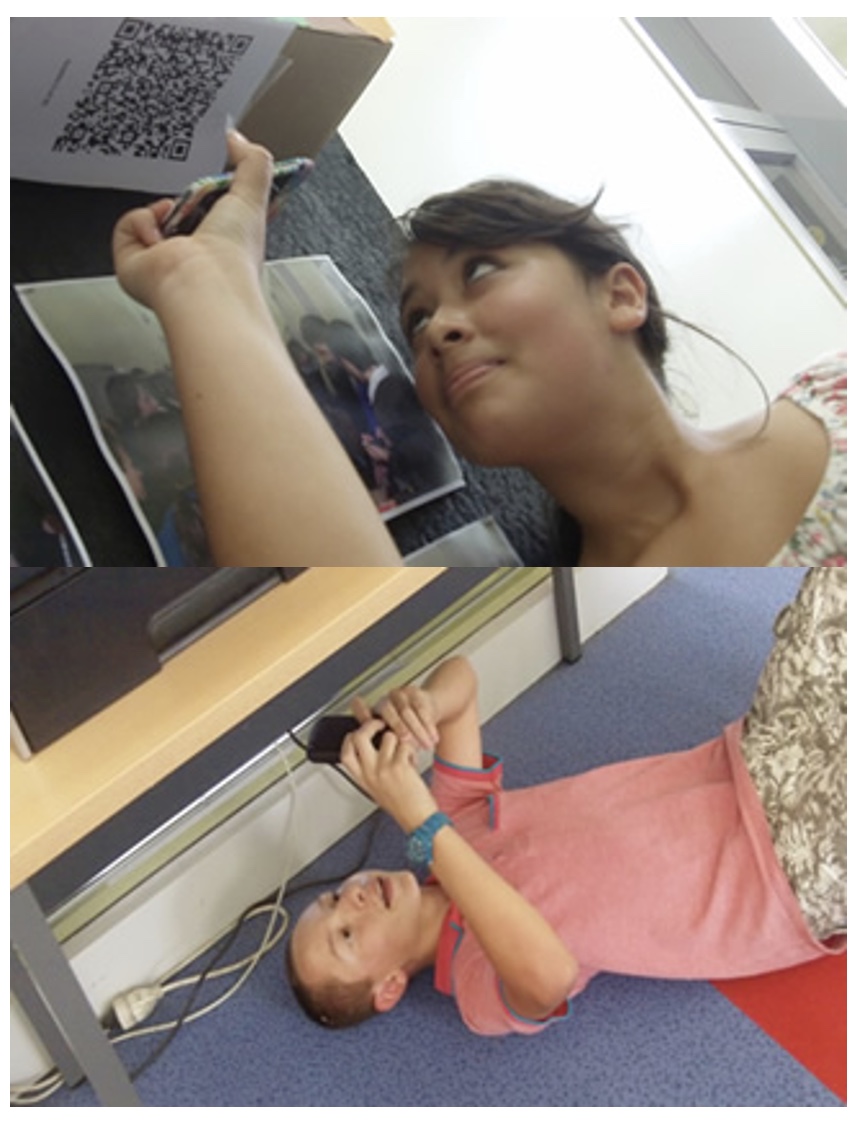
1. Arrange students into groups. Each group needs at least ONE person who has a mobile device.
2. If their phone camera doesn't automatically detect and decode QR codes, ask students to
4. Cut them out and place them around your class / school.
1. Give each group a clipboard and a piece of paper so they can write down the decoded questions and their answers to them.
2. Explain to the students that the codes are hidden around the school. Each team will get ONE point for each question they correctly decode and copy down onto their sheet, and a further TWO points if they can then provide the correct answer and write this down underneath the question.
3. Away they go! The winner is the first team to return with the most correct answers in the time available. This could be within a lesson, or during a lunchbreak, or even over several days!
4. A detailed case study in how to set up a successful QR Scavenger Hunt using this tool can be found here.
Question | Answer |
| 1. Heat can be loss from different parts of your house. In your books, create a subheading for each method and write a short description of each form of insulation. | 2. Double glazing adds an extra pane of glass. The air trapped between the two panes acts as an insulator and reduces heat loss by conduction. The insulating effect of the gap can be improved by removing the air and creating a vacuum. The problems with double glazing are that it can be expensive and that it is difficult to break in emergencies without a special hammer. | 3. Most outside walls have an empty space between the two layers of bricks called a cavity. The air trapped in the cavity acts as an insulator and reduces any heat loss due to conduction through the bricks. Heat loss can also occur due to convection within the cavity. Plastic foam insulation can be pumped into the cavity to prevent this. | 4. The heat from radiators , heats the home by convection but if not stopped will continue to rise. The heat eventually escapes through the roof and is lost due to conduction through the roof tiles. Loft insulation contains trapped air and so forms an insulating layer between the loft and the rest of the house. This helps to reduce heat loss through the roof. | 5. A lot of heat energy can be lost from a house due to draughts escaping through gaps under doors and around windows. Draught excluders are hairy or spongy strips that can be used to close the gaps around doors and windows. | 6. Warm air rises and is carried up towards the windows in a house by convection currents. This heat energy can escape through gaps around windows that are uncovered. Fitting curtains and closing them can prevent draughts leaving a house and so reduce heat loss. In addition, curtains are opaque and so radiated heat does not pass through them. | 7. Some of this heat energy is absorbed by the wall that the radiator is attached to, and so the wall heats up. Heat loss from a radiator can be reduced by placing shiny foil between the wall and the radiator. This will reflect heat back into room. |

Question 1 (of 7)
Question 2 (of 7)
Question 3 (of 7)
Question 4 (of 7)
Question 5 (of 7)
Question 6 (of 7)
Question 7 (of 7)