
PREMIUM LOGIN
ClassTools Premium membership gives access to all templates, no advertisements, personal branding and many other benefits!
| Username: | ||
| Password: | ||
|
Submit
Cancel
|
||
| Not a member? | ||
PREMIUM LOGIN
ClassTools Premium membership gives access to all templates, no advertisements, personal branding and many other benefits!
| Username: | ||
| Password: | ||
|
Submit
Cancel
|
||
| Not a member? | ||
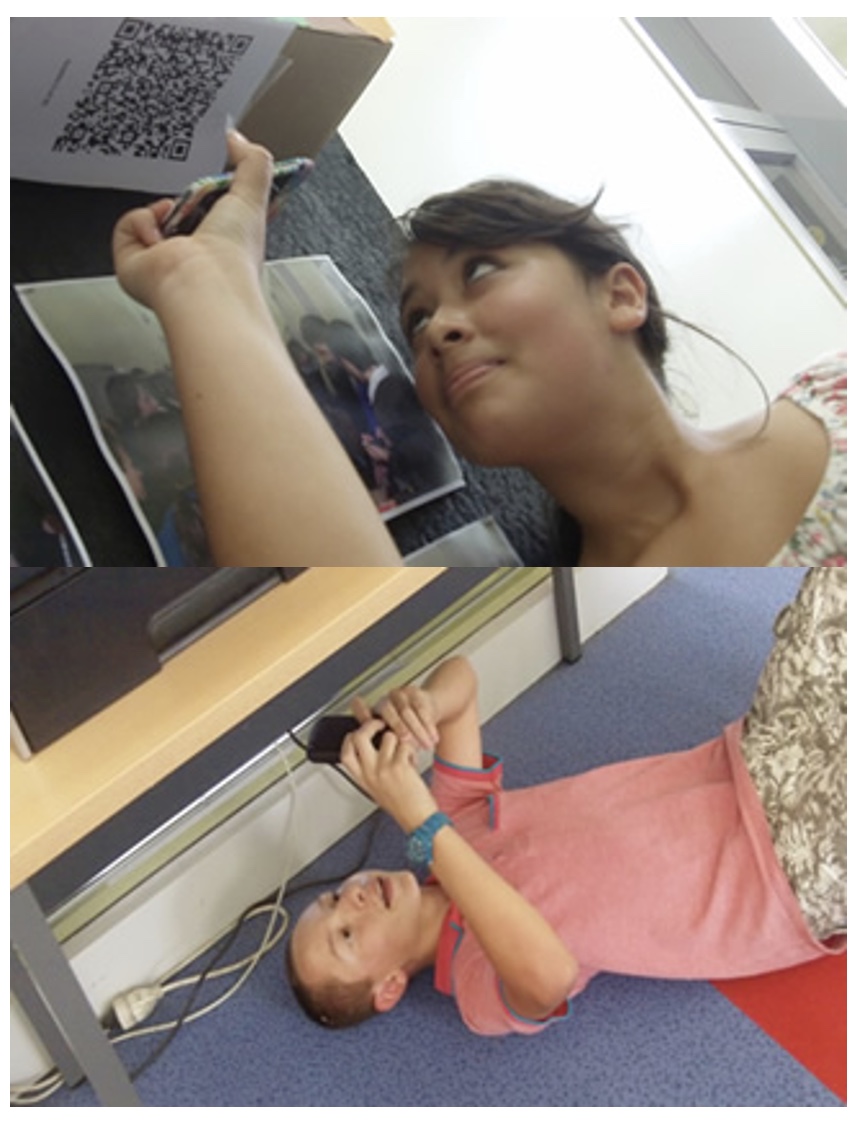
1. Arrange students into groups. Each group needs at least ONE person who has a mobile device.
2. If their phone camera doesn't automatically detect and decode QR codes, ask students to
4. Cut them out and place them around your class / school.
1. Give each group a clipboard and a piece of paper so they can write down the decoded questions and their answers to them.
2. Explain to the students that the codes are hidden around the school. Each team will get ONE point for each question they correctly decode and copy down onto their sheet, and a further TWO points if they can then provide the correct answer and write this down underneath the question.
3. Away they go! The winner is the first team to return with the most correct answers in the time available. This could be within a lesson, or during a lunchbreak, or even over several days!
4. A detailed case study in how to set up a successful QR Scavenger Hunt using this tool can be found here.
Question | Answer |
| 1. A way to organize your writing by putting main ideas and supporting ideas into categories | outline | 2. The last attempt at writing after all corrections and rewrites have been made | final draft | 3. At the beginning of each new paragraph, a gap of five spaces used to designate a new idea | indent | 4. The part of the topic sentence that limits the topic | controlling idea | 5. Things you do to prepare to write, such as thinking, talking, interviewing, and brainstorming | pre-writing | 6. A quick and often timed writing to get as many words as possible on paper | free writing | 7. Reasons, examples, and details that explain the main idea of a paragraph | support | 8. A way to generate ideas quickly and spontaneously | brainstorming | 9. A record of thought, ideas, and feelings (like a diary) | journal | 10. The first sentence of a paragraph that gives the main idea | topic sentence | 11. A kind of brainstorming technique that uses connecting circles to group ideas together | mind map | 12. Making changes to a first draft of writing; rewriting | revising | 13. The first attempt at writing | first draft | 14. Words that connect sentences, such as first, in conclusion, or however | transition words | 15. Students exchange papers and give suggestions to each other about their writing | peer editing |

Question 1 (of 15)
Question 2 (of 15)
Question 3 (of 15)
Question 4 (of 15)
Question 5 (of 15)
Question 6 (of 15)
Question 7 (of 15)
Question 8 (of 15)
Question 9 (of 15)
Question 10 (of 15)
Question 11 (of 15)
Question 12 (of 15)
Question 13 (of 15)
Question 14 (of 15)
Question 15 (of 15)