
PREMIUM LOGIN
ClassTools Premium membership gives access to all templates, no advertisements, personal branding and many other benefits!
| Username: | ||
| Password: | ||
|
Submit
Cancel
|
||
| Not a member? | ||
PREMIUM LOGIN
ClassTools Premium membership gives access to all templates, no advertisements, personal branding and many other benefits!
| Username: | ||
| Password: | ||
|
Submit
Cancel
|
||
| Not a member? | ||
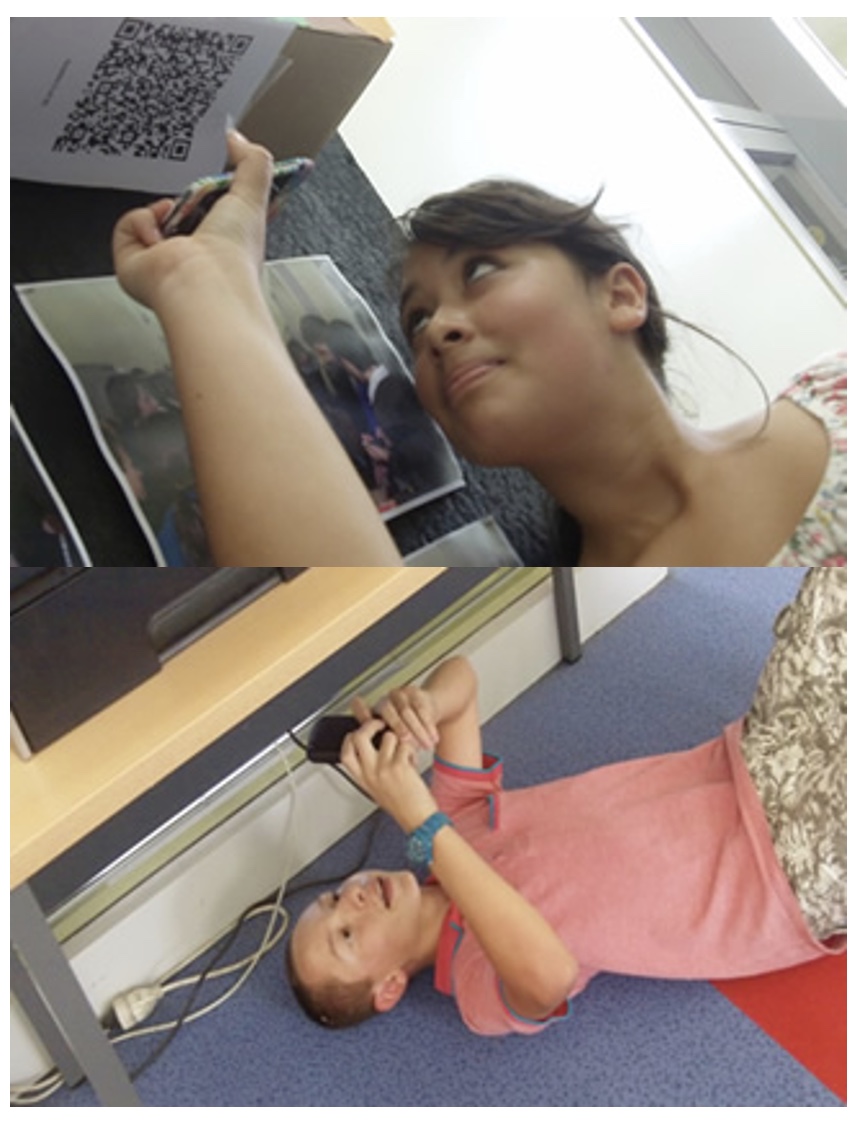
1. Arrange students into groups. Each group needs at least ONE person who has a mobile device.
2. If their phone camera doesn't automatically detect and decode QR codes, ask students to
4. Cut them out and place them around your class / school.
1. Give each group a clipboard and a piece of paper so they can write down the decoded questions and their answers to them.
2. Explain to the students that the codes are hidden around the school. Each team will get ONE point for each question they correctly decode and copy down onto their sheet, and a further TWO points if they can then provide the correct answer and write this down underneath the question.
3. Away they go! The winner is the first team to return with the most correct answers in the time available. This could be within a lesson, or during a lunchbreak, or even over several days!
4. A detailed case study in how to set up a successful QR Scavenger Hunt using this tool can be found here.
Question | Answer |
| 1. 1.the oldest permanent settlement in the U.S. It was founded by the Spanish in 1565. | St. Augustine | 2. 2.also called the Lost Colony was the first English settlement established by Sir Walter Raleigh | Roanoke | 3. 3.was the first permanent (aka successful) English settlement. Founded in 1607. | Jamestown | 4. 4.5 people are killed here by British soldiers (including Crispus Attucks, an African American) and colonists will destroy British tea in the harbor here because of an unfair tax on tea. | Boston (in the Boston Massacre) | 5. 5.were nicknames for shanytowns or homeless slum areas during the 1930s. | Hoovervilles | 6. 6.shots of the Revolutionary War were fired at ___________________ , Massachusetts as the British troops were on their way to seize the arsenal at ___________where shots were fired again. | Lexington, Concord | 7. 7.Kansas-Nebraska Act- two territories where the issue of whether or not slavery would be allowed would be decided by popular sovereignty. This led to “_______________________________” clashes between pro-slavery forces and abolitionist groups over slavery. John Brown was a key figure. | Bleeding Kansas | 8. 8.In 1819, _______________________ becomes a state. | Alabama | 9. 9.The Confederate capital was later moved from Montgomery, Alabama to _______, ___________ to be closer to the fighting. | Richmond, Virginia | 10. 10.area of black fertile soil in Alabama excellent for growing cotton | Black Belt | 11. 11.In 1898 the U.S. Marines took ______. Queen Liliuokalani and her people were no match for the U.S. desire to control their sugar plantations and to set up a naval base and coaling station. | Hawaii | 12. 12.attacked by the Japanese on December 7, 1941. FDR called it a “date which will live in infamy” | Pearl Harbor | 13. 13.film capital of the U.S. starting in the 1920’s. | Hollywood | 14. 14.September 1, 1939 Germany invaded ______________ to officially started World War II. | Poland | 15. 15.First atomic bomb was dropped on ___________________, Japan. Second bomb dropped on _______________________________, Japan. | Hiroshima,Nagasaki | 16. 16.were land set aside for Native Americans who were relocated to Oklahoma during the 1800s. | Reservations | 17. 17.was the iron and steel center of Alabama- produced weapons for World War I | Birmingham | 18. 18.Thomas Jefferson authorized the purchase of this land in 1803 from France/Napoleon. | Louisiana Territory or Louisiana Purchase | 19. 19.seceded from Alabama when Alabama seceded from the Union at the outbreak of the Civil War in 1861. | Winston County (called themselves the Free State of Winston) | 20. 20.site in Virginia where Robert E. Lee (South) surrendered to U.S. Grant (North) ending the Civil War. | Appomattox Courthouse | 21. 21.Union General William Tecumseh Sherman- burned ______________ on way to Savannah (March to Sea) during the Civil War. | Atlanta (an important RR hub) | 22. 22.a passageway that connects Atlantic and Pacific Oceans. It was begun during Theodore Roosevelt’s presidency | Panama Canal | 23. 23. a perfect community where religious groups like the Quakers, Shakers, Amish, and Mennonites tried to achieve religious harmony. | Utopia or Utopian community | 24. 24. war crimes trials against Nazis were here for the slaughter of Jews during the Holocaust. | Nuremberg, Germany | 25. 25.A small strip of land purchased by the U.S. from Mexico to build the Southern Pacific Railroad through. | Gadsden Purchase | 26. 26.First shots of the Civil War were fired at this federal property | Ft. Sumter (Charleston, South Carolina) | 27. 27. Gold was discovered at ______________in California in 1848. | Sutter\'s Mill or Sutter\'s Fort | 28. 28. meeting place of the 1st and 2nd Continental Congresses and the Constitutional Convention. | Philadelphia | 29. 29. Montgomery, Alabama is called the birthplace or \"cradle\" of the Confederacy because | it was organized here | 30. 30. Famous Supreme Court judge whose rulings made the Supreme Court very powerful. (Marbury V. Madison – Judicial Review) | John Marshall | 31. 31.Jim Crow Laws were segregation laws in the South that were legalized in the 1896 case of ___________vs. _______________________ (SEPARATE BUT EQUAL) | Plessy v. Ferguson | 32. 32. McCullough vs. Maryland established the supremacy of the ____________________ gov’t. | national or federal government | 33. 33.Supreme Court ruled slaves are property- not people. Roger B. Taney-Chief Justice. | Dred Scott | 34. 34. Spanish conquerors searching for the 3 G’s (gold, glory, God/gospel). Pizarro- Incas. Cortez- Aztecs | Conquistadors | 35. 35. Established a colony at Plymouth, group England, then Holland, seeking religious freedom in the New World | Pilgrims | 36. 36. Militiamen trained to be ready at a moment’s notice to defend the colonies. | Minutemen | 37. 37. A revolutionary group headed by Samuel Adams. They led the Boston Tea Party. | Sons of Liberty | 38. 38. those who supported the Constitution | Federalists | 39. 39.Southerners who worked with the Radical Republicans during Reconstruction. They were viewed by Southerners as traitors. | Scalawags | 40. 40.The first farm organization. Farmers formed cooperatives and pooled resources and worked together for better shipping rates from the RRs. | The Grange | 41. 41.Journalists who wrote about and exposed the evils of industrialization/urbanization at the beginning of the Progressive Era. | Muckrakers | 42. 42.Originally formed during Reconstruction, the newly formed group in the 1920s targeted blacks, immigrants, and Catholics. | Ku Klux Klan | 43. 43.Women in the 1920’s who broke with tradition and wore cosmetics, smoked, wore new (shorter) fashions, and danced the new dances (Charleston) | Flappers | 44. 44.Opposed passage of the Constitution (until they were promised a Bill of Rights protecting citizens from the government would be added.) | Anti-Federalists | 45. 45.Great Britain, France, Soviet Union, United States belonged to which alliance in WWII? | Allies or Allied Powers in WWII | 46. 46. Axis Powers in WWII | Germany, Italy, Japan | 47. 47. Black combat pilots who were trained in Alabama during WWII. Highly decorated unit. (1st group of black pilots) | Tuskegee Airmen | 48. 48. Insects that destroyed cotton forcing the Alabama farmers to diversify/grow different crops. | Boll weevil | 49. 49.Midwestern, Great Plains farmers whose land “blew” away because of drought and wind erosion in the 1930’s. | Okies | 50. 50.A group in the Senate led by Thaddeus Stevens and Charles Sumner that wanted to punish the South after the Civil War. | Radical Republicans | 51. 51.Native Americans depended on these for food, clothing, and shelter on the Great Plains and the American West. | Buffalo | 52. 52. First 10 amendments to the Constitution- was at the insistence of the anti-federalists. They would not ratify the document until this was added | Bill of Rights | 53. 53.The Election of 1876 led to the THIS where the Republican Rutherford B. Hayes is allowed to claim the presidency in return for the promise to end Reconstruction. He defeated Samuel J. Tilden. | Compromise of 1877 | 54. 54. He known as the Great Compromiser- authored the Missouri Compromise and Compromise of 1850. | Henry Clay |

Question 1 (of 54)
Question 2 (of 54)
Question 3 (of 54)
Question 4 (of 54)
Question 5 (of 54)
Question 6 (of 54)
Question 7 (of 54)
Question 8 (of 54)
Question 9 (of 54)
Question 10 (of 54)
Question 11 (of 54)
Question 12 (of 54)
Question 13 (of 54)
Question 14 (of 54)
Question 15 (of 54)
Question 16 (of 54)
Question 17 (of 54)
Question 18 (of 54)
Question 19 (of 54)
Question 20 (of 54)
Question 21 (of 54)
Question 22 (of 54)
Question 23 (of 54)
Question 24 (of 54)
Question 25 (of 54)
Question 26 (of 54)
Question 27 (of 54)
Question 28 (of 54)
Question 29 (of 54)
Question 30 (of 54)
Question 31 (of 54)
Question 32 (of 54)
Question 33 (of 54)
Question 34 (of 54)
Question 35 (of 54)
Question 36 (of 54)
Question 37 (of 54)
Question 38 (of 54)
Question 39 (of 54)
Question 40 (of 54)
Question 41 (of 54)
Question 42 (of 54)
Question 43 (of 54)
Question 44 (of 54)
Question 45 (of 54)
Question 46 (of 54)
Question 47 (of 54)
Question 48 (of 54)
Question 49 (of 54)
Question 50 (of 54)
Question 51 (of 54)
Question 52 (of 54)
Question 53 (of 54)
Question 54 (of 54)