
PREMIUM LOGIN
ClassTools Premium membership gives access to all templates, no advertisements, personal branding and many other benefits!
| Username: | ||
| Password: | ||
|
Submit
Cancel
|
||
| Not a member? | ||
PREMIUM LOGIN
ClassTools Premium membership gives access to all templates, no advertisements, personal branding and many other benefits!
| Username: | ||
| Password: | ||
|
Submit
Cancel
|
||
| Not a member? | ||
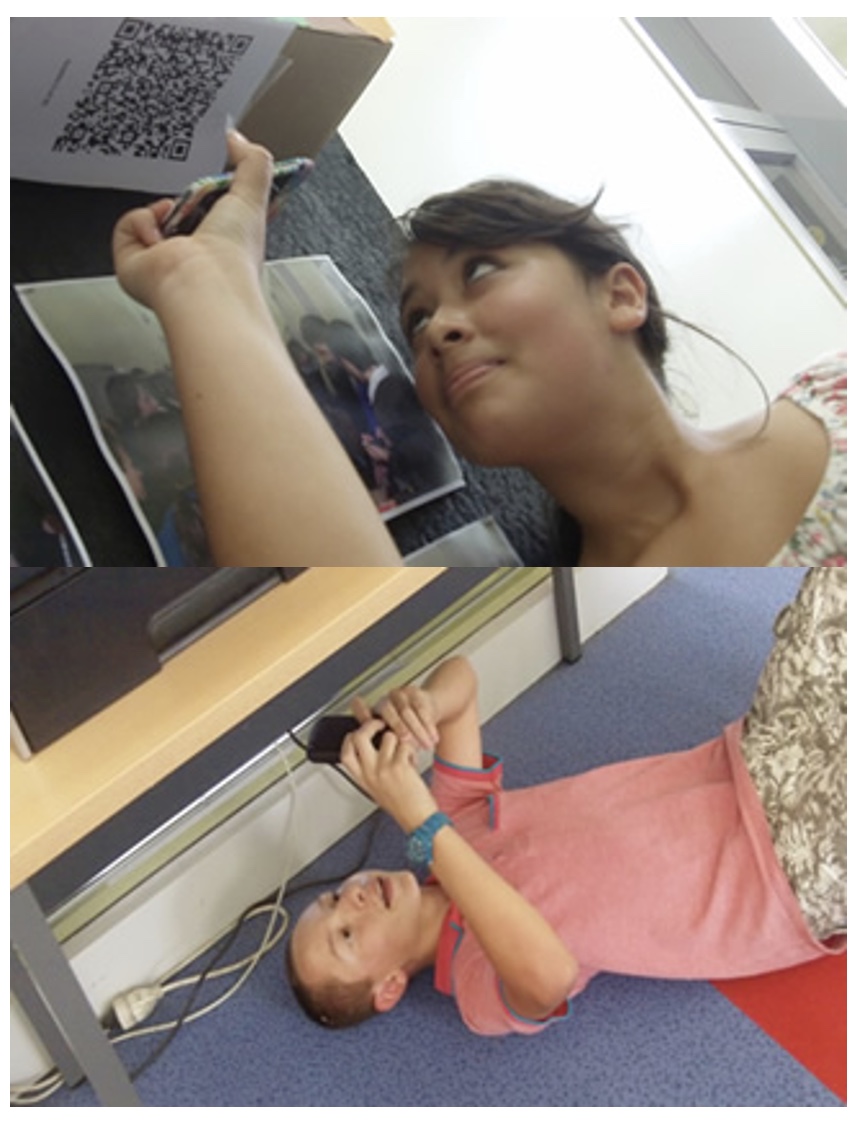
1. Arrange students into groups. Each group needs at least ONE person who has a mobile device.
2. If their phone camera doesn't automatically detect and decode QR codes, ask students to
4. Cut them out and place them around your class / school.
1. Give each group a clipboard and a piece of paper so they can write down the decoded questions and their answers to them.
2. Explain to the students that the codes are hidden around the school. Each team will get ONE point for each question they correctly decode and copy down onto their sheet, and a further TWO points if they can then provide the correct answer and write this down underneath the question.
3. Away they go! The winner is the first team to return with the most correct answers in the time available. This could be within a lesson, or during a lunchbreak, or even over several days!
4. A detailed case study in how to set up a successful QR Scavenger Hunt using this tool can be found here.
Question | Answer |
| 1. Pelvic Fin-paired fins that help with up and down movement | 1 | 2. caudal fin-fin provides the initial push for the trout to start moving and acts as a rudder for steering through the water, biggest most powerful fin | 2 | 3. Pectoral fin-paired fins that act as brakes and help with side to side and gliding movement in fast currents | 3 | 4. lateral line-a sensory organ that runs from the operculum to the caudal fin. it detects pressure waves or vibrations. It helps the trout maintain its position without bumping into other fish or objects in the water. It can even detect when someone is stepping on the bank or a log on shore | 4 | 5. eyes-a sensory organ used for sight. the pupils are slightly triangular instead of circular, allowing for a larger field of vision. Trout can see clearly in front of them. Above and slightly behind them the images are not as clear. In addition, the eyes have large pupils which allow for available light to be admitted | 5 | 6. Gills-A respiratory organ used to breathe. trout draw in water through their mouths, this passes through their gills where blood vessels exchange CO2 for Oxygen | 6 | 7. dorsal fin-single fin used for swimming and stabilization | 7 | 8. Vent-this opening is where water is excreted as waste. It is also the opening through which eggs or sperm (milt) pass through during spawning | 8 | 9. Adipose fin- this small fin keeps the water running alongside the fish rather than crossing over its back. Like the dorsal fin it is used for swimming and stabilization. The word adipose means that it is a fatty fin without rays | 9 | 10. Nares-a sensory organ used to smell. The nares are closed sacs and function as a nostril, helping the trout to detect odors. Trout return to their home stream yearly to spawn. They can identify their home stream by the smell of the water. | 10 | 11. Mouth-A sensory organ to taste and eat. The trout will take a lot of things into its mouth to see if it is worth eating. It closes its mouth to crush it. If it feels good and the juices taste good, it will reposition it in its mouth and swallow it whole. If it does not like what it tastes, it will spit it out. It is also used to feel things. | 11 | 12. Operculum-a hard plate that protects the gills | 12 | 13. anal fin-located behind the vent. This fin is used for swimming and stabilization | 13 |

Question 1 (of 13)
Question 2 (of 13)
Question 3 (of 13)
Question 4 (of 13)
Question 5 (of 13)
Question 6 (of 13)
Question 7 (of 13)
Question 8 (of 13)
Question 9 (of 13)
Question 10 (of 13)
Question 11 (of 13)
Question 12 (of 13)
Question 13 (of 13)