
PREMIUM LOGIN
ClassTools Premium membership gives access to all templates, no advertisements, personal branding and many other benefits!
| Username: | ||
| Password: | ||
|
Submit
Cancel
|
||
| Not a member? | ||
PREMIUM LOGIN
ClassTools Premium membership gives access to all templates, no advertisements, personal branding and many other benefits!
| Username: | ||
| Password: | ||
|
Submit
Cancel
|
||
| Not a member? | ||
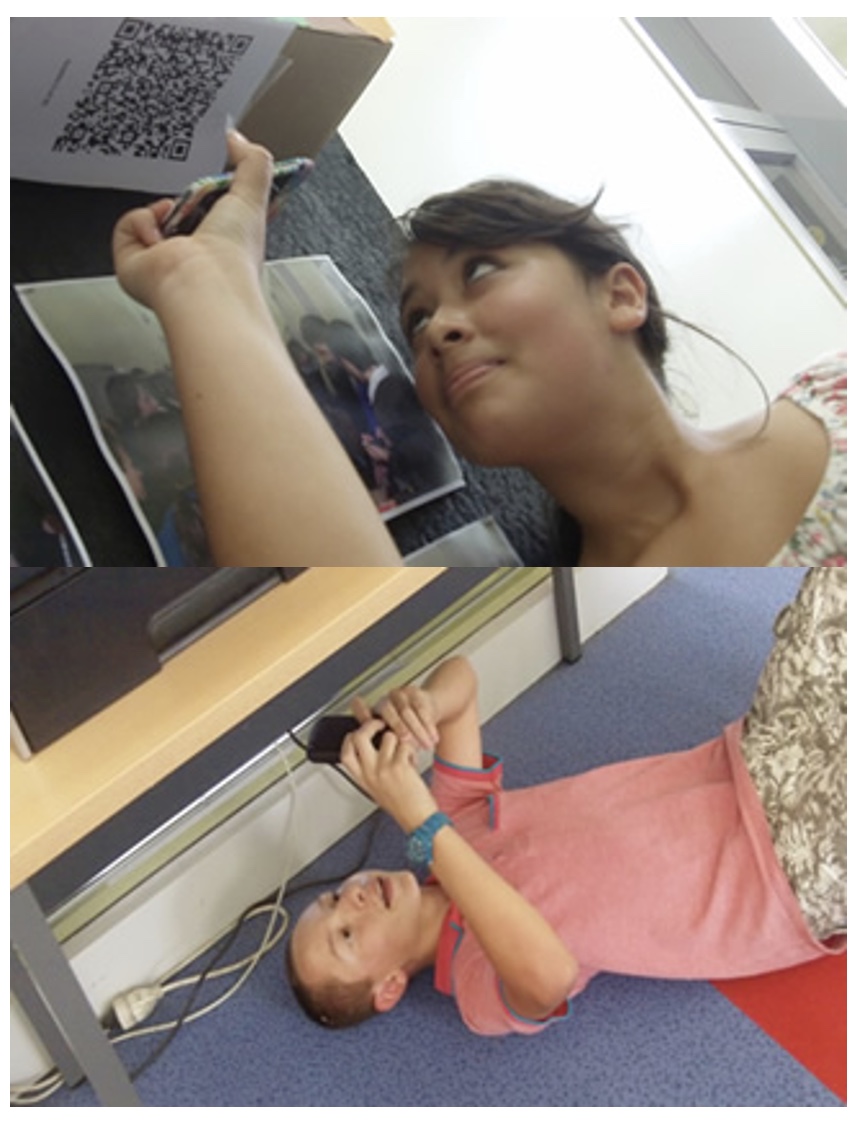
1. Arrange students into groups. Each group needs at least ONE person who has a mobile device.
2. If their phone camera doesn't automatically detect and decode QR codes, ask students to
4. Cut them out and place them around your class / school.
1. Give each group a clipboard and a piece of paper so they can write down the decoded questions and their answers to them.
2. Explain to the students that the codes are hidden around the school. Each team will get ONE point for each question they correctly decode and copy down onto their sheet, and a further TWO points if they can then provide the correct answer and write this down underneath the question.
3. Away they go! The winner is the first team to return with the most correct answers in the time available. This could be within a lesson, or during a lunchbreak, or even over several days!
4. A detailed case study in how to set up a successful QR Scavenger Hunt using this tool can be found here.
Question | Answer |
| 1. 1.What 2 identifiers are used in Patient identification for a pre-op patient? | Patient's full name and date of birth | 2. 2. According to joint commission, who does the "time out"? | The Circulating RN | 3. 3. What position should the patient stretcher be in for maximum patient safety? | Lowest position with side rails up X 2 | 4. 4. Why are operative patients at an increased risk for falls? | Medications that cause sedation | 5. 5. Why is it important to mark the operative site, and can the nurse mark it for the surgeon if he tells her its ok? | To prevent wrong site operations, this is done before the patient receives ANY sedation and before the patient is taken into the operating suite. | 6. 6. What would the risk be to a patient if they have retained body piercings left in place? | The risk of injury if piercings are pulled during the procedure, and the risk of burns to the patient from the metal. | 7. 7. Once the patient get to the holding suite, can the consent be changed if the patient wants to add to the procedure? | Not without physician consent. | 8. 8. Once the patient gets up to the holding suite, they can/cannot decide to defer treatment. Why? | The patient has the right to defer treatment at any time, if this is a life threatening condition and informed consent has been provided, a judge and the physician can sign and the procedure will be performed. | 9. 9. If your patient does not speak English, you can assume that the consent is accurate, because they wouldn't be there if they didn't understand. Is this an accurate statement, explain your response. | An interpreter must be present, unless there is a family member that can interpret. | 10. 10. Does a DNR order stand in the OR? | NO |

Question 1 (of 10)
Question 2 (of 10)
Question 3 (of 10)
Question 4 (of 10)
Question 5 (of 10)
Question 6 (of 10)
Question 7 (of 10)
Question 8 (of 10)
Question 9 (of 10)
Question 10 (of 10)