
PREMIUM LOGIN
ClassTools Premium membership gives access to all templates, no advertisements, personal branding and many other benefits!
| Username: | ||
| Password: | ||
|
Submit
Cancel
|
||
| Not a member? | ||
PREMIUM LOGIN
ClassTools Premium membership gives access to all templates, no advertisements, personal branding and many other benefits!
| Username: | ||
| Password: | ||
|
Submit
Cancel
|
||
| Not a member? | ||
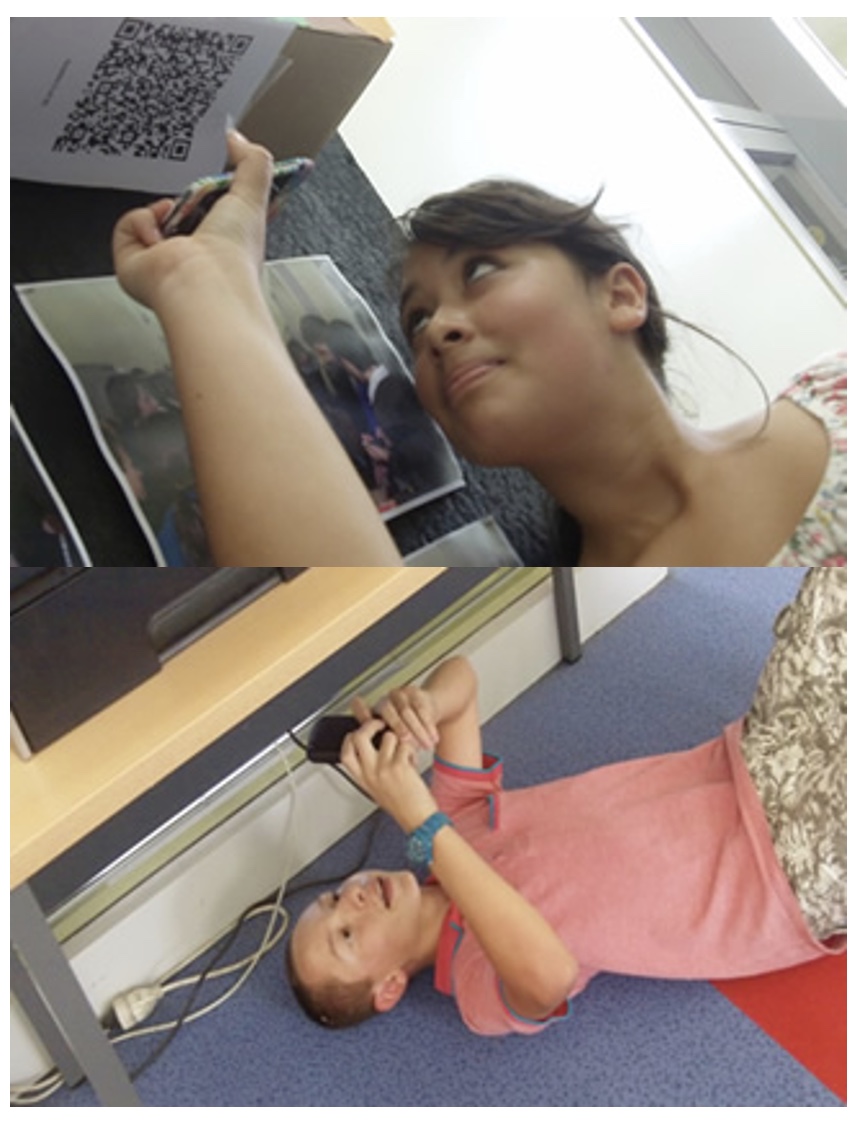
1. Arrange students into groups. Each group needs at least ONE person who has a mobile device.
2. If their phone camera doesn't automatically detect and decode QR codes, ask students to
4. Cut them out and place them around your class / school.
1. Give each group a clipboard and a piece of paper so they can write down the decoded questions and their answers to them.
2. Explain to the students that the codes are hidden around the school. Each team will get ONE point for each question they correctly decode and copy down onto their sheet, and a further TWO points if they can then provide the correct answer and write this down underneath the question.
3. Away they go! The winner is the first team to return with the most correct answers in the time available. This could be within a lesson, or during a lunchbreak, or even over several days!
4. A detailed case study in how to set up a successful QR Scavenger Hunt using this tool can be found here.
Question | Answer |
| 1. Question A tree is a tall plant with a trunk and branches made out of wood. It can live for many years. The four main parts of a tree are the roots, the trunk, the branches and the leavers. | 2. Question2 A greenhouse is a building where plants such as flowers and vegetables are grown. It usually has a glass or clear plastic roof. Many greenhouses also have glass or plastic walls. Greenhouses get hot during the day. The sun's heat warms the plants and soil inside the greenhouse and they stay warm through the night, because the heat cannot escape. Many vegetables and flowers are grown in greenhouses in late winter and early spring, when it is still too cold to grow plants outside. Then these plants can be moved to the soil outside as the weather warms up or continue to be grown in the greenhouse e.g tomatoes. | 3. Question3 Compost is a type of fertilizer that is made from rotting plants. It is easy and cheap to make, as all it really requires is vegetable waste. The vegetable waste is broken down by bacteria (germs) and worms. The worms do the hard work. They can live their whole lives in the dark and love the moist atmosphere of a compost heap, eating the waste material and converting it into compost. Good things to compost are vegetable peelings, fruit waste, teabags, plant prunings and grass cuttings. These are fast to break down. It’s also good to include things such as cardboard egg boxes, scrunched up paper and fallen leaves. | 4. Question4 They produce seeds and fruit for us to eat and nectar so that bees can produce honey. The colour and perfume of flowers have cheered up people for many years. | 5. Question5 Earthworms live in dark damp soil. They live in vegetable peel. They also live in meadows and dead plants. Earthworms live in gardens. They live under rocks. Earthworms live in wet woods. They also live in damp grass. | 6. Question6 The best-known method spiders use to capture prey is a sticky web. The placement of the web allows different spiders to trap different insects in the same area. | 7. Question7 Snails are found all over the world. Land snails live in damp habitats. They live in caves and dark places. Snails can be found in dark places such as in a garden under plants. | 8. Question8 A woodlouse is a small land arthropod (jointed-legged animal). They have fourteen legs and breathe through gills,because of the gills, woodlice need water in the air around them. They mostly eat dead plants, and are considered helpful, because they act as "rubbish collectors." Some species can roll up into a ball when in danger. In such position, their hard shell faces out, protecting the softer parts of the body. | 9. Question9 Slugs eat plants. Slugs can generally be found munching on garden plants during the night, they are a hazard to any garden despite their unassuming appearance. Ripe strawberries are a favorite meal for slugs. In addition to the strawberries, they like many kinds of plants, including corn, lettuce, beans, and flowers of all kinds. | 10. Question10 A shrub or bush is a category of plants. A tree usually has one stem, which at some height has branches. A shrub can have multiple stems from the bottom up. Usually, bushes do not grow as tall as trees, very often they are less than 10–12 m tall. | 11. Question11Ponds are a fascinating habitat, containing a large number of different plants and animals. The invertebrates found vary from large airborne insects like dragonflies, down to small slimy flatworms. Ponds are smaller than lakes, but are still capable of nurturing plenty of life forms. Apart from pond plants and weeds, we can also find various types of bacteria and microscopic creatures, fish, insects, amphibians (such as toads or frogs), birds, reptiles (cold-blooded animals) and mammals (warm-blooded animals). Did you know that there can be 1,000 or more different types of animal species living in a pond? |

Question 1 (of 11)
Question 2 (of 11)
Question 3 (of 11)
Question 4 (of 11)
Question 5 (of 11)
Question 6 (of 11)
Question 7 (of 11)
Question 8 (of 11)
Question 9 (of 11)
Question 10 (of 11)
Question 11 (of 11)