
PREMIUM LOGIN
ClassTools Premium membership gives access to all templates, no advertisements, personal branding and many other benefits!
| Username: | ||
| Password: | ||
|
Submit
Cancel
|
||
| Not a member? | ||
PREMIUM LOGIN
ClassTools Premium membership gives access to all templates, no advertisements, personal branding and many other benefits!
| Username: | ||
| Password: | ||
|
Submit
Cancel
|
||
| Not a member? | ||
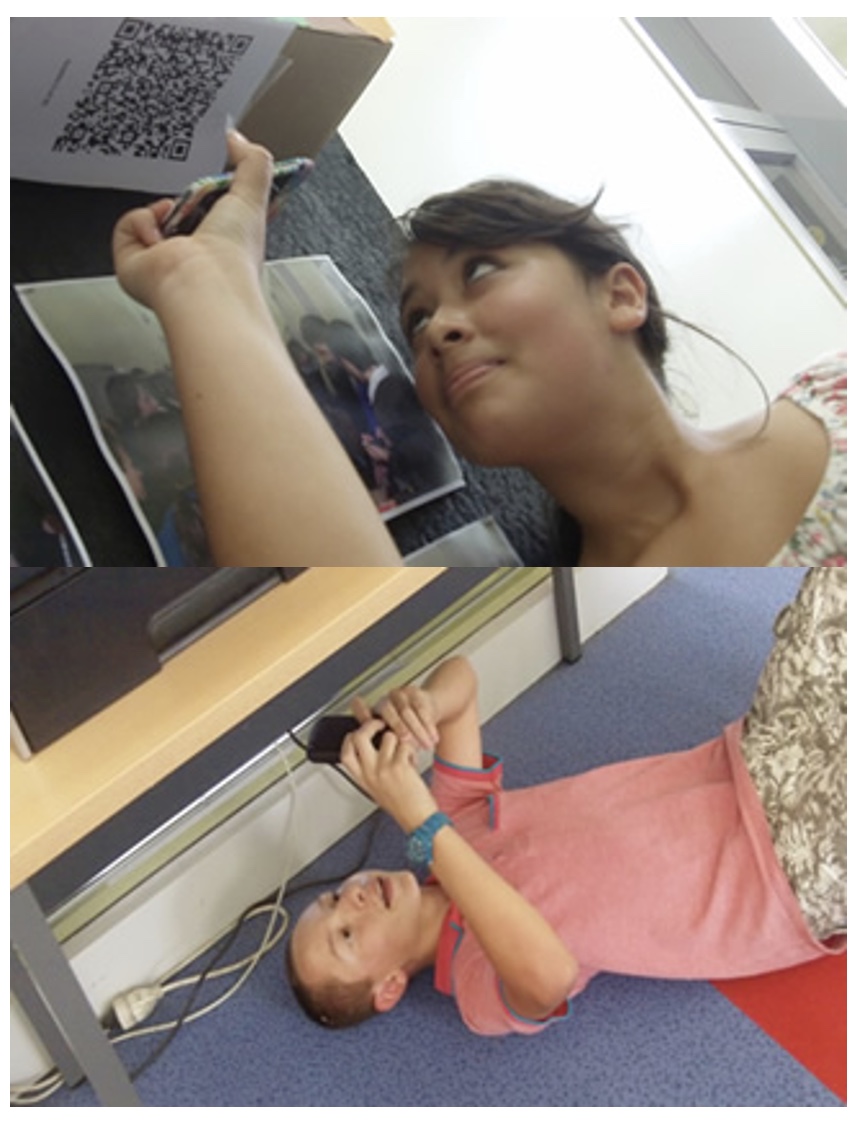
1. Arrange students into groups. Each group needs at least ONE person who has a mobile device.
2. If their phone camera doesn't automatically detect and decode QR codes, ask students to
4. Cut them out and place them around your class / school.
1. Give each group a clipboard and a piece of paper so they can write down the decoded questions and their answers to them.
2. Explain to the students that the codes are hidden around the school. Each team will get ONE point for each question they correctly decode and copy down onto their sheet, and a further TWO points if they can then provide the correct answer and write this down underneath the question.
3. Away they go! The winner is the first team to return with the most correct answers in the time available. This could be within a lesson, or during a lunchbreak, or even over several days!
4. A detailed case study in how to set up a successful QR Scavenger Hunt using this tool can be found here.
Question | Answer |
| 1. a plan of government | constitution | 2. Law that divided the northwest territory into townships and demanded that one section of land in each township be set aside for a public school | Land Ordinance of 1785 | 3. Law passed by Confederation Congress to set up government and prohibit slavery in the Northwest Territory | Northwest Ordinance | 4. The location of the Constitutional Convention, located in Philadelphia, Pa. | Independence Hall | 5. The meeting of state delegates in 1787 in Philadelphia called to revise the Articles of Confederation. It instead designed a new plan of government, the US Constitution. | Constitutional Convention | 6. The first constitution of the United States | Articles of Confederation | 7. held the most power under the Articles of Confederation | states | 8. number of votes each state had under the Articles of Confederation | one | 9. won a war against Britain, signed the Treaty of Paris, signed Northwest Ordinance | achievements of the Articles of Confederation | 10. congress had no power to tax, congress had no power to enforce laws, there was no executive branch, 9 out 0f 13 states had to approve of the law before being passed, congress could not enforce the states to meet military quotas, could not regulate trading, also there was a unanimous vote of the 13 states | weaknesses of Articles | 11. Leader of over 1,000 Massachusetts farmers in an uprising after the state seized and sold their farms for non-payment of taxes. | Daniel Shays | 12. a 1786 rebellion in which an army of 1,500 disgruntled and angry farmers led by Daniel Shays marched to Springfield, Massachusetts, and forcibly restrained the state court from foreclosing mortgages on their farms | Shay's Rebellion | 13. delegates realized that the Articles of Confederation were too weak to prevent an uprising like this, made constitution with a stronger central government. | effect of Shay's Rebellion | 14. The meeting of state delegates in 1787 in Philadelphia called to revise the Articles of Confederation. It instead designed a new plan of government, the US Constitution. | Constitutional Convention | 15. President of the Constitutional Convention | George Washington | 16. known as the "Father of the Constitution" | James Madison | 17. plan at the constitutional convention that called for a strong national government with three branches and a two-chamber legislature with representation based on population | Virginia Plan | 18. Proposal at the Constitutional Convention made by William Paterson of New Jersey for a central government with a single-house legislature in which each state would be represented equally. | New Jersey Plan | 19. Compromise in which states would have equal representation in one house of the legislature and representation based on population in the other house | Great Compromise | 20. wrote the Great Compromise | Roger Sherman | 21. Plan stating that each slave would count for 3/5 of a person for taxation and representation purposes | 3/5 Compromise | 22. to approve | ratify | 23. branch of government that enforces the laws | executive branch | 24. branch of government that interprets the laws | judicial branch | 25. only branch of government under the Articles of Confederation | legislative branch | 26. what most state constitutions had that the original United States Constitution did not | bill of rights | 27. Period after the American Revolution when the US was in a depression, deep in dept, and where the states held all the power. | Critical Period | 28. Final state to ratify the Constitution | Rhode Island | 29. 9th state to ratify the Constitution | New Hampshire | 30. 1st state to ratify the Constitution | Delaware | 31. how many states was required to ratify the Constitution in order for it to take effect | 9 | 32. those that supported a strong national government were called this | Federalists | 33. City the Constitutional Convention was held | Philadelphia | 34. After the American Revolution Americans wanted the power of government to be held by these | states | 35. We, the people, means that the Constitution gets its power from the _____ | citizens | 36. This was created so that the common man did not directly elect the President | electoral college |

Question 1 (of 36)
Question 2 (of 36)
Question 3 (of 36)
Question 4 (of 36)
Question 5 (of 36)
Question 6 (of 36)
Question 7 (of 36)
Question 8 (of 36)
Question 9 (of 36)
Question 10 (of 36)
Question 11 (of 36)
Question 12 (of 36)
Question 13 (of 36)
Question 14 (of 36)
Question 15 (of 36)
Question 16 (of 36)
Question 17 (of 36)
Question 18 (of 36)
Question 19 (of 36)
Question 20 (of 36)
Question 21 (of 36)
Question 22 (of 36)
Question 23 (of 36)
Question 24 (of 36)
Question 25 (of 36)
Question 26 (of 36)
Question 27 (of 36)
Question 28 (of 36)
Question 29 (of 36)
Question 30 (of 36)
Question 31 (of 36)
Question 32 (of 36)
Question 33 (of 36)
Question 34 (of 36)
Question 35 (of 36)
Question 36 (of 36)