
PREMIUM LOGIN
ClassTools Premium membership gives access to all templates, no advertisements, personal branding and many other benefits!
| Username: | ||
| Password: | ||
|
Submit
Cancel
|
||
| Not a member? | ||
PREMIUM LOGIN
ClassTools Premium membership gives access to all templates, no advertisements, personal branding and many other benefits!
| Username: | ||
| Password: | ||
|
Submit
Cancel
|
||
| Not a member? | ||
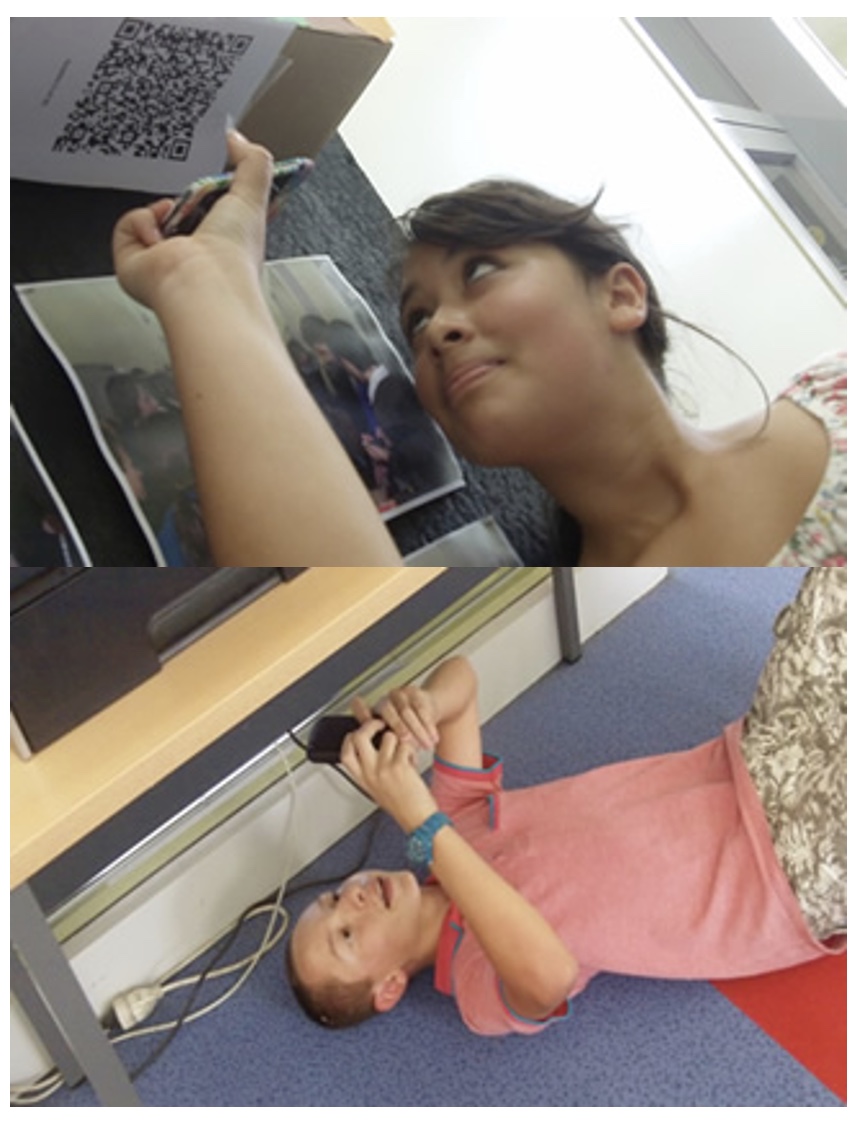
1. Arrange students into groups. Each group needs at least ONE person who has a mobile device.
2. If their phone camera doesn't automatically detect and decode QR codes, ask students to
4. Cut them out and place them around your class / school.
1. Give each group a clipboard and a piece of paper so they can write down the decoded questions and their answers to them.
2. Explain to the students that the codes are hidden around the school. Each team will get ONE point for each question they correctly decode and copy down onto their sheet, and a further TWO points if they can then provide the correct answer and write this down underneath the question.
3. Away they go! The winner is the first team to return with the most correct answers in the time available. This could be within a lesson, or during a lunchbreak, or even over several days!
4. A detailed case study in how to set up a successful QR Scavenger Hunt using this tool can be found here.
Question | Answer |
| 1. Filling in old oil wells with cement is a method used to prevent pollution of _________. | groundwater | 2. Surface water could be polluted by contaminants in the mountains from rain water ______. | runoff | 3. Our rain water runoff flows into the San Jacinto River_________________. | watershed | 4. Animals can be affected by water pollution by_______ and _______ polluted water. | eating food and drinking water | 5. Two types of weathering | chemical and mechanical | 6. Chemical weathering from dissolved chemicals in precipitation. | acid rain | 7. Waves breaking on a coast line cause ________ as sand particles wash away. | erosion | 8. Water fills cracks in rock, freezes and breaks rock. | ice wedging | 9. Sediment builds up where a river meets the ocean and forms a _______________. | delta | 10. The factor that controls how rocks weather and erode. | time | 11. Most common form of weathering on the Gulf Coast | oxidation | 12. Most common form of weathering in the desert (mountains and basins) | wind abrasion | 13. The force that pulls water down through a river | gravity | 14. Cave formation is chemical weathering by means of ______________________. | carbonation | 15. Sand dunes form in deserts as a result of _________________ erosion. | wind | 16. In the Rock and Roll Lab, the mass of our rocks was the ___________variable. | dependent | 17. Build up of sediment in one area is known as _____________________. | deposition |

Question 1 (of 17)
Question 2 (of 17)
Question 3 (of 17)
Question 4 (of 17)
Question 5 (of 17)
Question 6 (of 17)
Question 7 (of 17)
Question 8 (of 17)
Question 9 (of 17)
Question 10 (of 17)
Question 11 (of 17)
Question 12 (of 17)
Question 13 (of 17)
Question 14 (of 17)
Question 15 (of 17)
Question 16 (of 17)
Question 17 (of 17)