
PREMIUM LOGIN
ClassTools Premium membership gives access to all templates, no advertisements, personal branding and many other benefits!
| Username: | ||
| Password: | ||
|
Submit
Cancel
|
||
| Not a member? | ||
PREMIUM LOGIN
ClassTools Premium membership gives access to all templates, no advertisements, personal branding and many other benefits!
| Username: | ||
| Password: | ||
|
Submit
Cancel
|
||
| Not a member? | ||
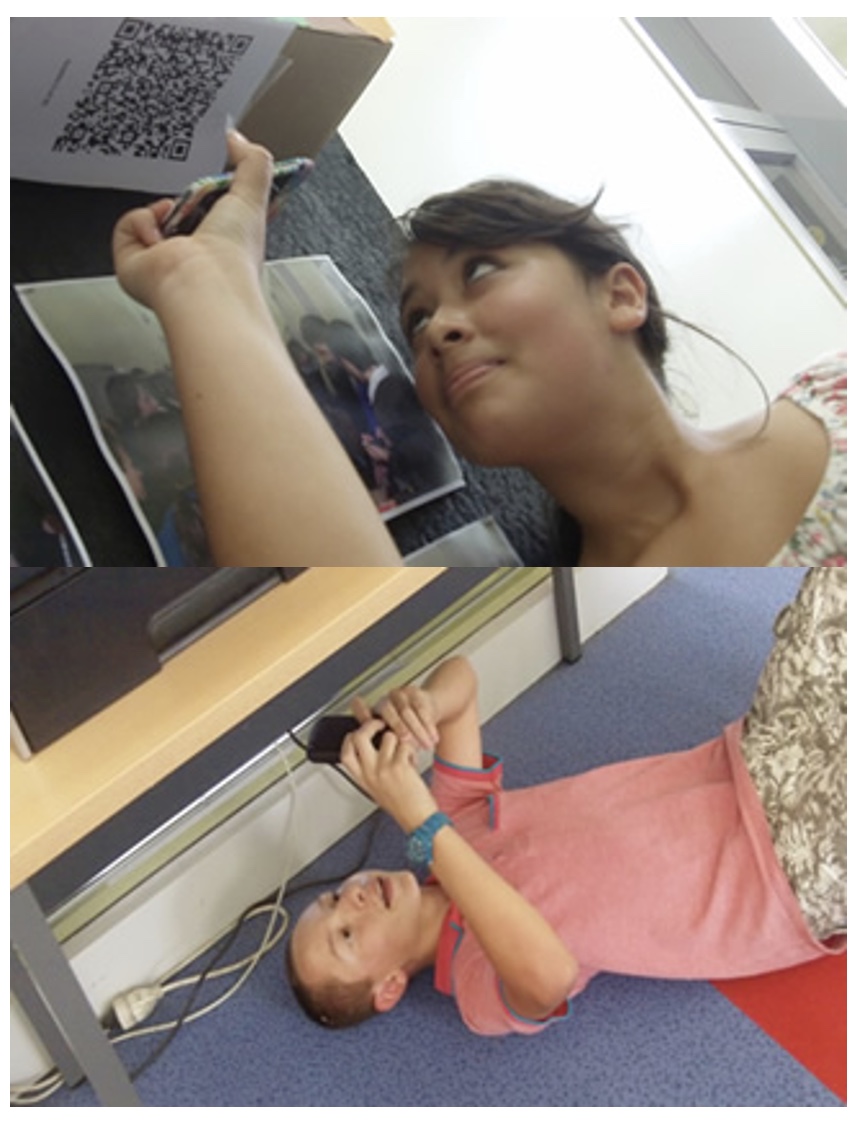
1. Arrange students into groups. Each group needs at least ONE person who has a mobile device.
2. If their phone camera doesn't automatically detect and decode QR codes, ask students to
4. Cut them out and place them around your class / school.
1. Give each group a clipboard and a piece of paper so they can write down the decoded questions and their answers to them.
2. Explain to the students that the codes are hidden around the school. Each team will get ONE point for each question they correctly decode and copy down onto their sheet, and a further TWO points if they can then provide the correct answer and write this down underneath the question.
3. Away they go! The winner is the first team to return with the most correct answers in the time available. This could be within a lesson, or during a lunchbreak, or even over several days!
4. A detailed case study in how to set up a successful QR Scavenger Hunt using this tool can be found here.
Question | Answer |
| 1. 1. What is the definition of tenacious? | persistent in seeking a goal | 2. 2. What is the definition of pretense? | a pretending; a false show of something | 3. 3What is the definition of expound? | explain in detail | 4. 4What is the definition of cajoling? | coaxing with flattery | 5. 5What is the definition of simile? | a comparison using like or as | 6. 6What is the definition of a complex character? | someone with conflicting motivation | 7. 7What is inference? | reaching a conclusion from known facts or evidence | 8. 8Write a sentence with an adjective underlined. | varies | 9. 9Write a sentence with a conjunction underlined. | varies | 10. 10What is an antonym? | A word opposite in meaning to another | 11. 11Diagram this sentence. The bluebirds are singing. | varies | 12. 12Diagram this sentence. Extremely loud thunder rumbled rather threateningly. | varies | 13. 13According to Sergeant Major Morris in "The Monkey's Paw", what lesson does the fakir want to teach people? | fate ruled lives | 14. 14In "The Street of the Canon", whom does the Hidalgo man first ask to dance? | Sarita's chaperone | 15. 15In "The Street of the Canon", What dangers does the man from Hidalgo face? | he is not welcome so may be attacked and killed | 16. 16In "The Street of the Canon", why are the two villages fighting? | both want to claim bones of famous historian | 17. 17In "A Problem", Why is Sasha in trouble? | cashed a false note | 18. 18In "The Upside of Quitting", what is sunk cost as discussed in this story? | what has been invested in the past | 19. 19In "The Upside of Quitting", define the concept of opportunity cost. | the value of something given up | 20. 20In "The Winning Edge", what role does intelligence play in career or academic success? | less important than grit | 21. 21 In "The Winning Edge", what three related personality traits are key aspects of grit? | passion, ambition, optimism | 22. 22In "Contents of the Dead Man's Pocket", what happens to Tom's paper? | flies out the apt windot | 23. 23In "Contents of the Dead Man's Pocket", What is one method Tom used to try and get people's attention? | shouts for help, sets fire to paper, drops coins | 24. 24In "Contents of the Dead Man's Pocket", What does he decide to do after he gets back into the apartment? | go to the movies | 25. 25In "The Sun Parlor", what is the matter with West's aunt? | she has a heart attack | 26. 26In "Keep Memory Alive", why would forgetting make people accomplices? | events can happen again | 27. 27In "Keep Memory Alive", Wiesel says the honor of the Nobel Prize truly belongs to which group of people? | survivors, their children, and Jewish people | 28. 28In "The American Idea", who first put the American idea into words? | thomas Jefferson | 29. 29IN "How to React to Familiar Faces", what even occurs that shows that the author is not immune to the syndrome of confusion between the imaginary and the real? | feeling as if he knows famous people | 30. 30IN "How to React to Familiar Faces", how does the "reality" of TV change how people see the everyday world? | real becomes imaginary and imaginary becomes real | 31. 31In "Seeing Things", what is the retina? | pigmented nerve cells in the back of the eye. | 32. 32In "Seeing Things", what part of the brain ""points back" to the look and feel of a previous experience? | the hippocampus | 33. 33In "Sundiata", what characteristics does Mari Djata share with other epic heroes? | he was born inot a high position but had to overcome burdens | 34. 34In "Sundiata", what injustice occurs after the king's death? | mari djata is ridiculed and banished | 35. 35In "Don Quixote", how does he see himself? | as a knight | 36. 36In what way is Don Quixote's adventure with the windmills a parody of an episode from a romance or legend? | he is portraying a night fighting for love and honor | 37. 37In "Cupid and Psyche" why is Venus angry with Psyche? | so beautiful | 38. What are the five elements of a story? | setting, plot, character, conflict, theme | 39. 38What is a personal narrative? | a story written about a particular moment in a person's life | 40. 39list 3 items that should be included in an introductory paragraph. | hook, transition, thesis | 41. 40What is MLA? | format used for writing English essays | 42. 41What is plagiarism? | using someone elses ideas as your own | 43. 42 is paraphrasing? | expressing someone elses ideas in your own words | 44. 43What is the proofreading symbol for a spelling error? | sp | 45. 44What is the proofreading symbol for no space? | varies |

Question 1 (of 45)
Question 2 (of 45)
Question 3 (of 45)
Question 4 (of 45)
Question 5 (of 45)
Question 6 (of 45)
Question 7 (of 45)
Question 8 (of 45)
Question 9 (of 45)
Question 10 (of 45)
Question 11 (of 45)
Question 12 (of 45)
Question 13 (of 45)
Question 14 (of 45)
Question 15 (of 45)
Question 16 (of 45)
Question 17 (of 45)
Question 18 (of 45)
Question 19 (of 45)
Question 20 (of 45)
Question 21 (of 45)
Question 22 (of 45)
Question 23 (of 45)
Question 24 (of 45)
Question 25 (of 45)
Question 26 (of 45)
Question 27 (of 45)
Question 28 (of 45)
Question 29 (of 45)
Question 30 (of 45)
Question 31 (of 45)
Question 32 (of 45)
Question 33 (of 45)
Question 34 (of 45)
Question 35 (of 45)
Question 36 (of 45)
Question 37 (of 45)
Question 38 (of 45)
Question 39 (of 45)
Question 40 (of 45)
Question 41 (of 45)
Question 42 (of 45)
Question 43 (of 45)
Question 44 (of 45)
Question 45 (of 45)