
PREMIUM LOGIN
ClassTools Premium membership gives access to all templates, no advertisements, personal branding and many other benefits!
| Username: | ||
| Password: | ||
|
Submit
Cancel
|
||
| Not a member? | ||
PREMIUM LOGIN
ClassTools Premium membership gives access to all templates, no advertisements, personal branding and many other benefits!
| Username: | ||
| Password: | ||
|
Submit
Cancel
|
||
| Not a member? | ||
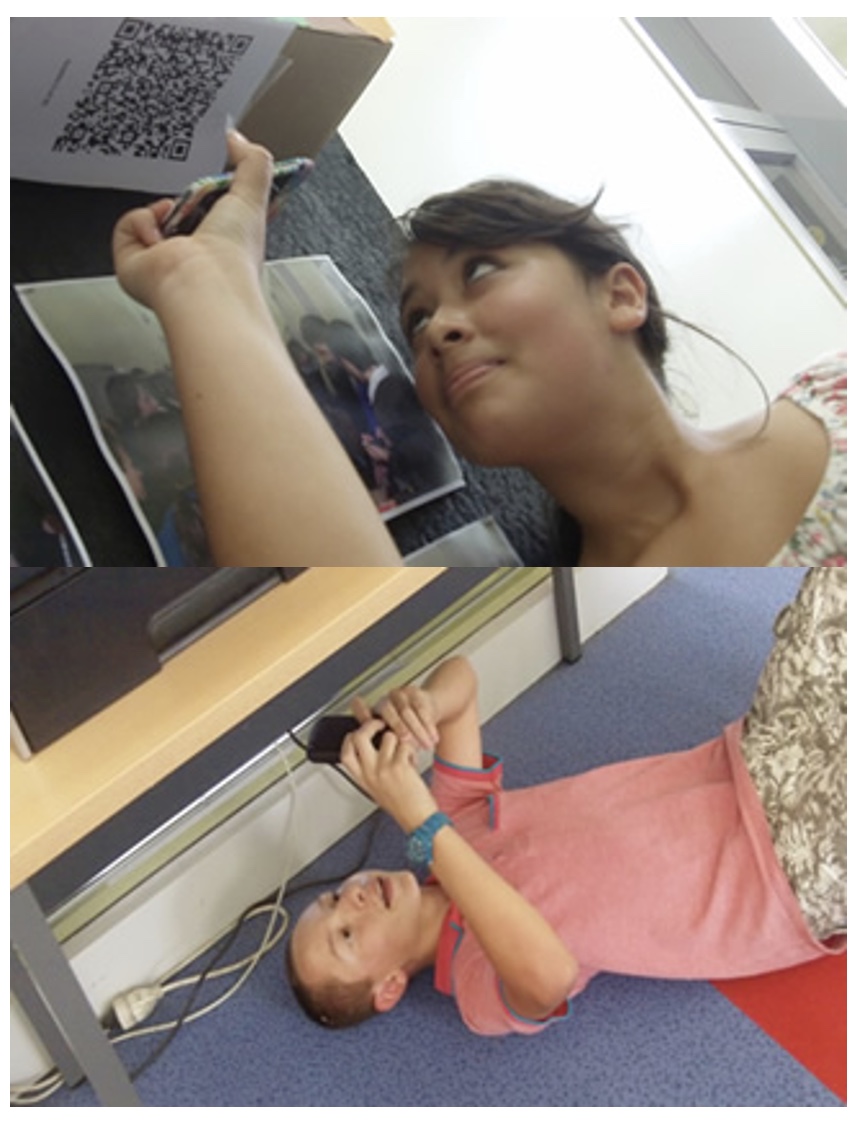
1. Arrange students into groups. Each group needs at least ONE person who has a mobile device.
2. If their phone camera doesn't automatically detect and decode QR codes, ask students to
4. Cut them out and place them around your class / school.
1. Give each group a clipboard and a piece of paper so they can write down the decoded questions and their answers to them.
2. Explain to the students that the codes are hidden around the school. Each team will get ONE point for each question they correctly decode and copy down onto their sheet, and a further TWO points if they can then provide the correct answer and write this down underneath the question.
3. Away they go! The winner is the first team to return with the most correct answers in the time available. This could be within a lesson, or during a lunchbreak, or even over several days!
4. A detailed case study in how to set up a successful QR Scavenger Hunt using this tool can be found here.
Question | Answer |
| 1. In this method, the cutting of a plant is attached to the stem of another rooted plant. The attached cutting becomes an integrated part of the rooted plant as the vascular systems are united. | Grafting | 2. A bud and some bark is removed from a plant. A T-shaped cut is made and the bud is fixed tightly on the stock with a tape. The bud integrates to the stock after some time and new branches are formed. | Bud grafting | 3. Stem cuttings with some nodes and internodes are placed in moist soil which gives rise to new roots and plant. | Cutting | 4. Branches are bent close to the ground and covered with moist soil. The underground branch produces new roots and develops into a separate plant. | Layering | 5. Human intervention which allows asexual reproduction of plants (no spores or seeds are produced) under controlled conditions. | Artificial Propagation |

Question 1 (of 5)
Question 2 (of 5)
Question 3 (of 5)
Question 4 (of 5)
Question 5 (of 5)