
PREMIUM LOGIN
ClassTools Premium membership gives access to all templates, no advertisements, personal branding and many other benefits!
| Username: | ||
| Password: | ||
|
Submit
Cancel
|
||
| Not a member? | ||
PREMIUM LOGIN
ClassTools Premium membership gives access to all templates, no advertisements, personal branding and many other benefits!
| Username: | ||
| Password: | ||
|
Submit
Cancel
|
||
| Not a member? | ||
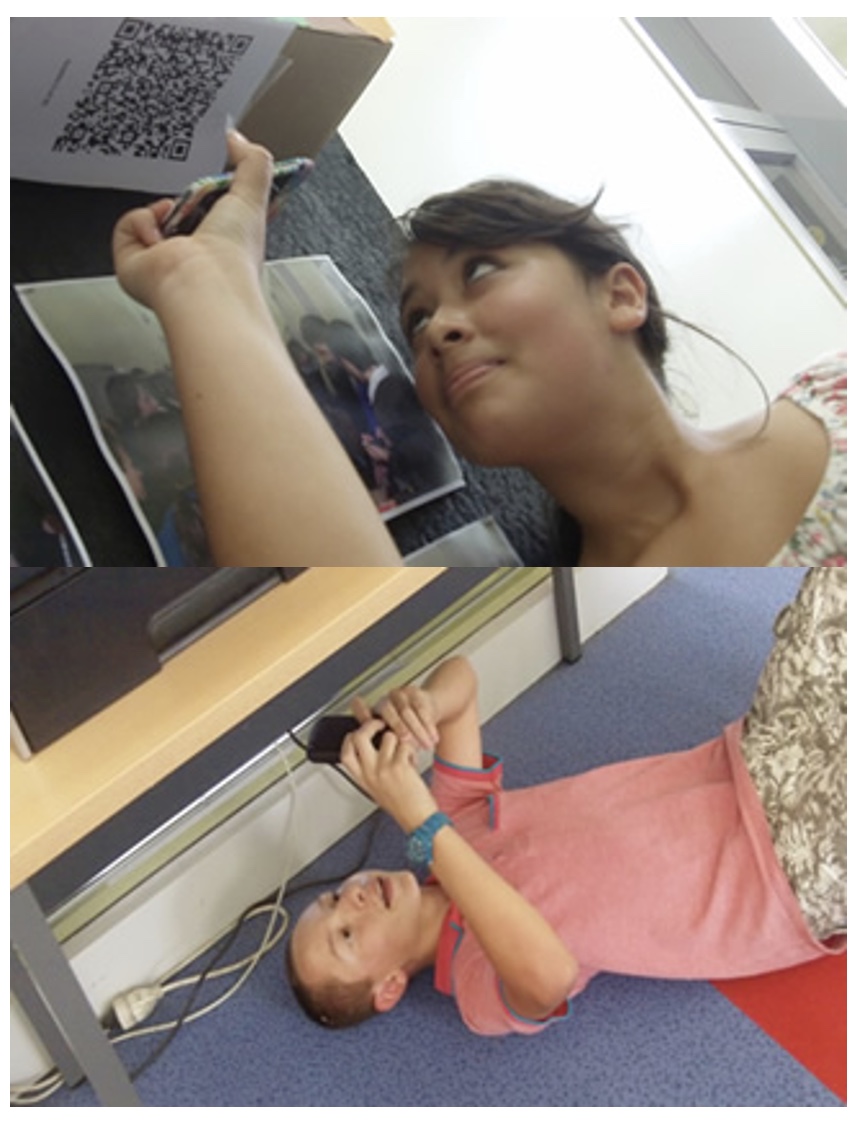
1. Arrange students into groups. Each group needs at least ONE person who has a mobile device.
2. If their phone camera doesn't automatically detect and decode QR codes, ask students to
4. Cut them out and place them around your class / school.
1. Give each group a clipboard and a piece of paper so they can write down the decoded questions and their answers to them.
2. Explain to the students that the codes are hidden around the school. Each team will get ONE point for each question they correctly decode and copy down onto their sheet, and a further TWO points if they can then provide the correct answer and write this down underneath the question.
3. Away they go! The winner is the first team to return with the most correct answers in the time available. This could be within a lesson, or during a lunchbreak, or even over several days!
4. A detailed case study in how to set up a successful QR Scavenger Hunt using this tool can be found here.
Question | Answer |
| 1. Who is the author of "The Crucible"? | 2. Describe what is going on in the picture under the title "The Salem Witch Trials" | 3. What is the English Law that was created in 1641? | 4. Describe Salem, Massachusetts | 5. Using the pictures, what is the difference between old Salem and modern day Salem? | 6. List 3 Puritan beliefs about witchcraft | 7. Name the 2 children who began acting strangely and were thought to be "witched" | 8. How long did The Salem Witch Trials last? | 9. What is 1 reason the town of Salem was an easy target for tragedy and turmoil? | 10. Who is a "leading accuser" of the practicing of witchcraft? (Hint: made to apologize in 1706) | 11. In the end, how much money was paid to the families of those accused of witchcraft when the General Court declared the trials unlawful? |

Question 1 (of 11)
Question 2 (of 11)
Question 3 (of 11)
Question 4 (of 11)
Question 5 (of 11)
Question 6 (of 11)
Question 7 (of 11)
Question 8 (of 11)
Question 9 (of 11)
Question 10 (of 11)
Question 11 (of 11)