
PREMIUM LOGIN
ClassTools Premium membership gives access to all templates, no advertisements, personal branding and many other benefits!
| Username: | ||
| Password: | ||
|
Submit
Cancel
|
||
| Not a member? | ||
PREMIUM LOGIN
ClassTools Premium membership gives access to all templates, no advertisements, personal branding and many other benefits!
| Username: | ||
| Password: | ||
|
Submit
Cancel
|
||
| Not a member? | ||
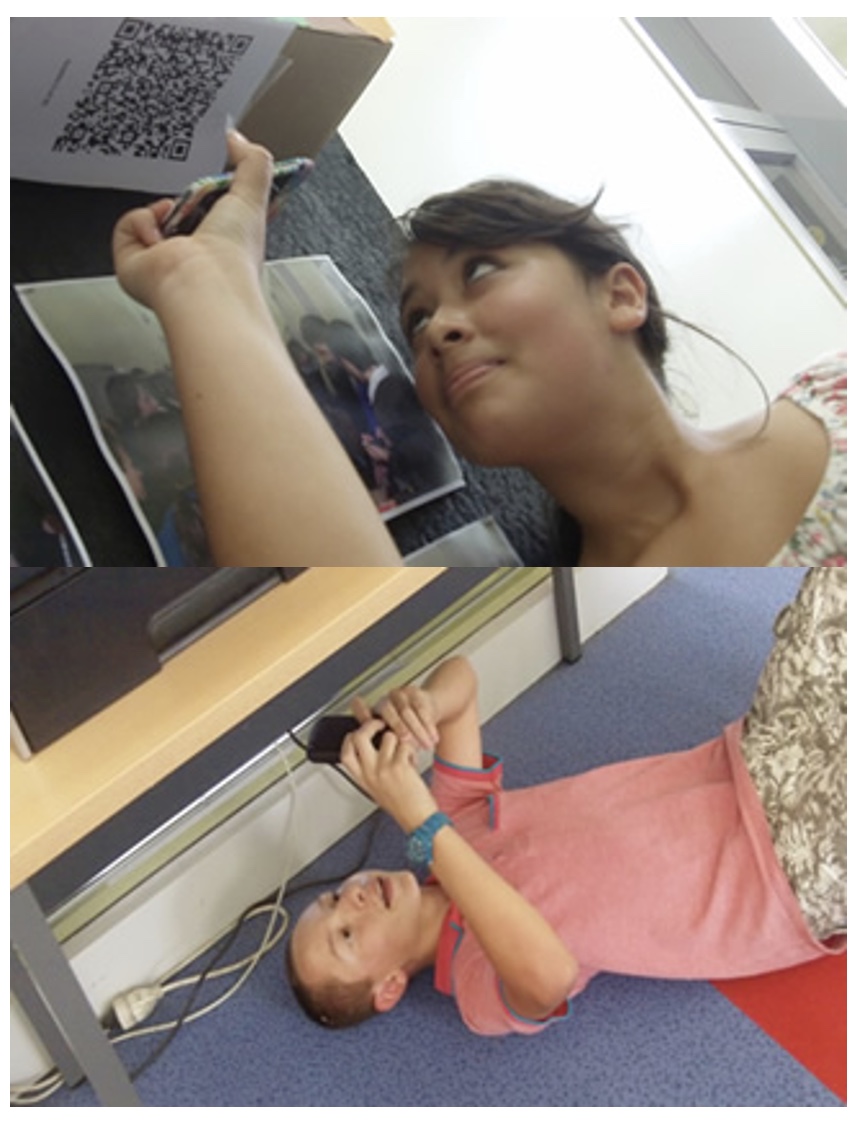
1. Arrange students into groups. Each group needs at least ONE person who has a mobile device.
2. If their phone camera doesn't automatically detect and decode QR codes, ask students to
4. Cut them out and place them around your class / school.
1. Give each group a clipboard and a piece of paper so they can write down the decoded questions and their answers to them.
2. Explain to the students that the codes are hidden around the school. Each team will get ONE point for each question they correctly decode and copy down onto their sheet, and a further TWO points if they can then provide the correct answer and write this down underneath the question.
3. Away they go! The winner is the first team to return with the most correct answers in the time available. This could be within a lesson, or during a lunchbreak, or even over several days!
4. A detailed case study in how to set up a successful QR Scavenger Hunt using this tool can be found here.
Question | Answer |
| 1. (Team Middle Table) – What age did you have to be to receive a pension? | 70 | 2. (Team Middle Table) – How many applied for pension? | 650,000 | 3. (Team Middle Table) – When did school meals become compulsory? | 1914 | 4. (Team Middle Table) – What percentage of kids had rickets? | 9% | 5. (Team Middle Table) – What was the name for the juvenile prison kids were sent to? | Borstals | 6. (Team Middle Table) – How much did a worker have to pay to receive national insurance? | 4d/week | 7. (Team Middle Table) – How many workers were covered by the 1906 workmen compensation act? | 6 million | 8. (Team Middle Table) – What was the max working week of the 1911 shops act? | 60 hours | 9. (Team Middle Table) – What facilities did the labour exchange provide? | washing, clothes mending and refreshments | 10. (Team Middle Table) – By 1914 how many jobs on average were set up per day by the Labour exchange? | 3000 | 11. (Team Middle Table) – How many school meals were there in 1906 compared to 1914? | 3 million to 14 million | 12. (Team Middle Table) – Who established the poverty line? | Booth and Rowntree | 13. (Team Middle Table) – What was the life expectancy among the poor? | mid 40s | 14. (Team Middle Table) – What did the new liberals argue? | there were times when it was right to intervene in people’s lives | 15. (Team Middle Table) – What did Booth and Rowntree’s investigation reveal? | around 40% of the population lived in poverty | 16. (Team Middle Table) – For the Boer War, what percentage of the urban male population was rejected on medical grounds? | 25% | 17. (Browntree) – Name 4 terms that were agreed and carried out in the Treaty of Edinburgh. | Bruce recognised as King, Balliol denounced, Edward III sister was to marry Brice’s son David, the Scots were to pay £20,000 to English | 18. (Browntree) – Who did Robert the Bruce kill on day one of the Battle of Bannockburn with an axe? | Sir Henry de Bohun | 19. (Browntree) – What was the nickname for Robert Bruce after his first few months as King? | King Hob | 20. (Browntree) – What 3 things did the Declaration of Arbroath set out to do? | to prove the Scots were fighting a just war, to justify Robert’s leadership, to request the pope to urge Edward to leave the Scots in peace | 21. (Browntree) – What were the names of Robert the Bruce’s brothers that were executed? | Thomas, Alexander, Nigel |

Question 1 (of 21)
Question 2 (of 21)
Question 3 (of 21)
Question 4 (of 21)
Question 5 (of 21)
Question 6 (of 21)
Question 7 (of 21)
Question 8 (of 21)
Question 9 (of 21)
Question 10 (of 21)
Question 11 (of 21)
Question 12 (of 21)
Question 13 (of 21)
Question 14 (of 21)
Question 15 (of 21)
Question 16 (of 21)
Question 17 (of 21)
Question 18 (of 21)
Question 19 (of 21)
Question 20 (of 21)
Question 21 (of 21)