
PREMIUM LOGIN
ClassTools Premium membership gives access to all templates, no advertisements, personal branding and many other benefits!
| Username: | ||
| Password: | ||
|
Submit
Cancel
|
||
| Not a member? | ||
PREMIUM LOGIN
ClassTools Premium membership gives access to all templates, no advertisements, personal branding and many other benefits!
| Username: | ||
| Password: | ||
|
Submit
Cancel
|
||
| Not a member? | ||
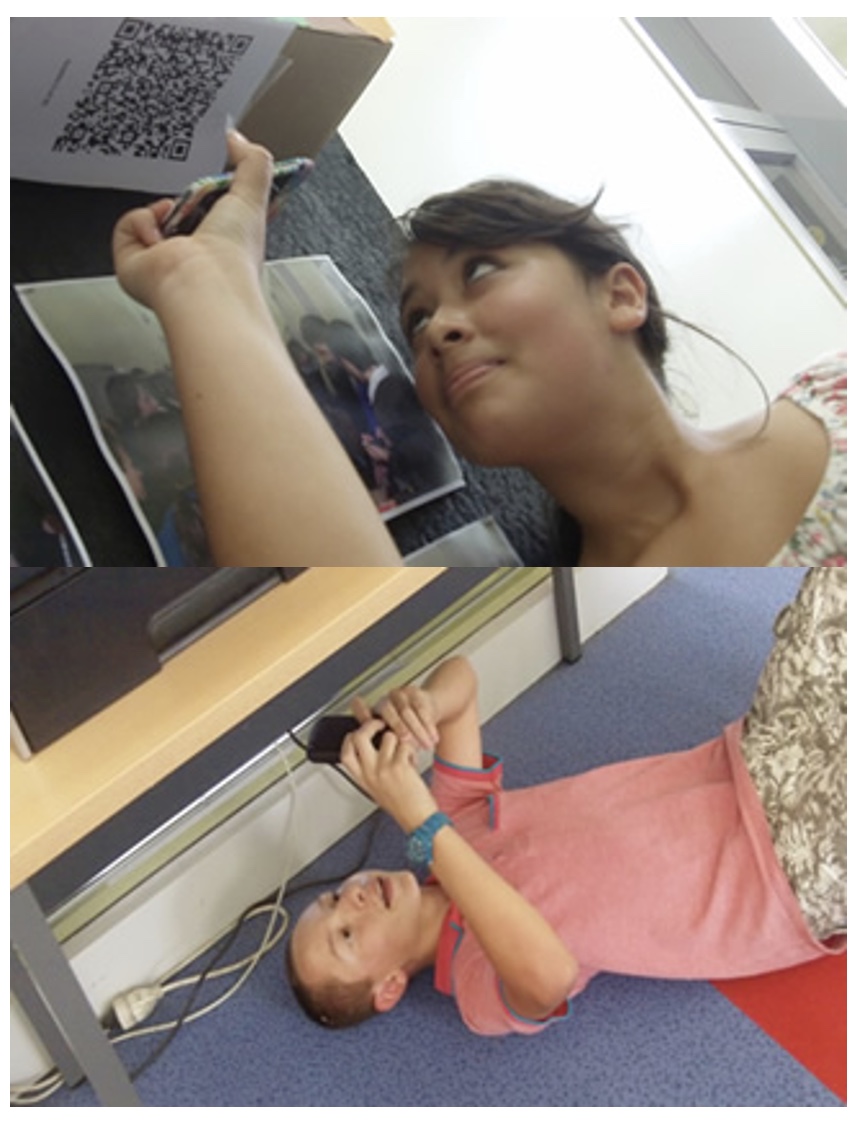
1. Arrange students into groups. Each group needs at least ONE person who has a mobile device.
2. If their phone camera doesn't automatically detect and decode QR codes, ask students to
4. Cut them out and place them around your class / school.
1. Give each group a clipboard and a piece of paper so they can write down the decoded questions and their answers to them.
2. Explain to the students that the codes are hidden around the school. Each team will get ONE point for each question they correctly decode and copy down onto their sheet, and a further TWO points if they can then provide the correct answer and write this down underneath the question.
3. Away they go! The winner is the first team to return with the most correct answers in the time available. This could be within a lesson, or during a lunchbreak, or even over several days!
4. A detailed case study in how to set up a successful QR Scavenger Hunt using this tool can be found here.
Question | Answer |
| 1. Conflict gives the story its energy. It is the major______________________ | ? | 2. Climax means_____________________________ | ? | 3. Resolution or Resolved means __________________________ | ? | 4. Theme is _____________________________ | ? | 5. An attitude of the writer towards the subjects? | Tone | 6. Evokes certain feelings to the reader? | Mood | 7. A ________ is a word or phrase intended to provoke a strong emotional reaction. | ? | 8. An attempt to persuade someone on a topic open for debate. | Argument | 9. A ______ can be proven with data, observations, and reliable sources. | Factual claim | 10. Making an __________ involves putting together information to make a reasonable guess. | ? | 11. A statement that many people assume to be true, though it may not be actually true. | Commonplace assertion | 12. List at least 4 author purposes used in a story? | ? | 13. This features a detailed description of something to give a reader a mental picture. | ? | 14. This structure presents the causal relationship between a specific event, idea, or concept and the events, ideas, or concepts that follow. | ? | 15. The following is an example of which text structure? A book about the American revolution might list the events leading to the war. | ? | 16. This structure sets up a problem or problems, explains the solution, and then discusses the effects of the solution. | ? | 17. ________________is an article that is written that usually wants to persuade you to think the way they think or believe the way they do. | Propaganda | 18. What is textual evidence? | ? | 19. If you have two answers that are close, which one is the right answer? | ? | 20. Define and give an example for an antonym. | ? | 21. Define and give an example for a synonym. | ? | 22. What is a comparison in which one thing is said to be another. Ex. My mom is a teddy bear. | ? | 23. What is a comparison using like or as? | ? | 24. Sensory words or imagery are words that _______________________________. | ? | 25. List your five senses. | ? | 26. What is the term when human qualities are given to non-human things? | ? | 27. _____________________words or phrases that make a reference to historical, mythological, or literary person place or thing. | ? | 28. ___________________________is the use of any object, person, place, or thing that has meaning within itself and stand for something larger. | ? | 29. _____________________________is the central message or insight into life revealed through the literary work. A lesson about life and people. | ? | 30. A stanza is like a ____________________________. | ? | 31. ________________________ is the pattern in which the poem rhymes. | ? | 32. The repetition of a beginning sound is called ________. | ? | 33. When you analyze a poem, you use this analysis to help you determine the meaning. | ? | 34. The pattern of rhymes at the end of lines are ______. | ? | 35. What type of poem is this one by Robert Frost? | ? | 36. A _____ short poem that tells a folk story or story of a local hero. | ? | 37. A ____ tells the story of mythic or national heroes. Long and serious in tone and usually doesn't rhyme. ex. The Odyssey. | ? | 38. A _____ a poem with short stanzas and rhyming lines that expresses poets feeling. "The Road Not Taken" | ? | 39. A ______ is often about love or nature and has 14 lines and rigid form. | ? | 40. An ____ is a poem that mourns the dead. | ? | 41. An ___found on a tombstone. | ? | 42. A funny, nonsense poem using AABBA rhyme scheme is a ____. | ? | 43. What is it called when there is no rhyme scheme? | ? | 44. Read the ____________ first. | ? | 45. ___________important elements in the test questions. | ? | 46. Note if a question is asking a___________ question (located in paragraph) or a whole question. | ? | 47. Determine if it is fiction or _____________.If fiction, pay attention to _____structure | ? | 48. _________what the article is about by the title. | ? | 49. Take __________over the story in the margins. | ? | 50. ___________all subtitles, graphs, pictures, and small print in the article. | ? | 51. Mark where you found the ___________ using textual evidence. | ? | 52. The repetition of initial consonant sounds. | Alliteration | 53. A reference to a well known person, place, thing, or idea | ? | 54. A hint to the reader of what is to come in the story. | ? | 55. Extreme exaggeration | ? | 56. An implied comparison of two unlike things using like or as. | ? | 57. Words that sound like they are spoken. | ? | 58. Hints to what is to come in the story | ? | 59. A section of the story that interrupts the sequence of events that relate to an event from an earlier time. | ? | 60. A person place or object that has meaning in itself but has other meaning as well. | ? | 61. When the outcome or action is unexpected or opposite of what you would expect. | ? | 62. A person or character telling the story. | ? | 63. Wherein the author uses words and phrases that evoke one of the five senses to create “mental images” for the reader. | ? | 64. When character calls himself I and the perspective of the story is told from a character in the story. | ? | 65. The perspective is told from the outside of the story by one person. | ? | 66. The narrator tells what every character in the story is thinking and feeling. | ? | 67. The narrator reveals only a single characters thoughts and feelings. | ? |

Question 1 (of 67)
Question 2 (of 67)
Question 3 (of 67)
Question 4 (of 67)
Question 5 (of 67)
Question 6 (of 67)
Question 7 (of 67)
Question 8 (of 67)
Question 9 (of 67)
Question 10 (of 67)
Question 11 (of 67)
Question 12 (of 67)
Question 13 (of 67)
Question 14 (of 67)
Question 15 (of 67)
Question 16 (of 67)
Question 17 (of 67)
Question 18 (of 67)
Question 19 (of 67)
Question 20 (of 67)
Question 21 (of 67)
Question 22 (of 67)
Question 23 (of 67)
Question 24 (of 67)
Question 25 (of 67)
Question 26 (of 67)
Question 27 (of 67)
Question 28 (of 67)
Question 29 (of 67)
Question 30 (of 67)
Question 31 (of 67)
Question 32 (of 67)
Question 33 (of 67)
Question 34 (of 67)
Question 35 (of 67)
Question 36 (of 67)
Question 37 (of 67)
Question 38 (of 67)
Question 39 (of 67)
Question 40 (of 67)
Question 41 (of 67)
Question 42 (of 67)
Question 43 (of 67)
Question 44 (of 67)
Question 45 (of 67)
Question 46 (of 67)
Question 47 (of 67)
Question 48 (of 67)
Question 49 (of 67)
Question 50 (of 67)
Question 51 (of 67)
Question 52 (of 67)
Question 53 (of 67)
Question 54 (of 67)
Question 55 (of 67)
Question 56 (of 67)
Question 57 (of 67)
Question 58 (of 67)
Question 59 (of 67)
Question 60 (of 67)
Question 61 (of 67)
Question 62 (of 67)
Question 63 (of 67)
Question 64 (of 67)
Question 65 (of 67)
Question 66 (of 67)
Question 67 (of 67)