
PREMIUM LOGIN
ClassTools Premium membership gives access to all templates, no advertisements, personal branding and many other benefits!
| Username: | ||
| Password: | ||
|
Submit
Cancel
|
||
| Not a member? | ||
PREMIUM LOGIN
ClassTools Premium membership gives access to all templates, no advertisements, personal branding and many other benefits!
| Username: | ||
| Password: | ||
|
Submit
Cancel
|
||
| Not a member? | ||
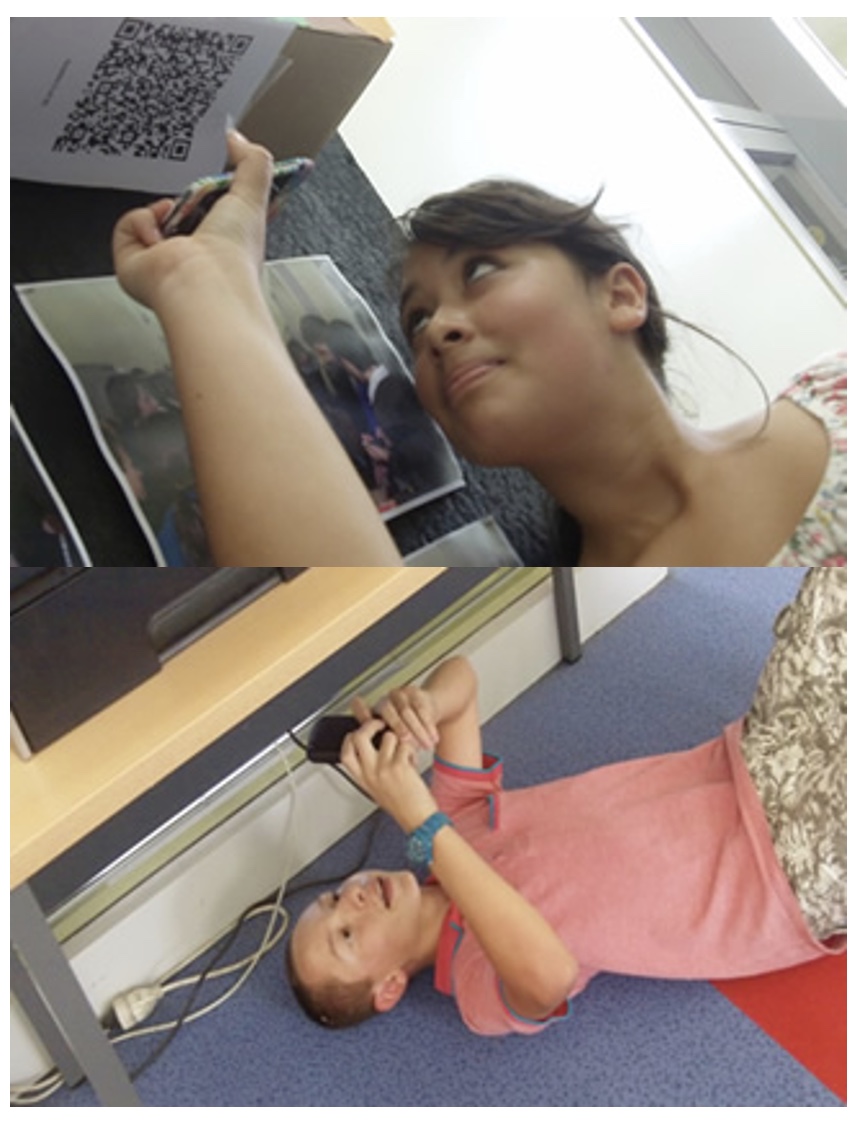
1. Arrange students into groups. Each group needs at least ONE person who has a mobile device.
2. If their phone camera doesn't automatically detect and decode QR codes, ask students to
4. Cut them out and place them around your class / school.
1. Give each group a clipboard and a piece of paper so they can write down the decoded questions and their answers to them.
2. Explain to the students that the codes are hidden around the school. Each team will get ONE point for each question they correctly decode and copy down onto their sheet, and a further TWO points if they can then provide the correct answer and write this down underneath the question.
3. Away they go! The winner is the first team to return with the most correct answers in the time available. This could be within a lesson, or during a lunchbreak, or even over several days!
4. A detailed case study in how to set up a successful QR Scavenger Hunt using this tool can be found here.
Question | Answer |
| 1. What does the I love you virus do? Look for your next clue by on Mr. Grimm’s window | Once clicked, it will send itself to everyone in the user’s mailing list and proceed to overwrite files with itself, making the computer unbootable. | 2. How did the "Code Red" virus get its name? Look for your next clue by Mr. Matney’s window | They techs who found it were drinking Code Red Mountain Dew at the time of discovery | 3. Who created the "Melissa" virus? Look for your next clue on the flag pole | David L. Smith | 4. What vulnerability did the "Sasser" exploit? Look for you next clue on the doors leading to the Little Theater. You should be able to see the code from the flag pole | The worm took advantage of a buffer overflow vulnerability in Local Security Authority Subsystem Service (LSASS), which controls the security policy of local accounts causing crashes to the computer. | 5. What type of virus was the "Zeus" virus. Look for you next clue on the side door of the CTE building. You should be able to see this from the flag pole too | Trojan | 6. What was another name for the "Conficker" virus? Look for this clue on the stuffed cougar in the CTE office | Also known as Downup or Downadup, Conficker is a worm of unknown authorship for Windows that made its first appearance in 2008. | 7. What two governments allegedly created the "Stuxnet" virus? This clue will be found near the cosmetology lab | Believed to have been created by the Israeli Defence Force together with the American Government, Stuxnet is an example of a virus created for the purpose of cyberwarfare, as it was intended to disrupt the nuclear efforts of the Iranians. | 8. The "Mydoom" virus contained at text message. What was it? On the door to the CTE lab for the next question | “andy; I’m just doing my job, nothing personal, sorry,” | 9. What was the usual ransom for the "CryptoLocker" virus? Go the the TV studio for the next question | The only way to unlock the files is to pay a ransom by a deadline. If the deadline is not met, the ransom will increase significantly or the decryption keys deleted. The ransom usually amount to $400 in prepaid cash or bitcoin. | 10. The "Flashback" virus attacked what type of computers? Come back to the IMC for the answers | Macs |

Question 1 (of 10)
Question 2 (of 10)
Question 3 (of 10)
Question 4 (of 10)
Question 5 (of 10)
Question 6 (of 10)
Question 7 (of 10)
Question 8 (of 10)
Question 9 (of 10)
Question 10 (of 10)