
PREMIUM LOGIN
ClassTools Premium membership gives access to all templates, no advertisements, personal branding and many other benefits!
| Username: | ||
| Password: | ||
|
Submit
Cancel
|
||
| Not a member? | ||
PREMIUM LOGIN
ClassTools Premium membership gives access to all templates, no advertisements, personal branding and many other benefits!
| Username: | ||
| Password: | ||
|
Submit
Cancel
|
||
| Not a member? | ||
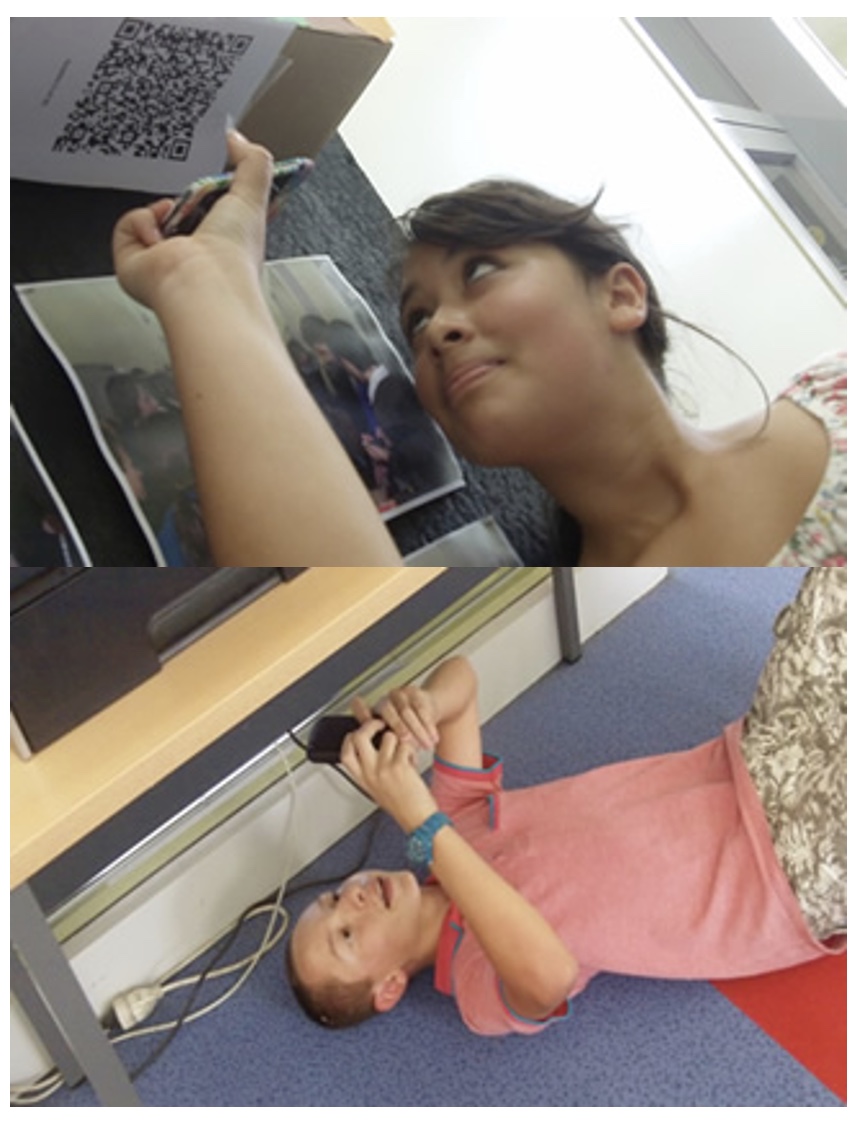
1. Arrange students into groups. Each group needs at least ONE person who has a mobile device.
2. If their phone camera doesn't automatically detect and decode QR codes, ask students to
4. Cut them out and place them around your class / school.
1. Give each group a clipboard and a piece of paper so they can write down the decoded questions and their answers to them.
2. Explain to the students that the codes are hidden around the school. Each team will get ONE point for each question they correctly decode and copy down onto their sheet, and a further TWO points if they can then provide the correct answer and write this down underneath the question.
3. Away they go! The winner is the first team to return with the most correct answers in the time available. This could be within a lesson, or during a lunchbreak, or even over several days!
4. A detailed case study in how to set up a successful QR Scavenger Hunt using this tool can be found here.
Question | Answer |
| 1. it does not explain the mechanisms of how stress can affect the nervous system/neurotransmitter levels but the model could be used to prevent exposure to stressors (such as cannabis) if the person is known to have a diathesis/vulnerability | 2. antipsychotics coupled with CBT (including PT anf family therapy and sometimes involving token economies) have a higher success rate in controlling symptoms and lowering relapse rates. They are more expensive initially but cheaper in the long run as it leads to less hospitalisation. | 3. in an adoption study where children were adopted from 19,000 Finnish schizophrenogenic mothers. Those reared by families that had low empathy and high levels of criticism had higher rates of developing Sz, compared with those raised in normal families, suggesting a genetic link and a stressor. | 4. it supports the nature –nurture debate and explains why the concordance rates for MZ twins is never 100%. If one twin experiences more stress (such as bullying at school) they will be more likely to develop Sz | 5. Falloon et al (1996) stress – such as divorce or bereavement, causes the brain to be flooded with neurotransmitters which brings on the acute episode. | 6. Brown and Birley (1968) 50% people who had an acute schizophrenic episode had experienced a major life event in 3 weeks prior. | 7. Vasos (2012) Found the risk of schizophrenia was 2.37 times greater in cities than it was in the countryside, probably due to stress levels. |

Question 1 (of 7)
Question 2 (of 7)
Question 3 (of 7)
Question 4 (of 7)
Question 5 (of 7)
Question 6 (of 7)
Question 7 (of 7)