
PREMIUM LOGIN
ClassTools Premium membership gives access to all templates, no advertisements, personal branding and many other benefits!
| Username: | ||
| Password: | ||
|
Submit
Cancel
|
||
| Not a member? | ||
PREMIUM LOGIN
ClassTools Premium membership gives access to all templates, no advertisements, personal branding and many other benefits!
| Username: | ||
| Password: | ||
|
Submit
Cancel
|
||
| Not a member? | ||
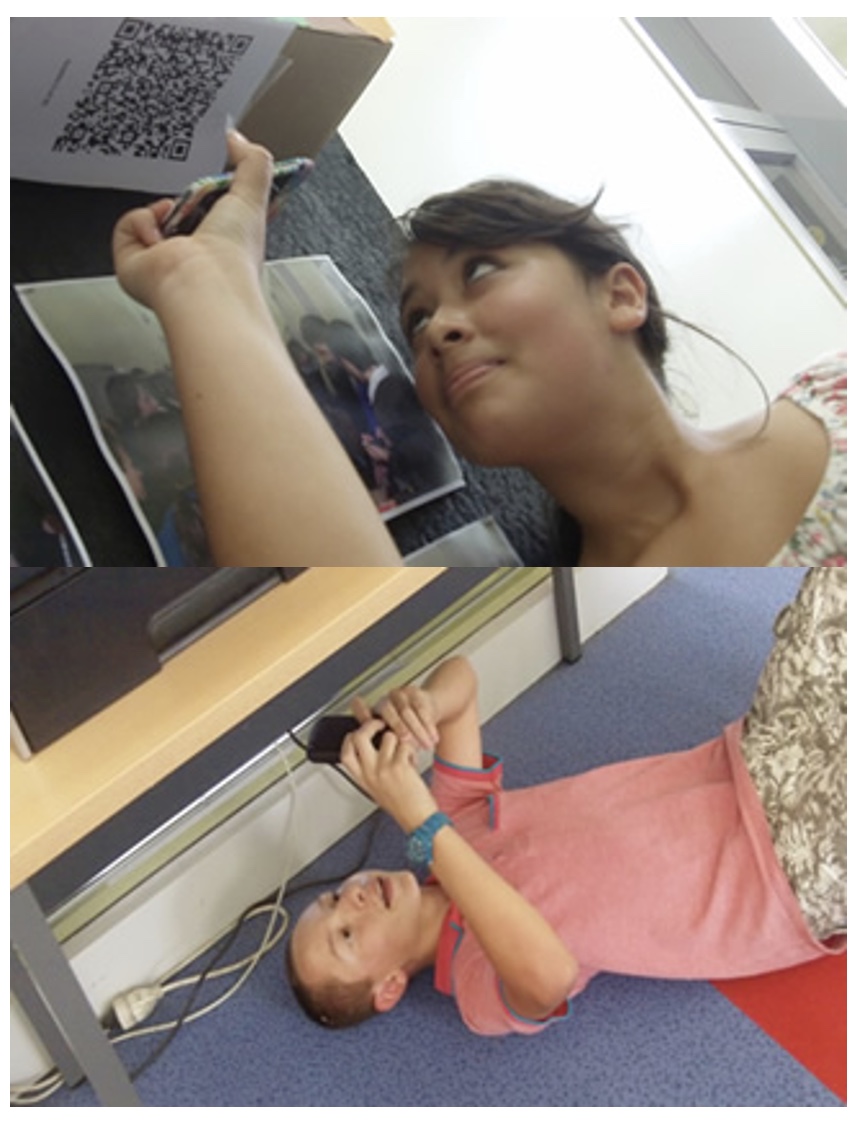
1. Arrange students into groups. Each group needs at least ONE person who has a mobile device.
2. If their phone camera doesn't automatically detect and decode QR codes, ask students to
4. Cut them out and place them around your class / school.
1. Give each group a clipboard and a piece of paper so they can write down the decoded questions and their answers to them.
2. Explain to the students that the codes are hidden around the school. Each team will get ONE point for each question they correctly decode and copy down onto their sheet, and a further TWO points if they can then provide the correct answer and write this down underneath the question.
3. Away they go! The winner is the first team to return with the most correct answers in the time available. This could be within a lesson, or during a lunchbreak, or even over several days!
4. A detailed case study in how to set up a successful QR Scavenger Hunt using this tool can be found here.
Question | Answer |
| 1. The molten rock and gases beneath the earth’s surface. | magma | 2. A crack in the earth’s crust through which molten rock comes to the surface. | volcano | 3. A scientist who studies volcanoes. | volcanologist | 4. Pockets of molten rock deep in the earth’s lithosphere. | magma chamber | 5. Magma that has broken through the surface of the earth. | lava | 6. The opening in the surface of the earth through which lava flows. | vent | 7. The bowl shape at the top of a main vent through which lava flows. | crater | 8. Bits of crushed rock propelled from an erupting volcano. | ash | 9. The funnel shaped mound of a volcano. | cone | 10. A ring of volcanoes found in the area around the Pacific Ocean. | Ring of Fire | 11. Places where a pool of intensely hot magma rises toward the surface, melting rock until it breaks through the crust. | hot spot | 12. A mixture of cinder, ash, and rock. | tephra | 13. An avalanche of red-hot dust and gases that races down the sides of some volcanoes. | pyroclastic flow | 14. Volcanic fog or gases. | vog | 15. Mud and rock fragments that surge down a mountain when part of it collapses. | debris flow | 16. Rock formed as magma and lava harden. | igneous rock | 17. Water that rises to the earth’s surface as it is heated by a magma pool. | hot spring | 18. A spring that periodically blows steam and hot water into the air. | geyser | 19. A hot spring that has more mud than water. | mud pot | 20. When molten rock pushes up between plates it causes the plates to spread apart, the magma cools forming new land. | seafloor spreading | 21. An eruption that flows through the side vents. | flank eruption | 22. Underwater volcanic eruptions that are twenty times more frequent than eruptions on land. | submarine eruption | 23. Bits of ash and lava discharged from a volcano. | cinder |

Question 1 (of 23)
Question 2 (of 23)
Question 3 (of 23)
Question 4 (of 23)
Question 5 (of 23)
Question 6 (of 23)
Question 7 (of 23)
Question 8 (of 23)
Question 9 (of 23)
Question 10 (of 23)
Question 11 (of 23)
Question 12 (of 23)
Question 13 (of 23)
Question 14 (of 23)
Question 15 (of 23)
Question 16 (of 23)
Question 17 (of 23)
Question 18 (of 23)
Question 19 (of 23)
Question 20 (of 23)
Question 21 (of 23)
Question 22 (of 23)
Question 23 (of 23)