
PREMIUM LOGIN
ClassTools Premium membership gives access to all templates, no advertisements, personal branding and many other benefits!
| Username: | ||
| Password: | ||
|
Submit
Cancel
|
||
| Not a member? | ||
PREMIUM LOGIN
ClassTools Premium membership gives access to all templates, no advertisements, personal branding and many other benefits!
| Username: | ||
| Password: | ||
|
Submit
Cancel
|
||
| Not a member? | ||
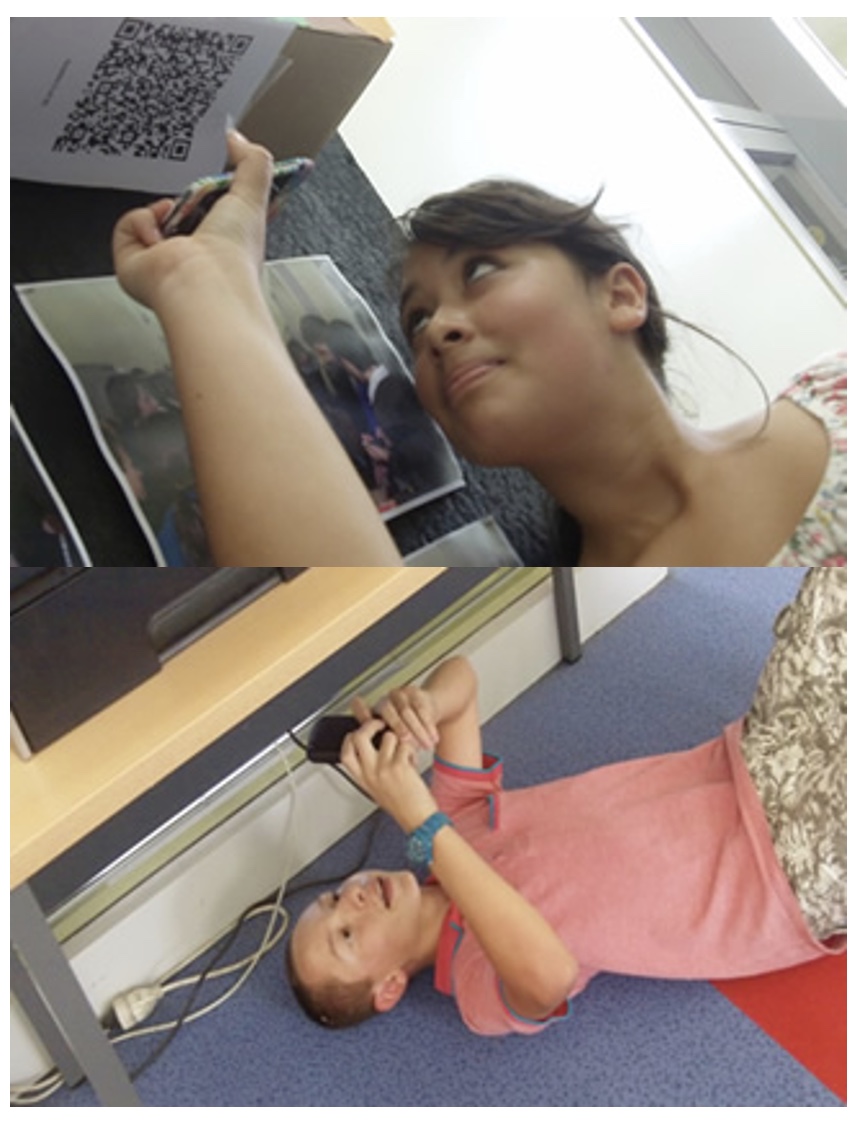
1. Arrange students into groups. Each group needs at least ONE person who has a mobile device.
2. If their phone camera doesn't automatically detect and decode QR codes, ask students to
4. Cut them out and place them around your class / school.
1. Give each group a clipboard and a piece of paper so they can write down the decoded questions and their answers to them.
2. Explain to the students that the codes are hidden around the school. Each team will get ONE point for each question they correctly decode and copy down onto their sheet, and a further TWO points if they can then provide the correct answer and write this down underneath the question.
3. Away they go! The winner is the first team to return with the most correct answers in the time available. This could be within a lesson, or during a lunchbreak, or even over several days!
4. A detailed case study in how to set up a successful QR Scavenger Hunt using this tool can be found here.
Question | Answer |
| 1. Socially constructed roles, behaviors, activities, and attributes that a given society deems masculine or feminine. | gender | 2. an identity term for a female-identified person who is attracted to male-identified people or a male-identified person who is attracted to female-identified people. | heterosexual | 3. a word that substitutes for a noun. | pronouns | 4. individuals whose gender identity and expression line up with their birth-assigned sex. | cisgender | 5. A system of oppression that includes discrimination and social prejudice against people with intellectual, emotional, and physical disabilities, their exclusion, and the valuing of people and groups that do not have disabilities. | ableism | 6. system of oppression that privileges men, subordinates women, and devalues practices associated with women. | sexism | 7. an identity term for a people who either do not feel sexual attraction or do not feel desire for a sexual partner or partners. Some asexual individuals may still have romantic attractions. | asexual | 8. a term for individuals whose gender identity/expression and/or sexual orientation does not conform to societal norms. | queer | 9. the fear and self-hatred of one’s own identity or identity group. | internalized oppression | 10. A pre-judgment or unjustifiable, and usually negative, attitude of one type of individual or groups toward another group and its members. | Prejudice | 11. the fear, hatred, and intolerance of people who identify or are perceived as gay or lesbian. | homophobia | 12. a person’s sexual and emotional attractions, not necessarily dependent on behavior. | orientation | 13. A group of unearned cultural, legal, social, and institutional rights extended to a group based on their social group membership. | Privileges | 14. The systemic and pervasive nature of social inequality woven throughout social institutions as well as embedded within individual consciousness. Oppression fuses institutional and systemic discrimination, personal bias, bigotry, and social prejudice in a complex web of relationships and structures that saturate most aspects of life in our society. | oppression | 15. oppression against individuals or groups based on their actual or perceived racial identity. | Racism | 16. the irrational fear or hatred of Islam, Muslims, Islamic traditions and practices, and, more broadly, those who appear to be Muslim. | Islamophobia | 17. The institutional, cultural, societal, and individual beliefs and practices that assign value to people based in their socio-economic class. | classism | 18. the fear and hatred of that which is perceived to be foreign or strange. | Xenophobia |

Question 1 (of 18)
Question 2 (of 18)
Question 3 (of 18)
Question 4 (of 18)
Question 5 (of 18)
Question 6 (of 18)
Question 7 (of 18)
Question 8 (of 18)
Question 9 (of 18)
Question 10 (of 18)
Question 11 (of 18)
Question 12 (of 18)
Question 13 (of 18)
Question 14 (of 18)
Question 15 (of 18)
Question 16 (of 18)
Question 17 (of 18)
Question 18 (of 18)