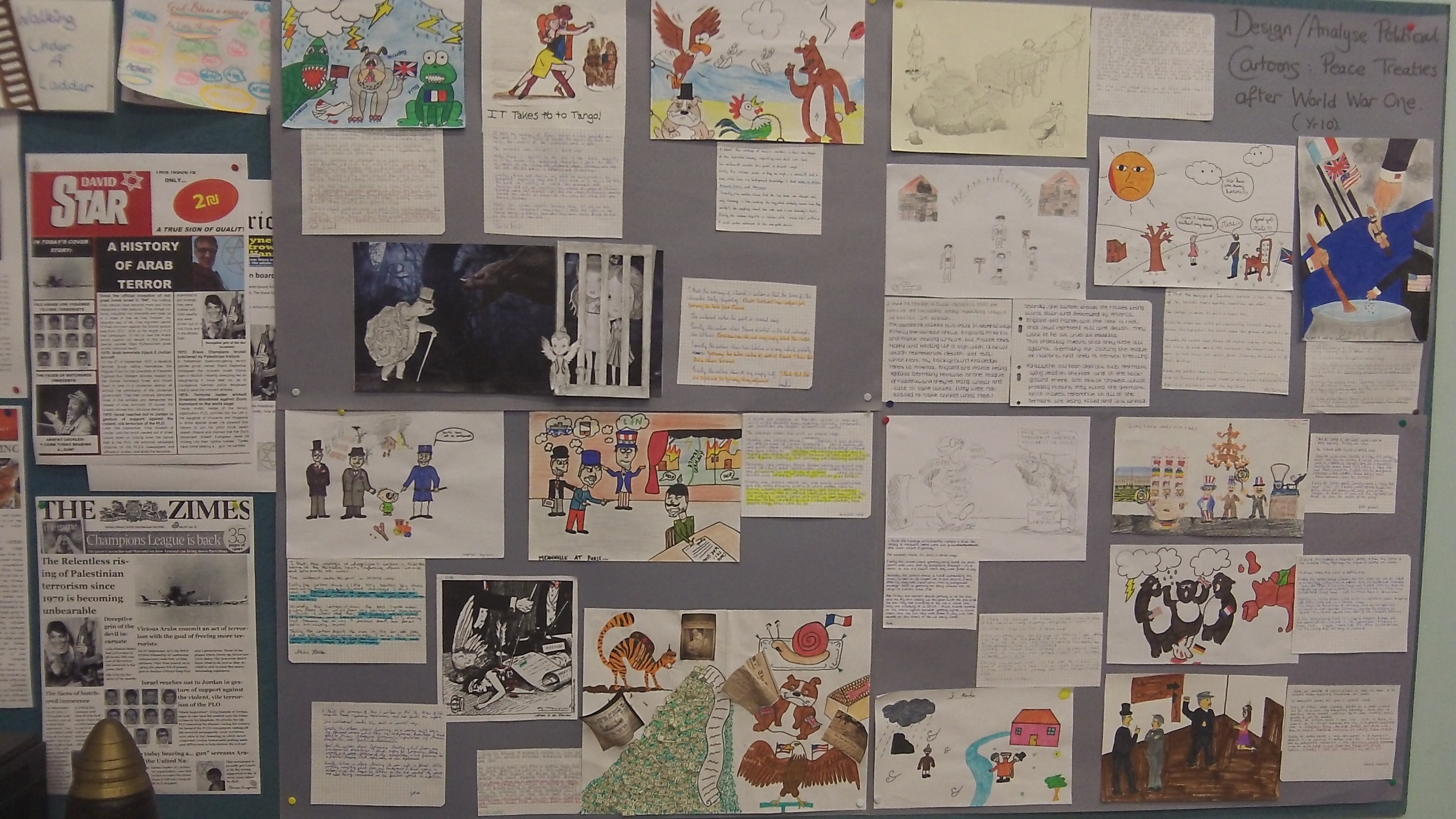
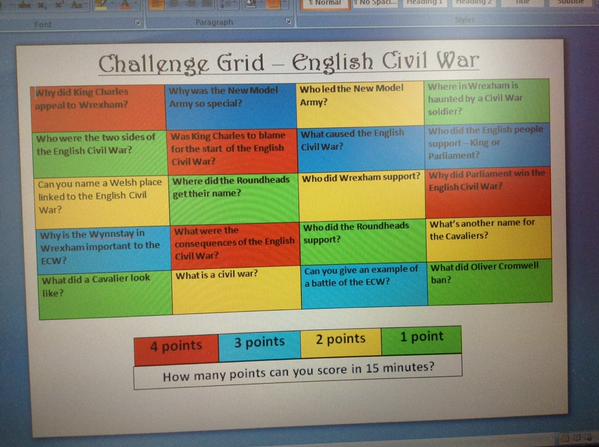
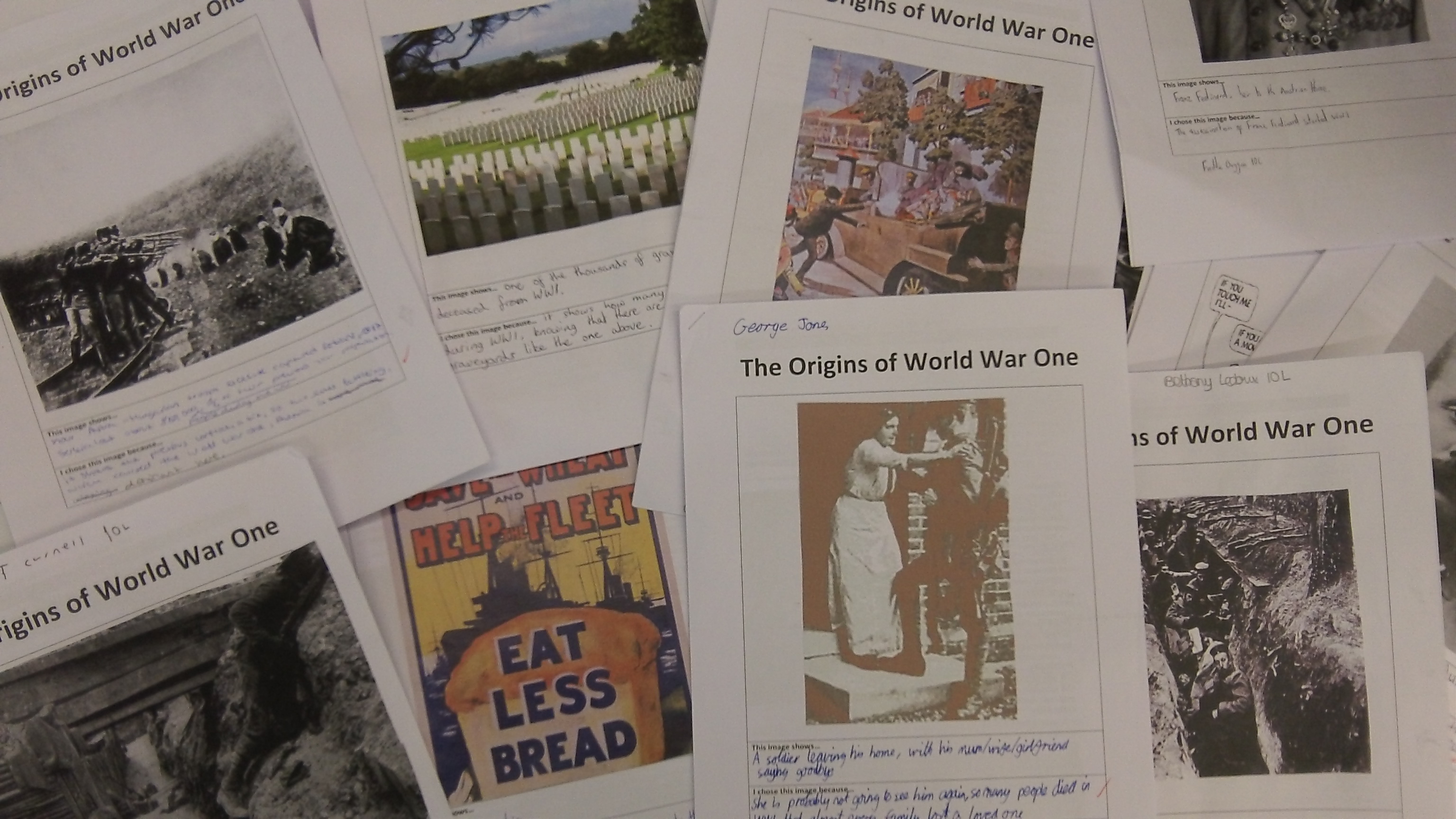
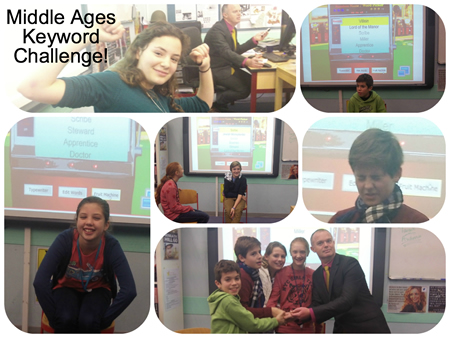
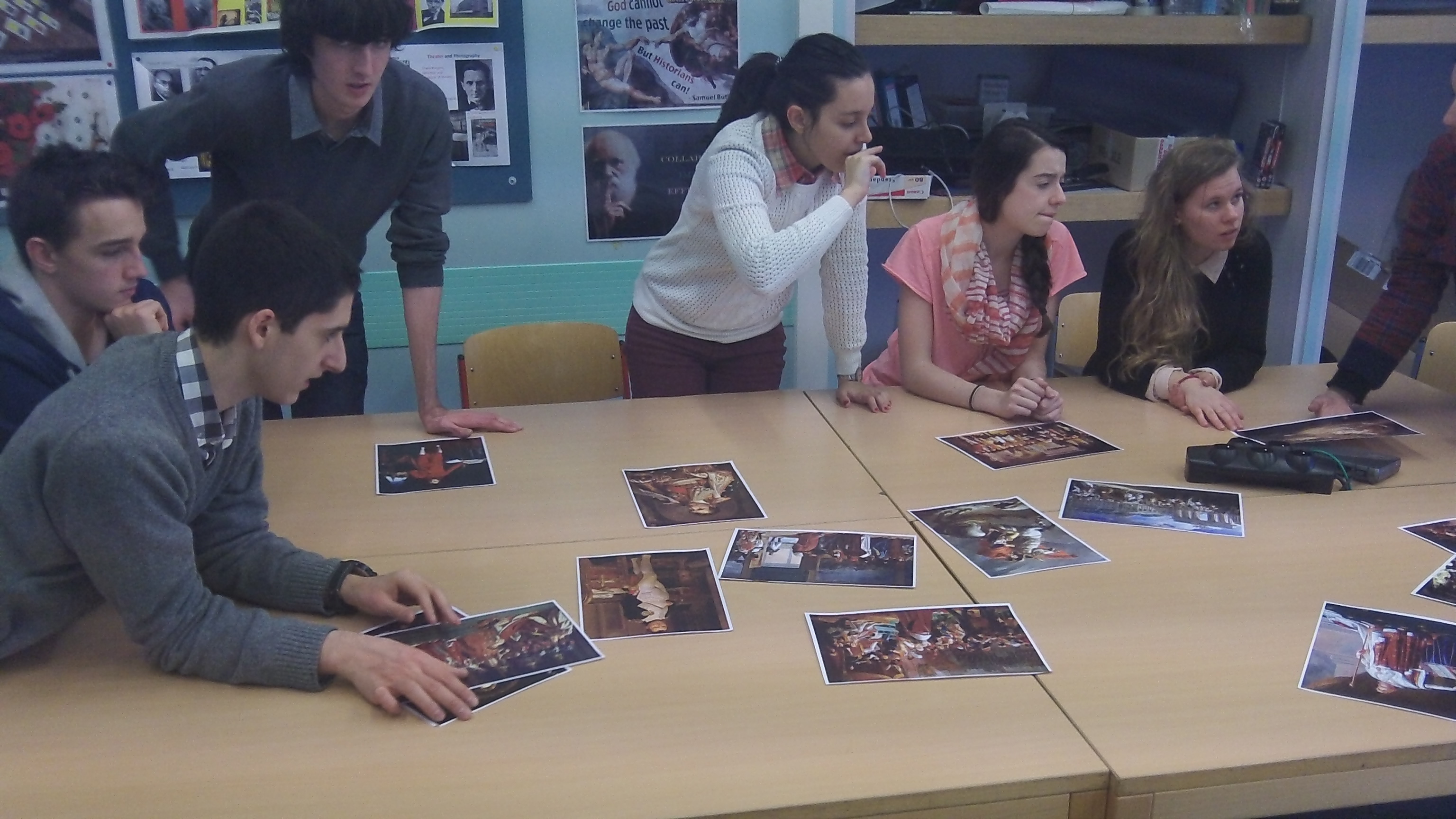
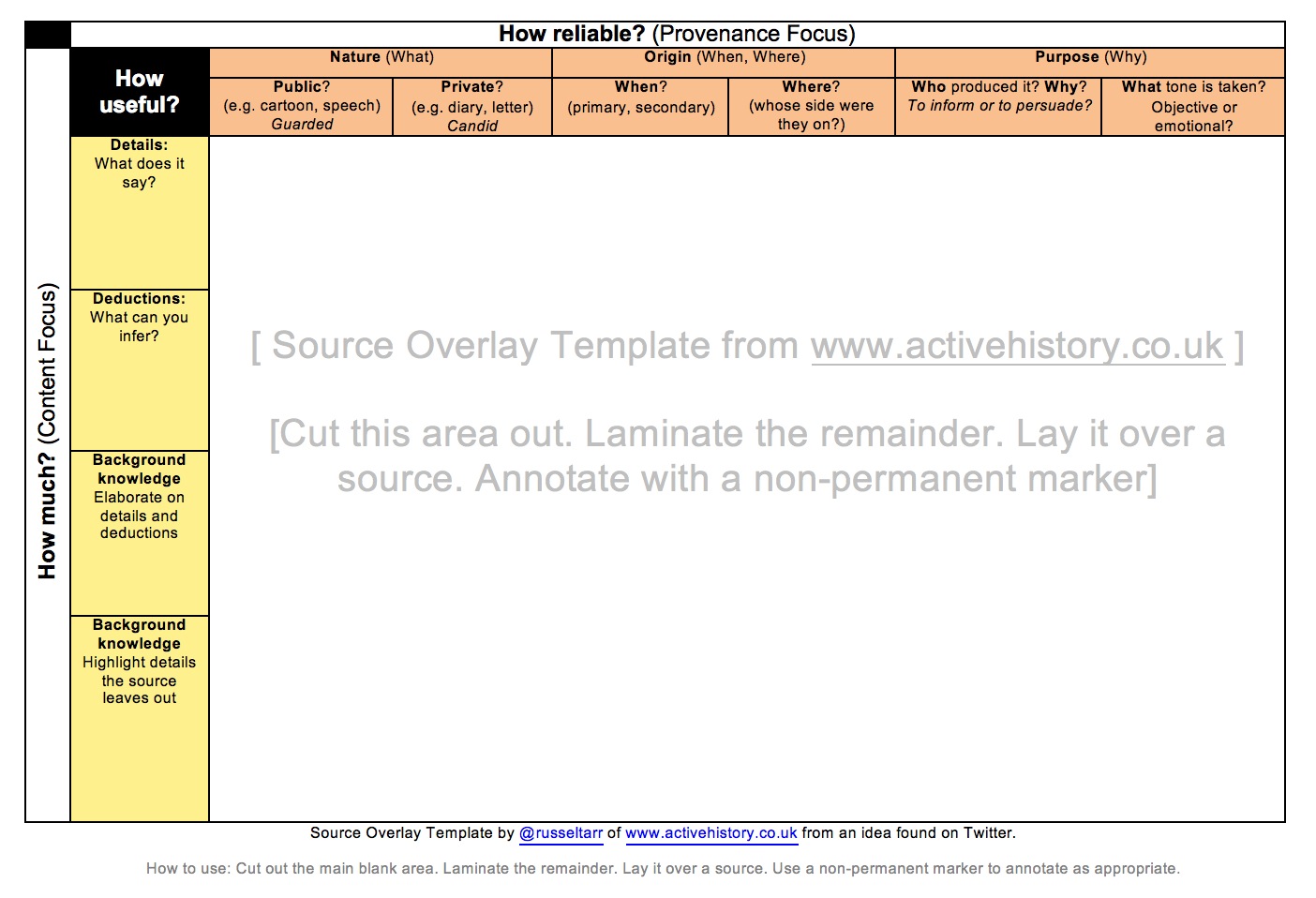
After studying a complex topic, challenge students to turn it into an illustrated storybook that can be understood by primary school students. Spend time in class talking through the main concepts, events and personalities that should be covered in a brief story. Consider too which images could be used to bring the subject to life.
In themselves these books can be useful revision aids, and could be peer-assessed. Even better however is to actually read them to students in a local primary school.
I use this technique successfully in two major projects:
- Henry VIII – Hero or Villain?
- In this exercise, Year 8 historians produce biased storybooks about Henry VIII. Half the class produce ‘positive’ books, half produce ‘negative’ books. In a subsequent lesson, different Year 5 students hear one ‘positive’ story and then one ‘negative’ story before completing a ‘wheel of life’ about Henry VIII where they try to reach a synthesis judgement.

Biased storybooks about Henry VIII (“Hero or Villain?”)
- How did Hitler become Chancellor of Germany?
- After completing a detailed investigation of the causes of Hitler’s rise to power, students produce a ‘Mr. Men’ storybook which they read to Year 6 students. In this exercise, the Year 6 students have an accompanying worksheet where their teams get points for correctly interpreting the different metaphors correctly.

Reading “Rise of Hitler Mr. Men” books (Year 11 > Year 6)
A measure of how good this technique is can be gleaned from the fact that the former UK education secretary Michael Gove thinks this approach is rubbish.
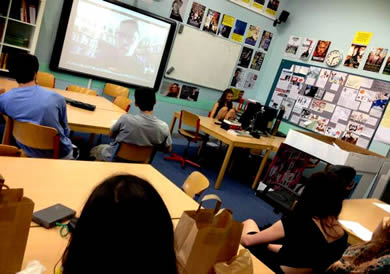
“Google Hangouts” video conferences are a superb way of bringing fresh voices into the classroom from anywhere in the world. It was by using Google Hangouts that my students interviewed Professor Orlando Figes at Birkbeck University recently with great success. Best of all, by choosing ‘Hangout on Air’ you get your video published directly to YouTube for future reference / downloading / editing!
Professor Orlando Figes being interviewed by students at the International School of Toulouse
I put together this Google Hangouts for Teachers – Quickstart Guide to provide myself and my interviewees with a handy point of reference – I hope you find it useful!
For extended essays, internal assessments and personal projects, Google Books is fast becoming an indispensable research resource for both teachers and students. I put this 3-minute guide together after making extensive use of Google Books during the research and writing of my forthcoming textbook on “Luther and the European Reformation” (available as from Easter 2015 from Hodder Murray).
During revision time I start every lesson with a ‘Fling the Teacher’ quiz on the topic to be covered in that lesson.
Prior to the lesson, I warn students what the topic will be so they can revise.
At the start of the lesson, I outline the main task for the lesson so they know what to do as soon as they finish the quiz.
I then direct students to a ‘Fling the Teacher’ quiz on this topic.
Students have 10 minutes to complete the quiz.
Any student finishing within that time gets points into their ‘leaderboard’ (which is an Excel spreadsheet which builds up throughout the revision period) based on the amount of time left on the clock (I usually double the amount of minutes). They can then proceed to the main task outlined at the start of the lesson.
It’s a great way of encouraging students to do a bit of intensive revision prior to each lesson – especially if prizes are awarded in the final lesson before study leave starts!
Here’s a video of some of my students doing the ‘Fling the Teacher Leaderboard Challenge’ in Summer 2013 (Georgia, in the hotseat, was the overall winner at the end of the competition!)
Link
IB History Revision – Fling the Teacher Quizzes
IGCSE History Revision – Fling the Teacher Quizzes
Fling the Teacher Generator
A great way to get students familiar with the key events of a historical person’s life and consider concepts of significance.
Stage 1: Start by outlining the central task
[themify_box style=”purple comment rounded” ]
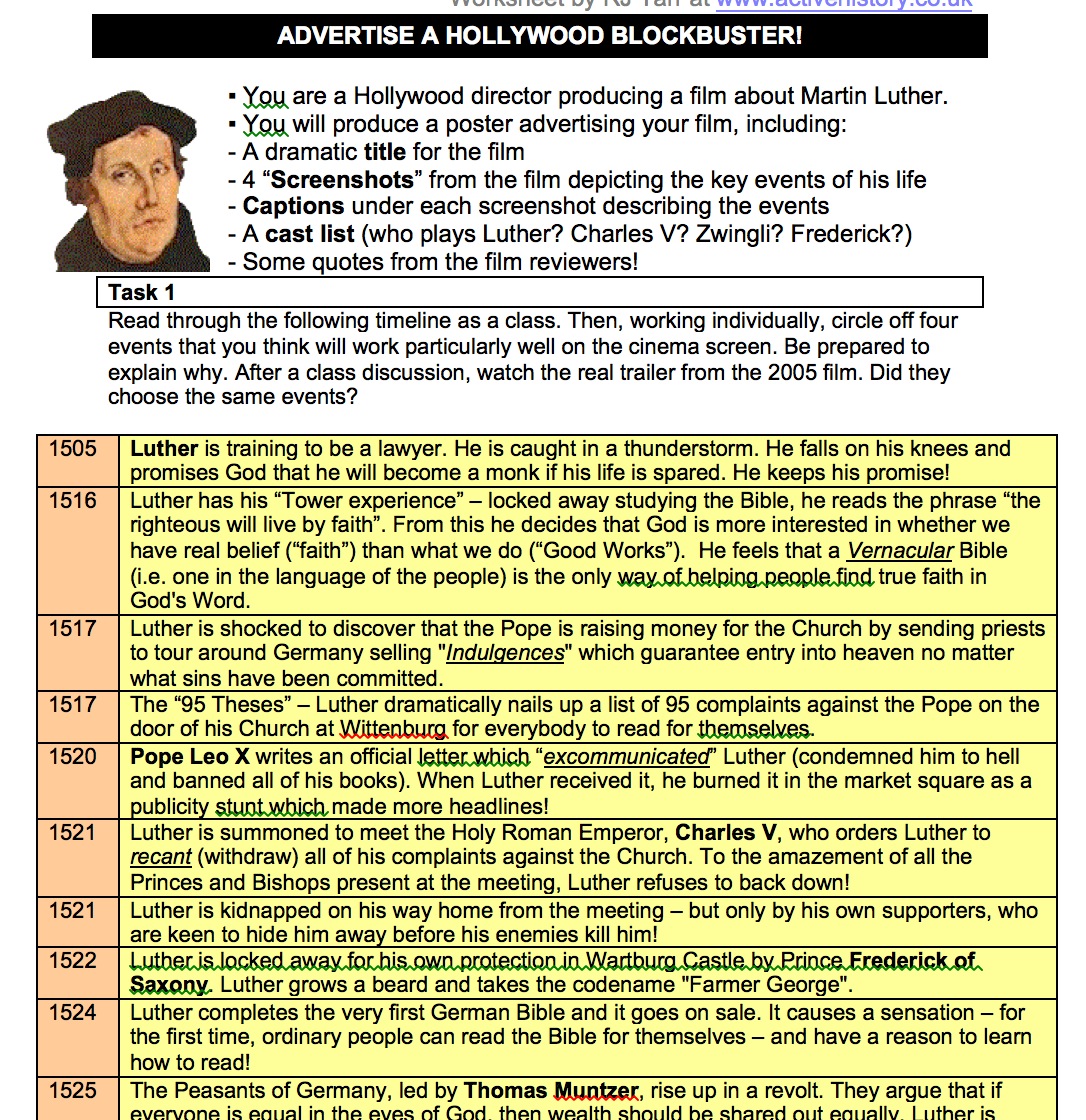
- You are a Hollywood director producing a film about [person / topic].
- You will produce a poster advertising your film, including:
- – A dramatic title for the film
- – 4 “Screenshots” from the film depicting the key events
- – Captions under each screenshot describing the events
- – A cast list
- – Some quotes from the film reviewers!
- – Some ‘tie-in’ merchandise relevant to the topic
[/themify_box]
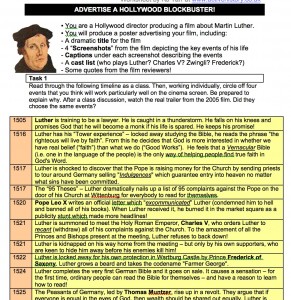
Provide students with a timeline of events. Read it through as a class then each student circles off four events that they think will work particularly well on the cinema screen. The example shown here comes from my Unit on Martin Luther at www.activehistory.co.uk.
Stage 2: Completing the movie proposal form
The students are then provided with the Hollywood Film Poster: Proposal Form, which guides them through the following questions:
[themify_box style=”purple comment rounded” ]
- What will be the title / strapline of your film? (decide whether you want to depict the main character as a hero or a villain. Discuss as a class first some famous film titles).
- What 4 events will you choose to focus on? (aim for different moods: drama, suspense, humour, violence, romance…)
- Choose 5 people from the timeline: Which famous actors would you use to play each of these characters?
- What sorts of reviews would you include?
- What sort of merchandise could you advertise as a ‘tie-in’ promotion?
[/themify_box]
Stage 3 [optional]: Developing the cast list
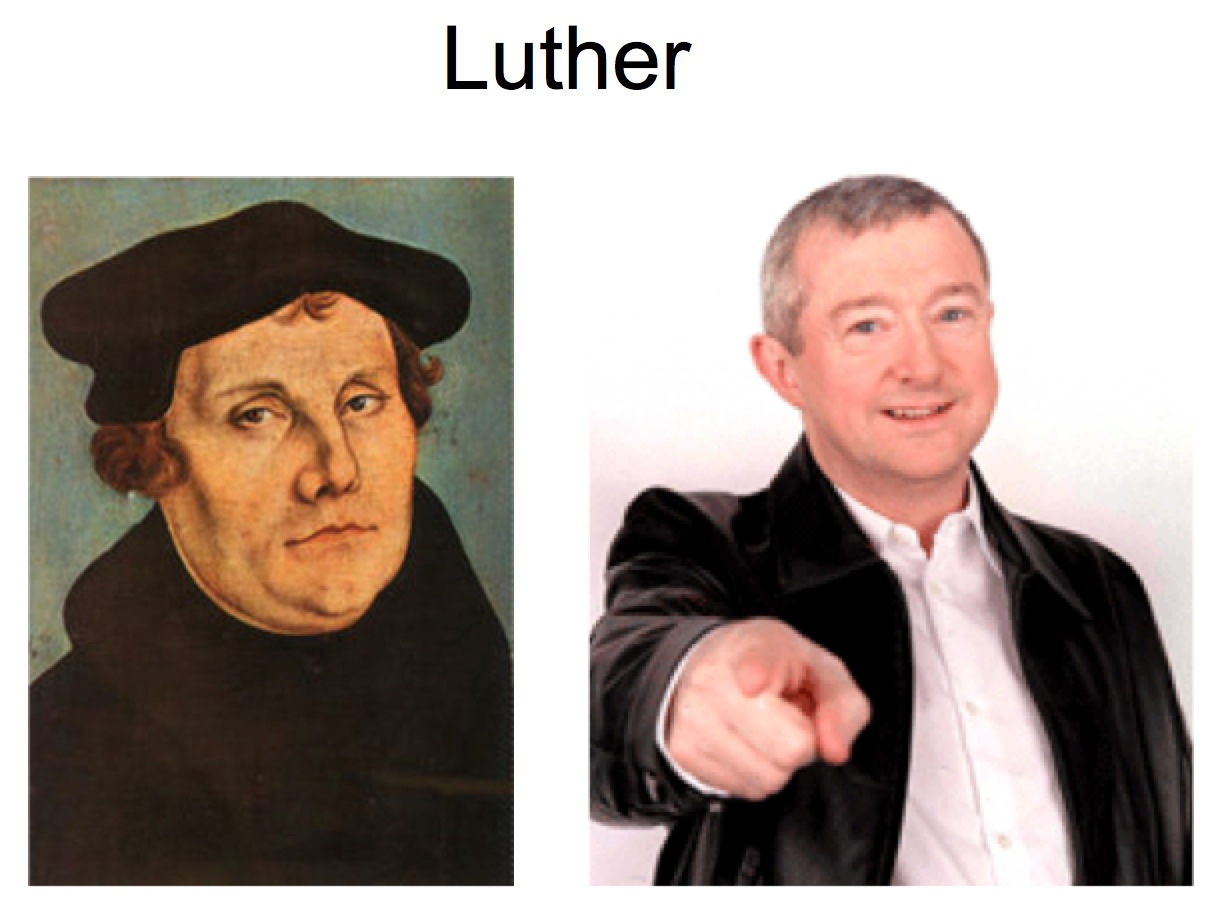
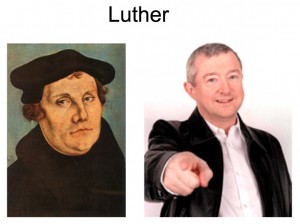
Provide the students with a copy of a PowerPoint template with the main characters listed in it, and space for them to put alongside their choice of actors. From my experience this works well as a homework exercise and they always have great fun sharing these ideas afterwards:
Stage 4: Producing the poster
At this stage the students are ready to produce the poster using the Mark Scheme Template.
Taking it further
Some students might want to create an actual movie trailer rather than a poster (see the example above!)
Downloads:
Hollywood Film Poster: Proposal Form
Hollywood Film Poster: Mark Scheme
Overview: After playing the Middle Ages Time Machine Adventure at activehistory.co.uk, Sidney wrote a complaint letter to the Time Travel Holiday Agent about her experiences. One half of the class wrote similar complaint letters focusing on the negative dimension; the other half wrote travel brochures focusing on the positive experiences!
Examples: This approach can work for any period or topic that has positive and negative sides to it.
Taking it further: Students could be paired together to produce a dramatised dialogue – the holidaymaker could storm into the travel agent demanding a refund by explaining the things which had gone wrong, whilst the travel agent would stress all the positive experiences which are either being omitted in the account or which provide a more rounded view of the situation / period in question.