Menu

Formulating final judgements

“Destroy or Deploy?”: A strategy for integrating fresh sources into classroom debates
Overview When preparing students for a classroom debate, present the class with a wide variety of relevant sources. After giving students time to move [...]
Using “Speed Dating” to share facts and opinions in the classroom
Overview The speed-dating format is designed to help students spot comparisons and contrasts between different ideas, answers or categories of information. [...]
“Brilliance or Baloney?”: A quiz format to develop substantiated judgements
Overview In subjects like history it is important that students form, express and substantiate their judgements on central issues. One efficient way of [...]
Using the ‘Battleships’ format to Teach Historical Interpretations
Overview: “Interpretation Battleships!” This activity is a development of the matrix exercise, designed to make it both more sophisticated and [...]
Use Continuum Lines to arrange a scale of opinion
Overview Continuum lines are a simple but effective technique for providing a sophisticated breakdown of a complex question. For example, when considering [...]
Use Matrix grids to judge two issues simultaneously
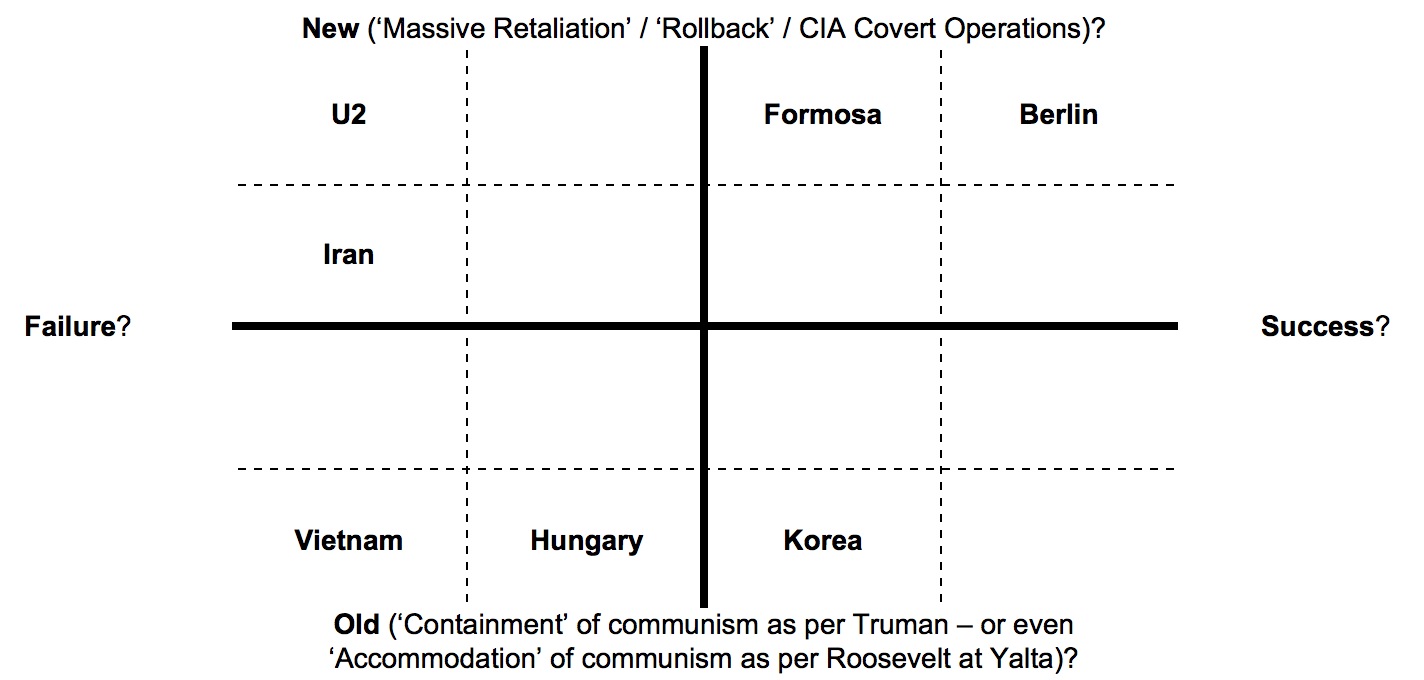
Overview In subjects such as history, it is often necessary to form a judgement on two separate but related issues. For example, “How successfully [...]
Interpretation Tracker
At the start of the lesson, ask students to write down their initial answer to a key question that is about to be considered further. Partway through the [...]
Interpretation via Triangulation
Sourcework Anticipation Task
After knowledge of a topic has been developed, provide students with a written source addressing a key question relating to the topic, but with key [...]

Overview: After playing the Middle Ages Time Machine Adventure at activehistory.co.uk, Sidney wrote a complaint letter to the Time Travel Holiday Agent about her experiences. One half of the class wrote similar complaint letters focusing on the negative dimension; the other half wrote travel brochures focusing on the positive experiences!

Examples: This approach can work for any period or topic that has positive and negative sides to it.

Taking it further: Students could be paired together to produce a dramatised dialogue – the holidaymaker could storm into the travel agent demanding a refund by explaining the things which had gone wrong, whilst the travel agent would stress all the positive experiences which are either being omitted in the account or which provide a more rounded view of the situation / period in question.

Interpretation Exercise – Complaint Letters v. Advertising Blurb
Rival interpretations
To assess the causes, consequences or significance of an event, ask students to produce an answer from the perspective of one or more particular witnesses. [...]