Overview
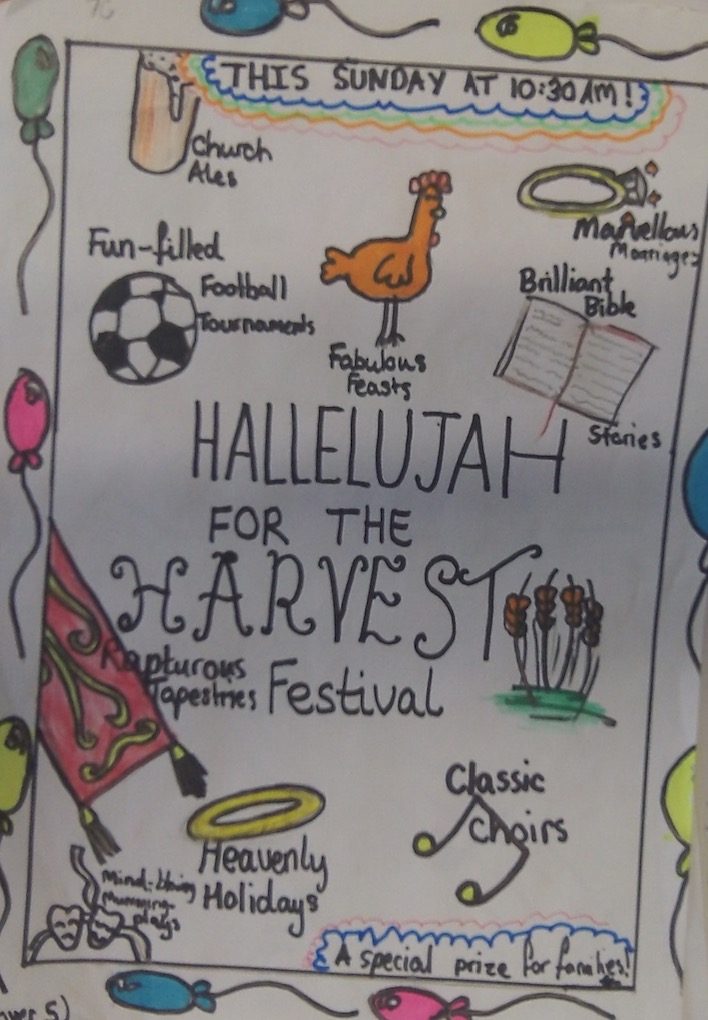
When introducing students to a particular historical time and place, get them to research different geographical locations associated with it. The class should then produce a travel brochure designed to persuade holidaymakers about all the wonderful things to expect if they take a time-travelling vacation. The teacher, in role as a prospective customer, then hears from each team and declares an overall winner. As and added twist, get them to ‘sell’ their holiday to different ‘target markets’ over several rounds. As a follow-up activity to force students to assess the period from a negative perspective, ask them to write a dramatic complaint letter outlining all the horrible sights, sounds and smells they experienced.
Case Study: Ancient Rome
Arrange the class into teams and outline the essential task, which will be to market an appealing “time travel” holiday to the place and period we are studying. They will need to make the holiday as appealing as possible to different target audiences, which I summarise as follows:
- A “Fun” holiday for teenagers on a relaxing summer break before starting university;
- A “Relaxing” holiday for a group of working mothers eager for quality time with friends;
- An “Interesting” holiday for a group of retired teachers eager for a cultural experience.
Next, provide the class with a list of places associated with the topic in question. For example, in a study of the Roman Empire, the list might look something like this:
| Roman Forums | • Forum of Trajan | Arches | • Arch of Septimius Severus |
| • Forum of Caesar | • Arch of Titus | ||
| • Forum of Augustus | • Arch of Constantine | ||
| • Forum of Peace | • Arch of Tiberius | ||
| Shrines and Temples | • The Pantheon | Sports and Leisure | • Theatre of Pompey |
| • Shrine of Cloacina | • Stadium of Domitian | ||
| • Temple of Romulus Divisus | • Theatre of Marcellus | ||
| • Temple of Saturn | • Circus Maximus | ||
| • Temple of Vesta | • Colosseum | ||
| • Temple of Concord | • Baths of Diocletian |
If there is sufficient time, each team should be given the opportunity to conduct some initial research to determine which sites would be particularly appealing to the different target markets, as the ultimate objective is to produce a package which has elements of ‘fun’, ‘relaxation’ and ‘interest’ within it.
Each member of each team should then choose, or be allocated one or two sites from different categories in this list to research further (depending on the size of the class, the time available and the amount of sites available to research). As far as possible, each site should be chosen by only one person in the class if this the size of the class makes this possible. In this way, each team will propose a completely different holiday package and the whole class will get to hear about as many sites as possible without undue repetition.
Next, each student should investigate their chosen sites using any sources available to them and use this research to complete a template which looks like this:
| ROMAN HOLIDAY | |||
| Your name | |||
| Name of Place | |||
| This place is …
(shade one, two or all three in yellow) |
Interesting | Fun | Relaxing |
| Because…
(explain clearly) |
|||
When the students have finished their research, they should use this to produce a group presentation piece on a large sheet of sugar paper. They should include images of the sites, and organise them under the three key headings of “Interesting!”, “Fun!” and “Relaxing!”. This could be arranged in the format of a Venn diagram.
The teacher should then take the role of a representative for the first group of prospective customers – for example, the teenagers looking for a ‘fun’ holiday. Each team should have a strictly limited amount of time to explain how their holiday package is clearly ‘fun’. The teacher then declares an overall winning team, and perhaps awards each member a couple of sweets (with members of the runner-up team getting one sweet each). The process should then be repeated for the ‘interesting’ and ‘relaxing’ holiday.
Whilst the presentations are taking place, each group needs to be taking notes on the various sites. After the exercise is completed, Students could then individually produce a piece of work selecting the best sites. For example, they could choose three sites for each of the three categories, then arrange then in an overall “Triangle 9” diagram.
Taking it further
Get each team to come up with a name for their company and a logo as per “The Apprentice” format.
Instead of the same teacher acting as the representative for the three different groups, use an older student who has a free period to judge the ‘teenager’ round, and colleagues to represent the other two groups.
As a follow-up exercise, get students to consider all of the negatives rather than the positives. Do this by asking them to produce letters of complaint as if they have already been on the trip and it was a “holiday from hell”. The class could be organised into three teams for this to represent each of the three groups as identified in the earlier activity. Students could also be paired together to produce a dramatised dialogue – the holidaymaker could storm into the travel agent demanding a refund by explaining the things which had gone wrong, whilst the travel agent would stress all the positive experiences which are either being omitted in the account or which provide a more rounded view of the situation / period in question.
In this example, after playing the Middle Ages Time Machine Adventure at activehistory.co.uk, Sidney wrote a complaint letter to the Time Travel Holiday Agent about her experiences:
Overview
I love using music in the classroom, and streaming services such as Spotify make this easier than ever. Some songs are better used to stoke up some energy during lessons, whilst the very best of all are historical sources in themselves, combining musical feeling with powerful lyrical content. In other words, popular music provides some of the richest, but most under-utilised, sources of historical interpretation that can be used in the classroom. By analysing the meaning of lyrics and placing them in their proper context, students are able to consolidate their knowledge and understanding in a highly engaging way. Moreover, collections of relevant songs can be organised into classroom playlists for use as atmospheric music during subsequent lessons or as a study aid during revision time.
Strategy 1. Provide a musically-themed timer to keep students on task
In lessons consisting of short bursts of activity on a regular basis, having a relevant piece of music to act as a timer is particularly effective to help students with time management. For example, I teach the Nazi school curriculum by getting students to write school reports for each other for a variety of subjects using various primary sources (for more on this, see my earlier blogpost “On School Report”). This involves an intensive blast of factual information, a short amount of time to write a report using the key terminology just provided, and then passing the reports around the class ready to write the next one for a different student. To maintain this pace, I start the activity with the report for ‘music’ and analyse the lyrics of the ‘Horst Wessel Song’ – the anthem of the Hitler Youth movement – as the central focus. I then give students three minutes to write their report, which is the length of the piece itself, and have the song playing in the background. As the exercise proceeds, students quickly get into the rhythm of how long they have left from the increasingly familiar tune.
I have also coded a dedicated classroom timer at ClassTools with 20 pre-loaded popular instrumental tracks of various lengths that you can bring up on your whiteboard. You can upload your own choices of music to it as well!
Strategy 2: Instrumental Music (for atmosphere and mood)
Classical music can be very helpful for creating a calm and purposeful working atmosphere, when a bit of Chopin or Debussy sets the tone perfectly. Even better, though, is when there is a relevant story around the composer to accompany the music and bring the topic into sharp focus. For example, when studying World War Two, give students a bit of background to the life – and tragic end – of Glenn Miller before playing some of his music (e.g. “In the Mood”) as the soundtrack for the main lesson.
Another piece I recommend is Elgar’s Cello Concerto in E Minor, made famous through its performance by Jacqueline du Pré (whose life story is gripping in its own right). Although now a well-established national favourite, fewer people are aware that it was inspired by the composer sitting on the cliffs watching British troop ships of the BEF heading off into the mist towards France in 1914. Less well-known, but perhaps equally moving, is “George Butterworth’s “On the Banks of Green Willow” by George Butterworth, a wonderfully elegaic piece by a young composer of the “Lost Generation”. A charismatic member of the “Bloomsbury set”, Butterworth joined the war to test his own mettle and quickly distinguished himself as a particuarly fine soldier, but was tragically killed during the Battle of the Somme and is now commemorated on the Thiepval memorial for the missing.
There are many other pieces of instrumental music whose historical context can be outlined at the start of the lesson and then used to provide a backdrop to the main activity. The best way forward with this technique is to start with a piece of music produced in the place or period being studied, then do some basic research around the context in which it was produced. Some notable pieces worthy of a listen in this respect include Beethoven’s Third Symphony (dedicated to Napoleon until he declared himself emperor, at which point the composer furiously scratched his name from the dedication), Shostakovich’s War Symphonies (arguably a subtle protest against Stalinism) and Tchaikovsky’s 1812 Overture, with its booming cannon commemorating Russia’s defence against Napoleon’s invading Grande Armée in 1812.
Strategy 3: Individual Songs (for starters / plenaries)
Occasionally, a historical topic will be associated with its own clear corpus of music. Notably, slave songs and many blues pieces can be analysed for historical meaning, perhaps by placing the lyrics of numerous songs around the room and using the Silent Discussion method to ensure plenty of annotation. For example, “Amazing Grace” was written by John Newton, a former slave trader keen to share how he came to see the error of his ways; “Redemption Song” by Bob Marley is a wonderfully evocative tale not just of being kidnapped into slavery, but also the challenges faced down the centuries by subsequent Afro-Americans.
The most fruitful individual performer in this respect is perhaps Hughie Ledbetter, better known by his stage name of Leadbelly. His “Pick a Bale of Cotton” is a classic example of a song which was designed to help the slaves stay motivated and maintain momentum in the fields. Moreoever, as with the classical composers outlined earlier, the life story of Leadbelly is worthy of study in itself for highlighting the hardships and injustices suffered by black Americans in the segregated south, and race relations in the United States as a whole in the period before the Second World War. Leadbelly, a convicted murderer, was recorded performing in prison by legendary musicologist Alan Lomax, and his songs include such superb material as “Bourgeois Blues”, “Midnight Special” and “Where did you sleep last night?” (covered by, of all people, Kurt Cobain of Nirvana, who described Leadbelly as ‘our favourite performer’).
Over the years I have built up a large repertoire of songs which have a strong historical dimension to use at particular points. A full list of more than 50 such songs, complete with suggestions about when they might be used, can be found at https://www.activehistory.co.uk/spotify/top_songs.php. Some of my favourites include:
- William the Conqueror (DMX Krew): Why was King Harold defeated at the Battle of Hastings?
- Cult of Personality (Living Colour): How important is the role of the individual?
- Sophiatown is Gone! (Miriam Makeba): In what ways did black South Africans oppose the Apartheid regime?
- Political Science (Randy Newman): What impact did the Vietnam War have upon American society?
Strategy 4. Write lyrics for an “ANTI-protest” song
Protest songs by definition are packed to the hilt with strongly expressed opinions and perspectives. These sorts of songs can be analysed in the manner just described, but another challenge could be to rewrite the lyrics of a song to provide the opposite perspective. Occasionally, history provides us with ready-made examples of such “Anti-Protest Songs” that can be used as an example. One illustration of this is when Neil Young’s derogatory “Southern Man” provoked the writing of “Sweet Home Alabama” by Lynyrd Skynyrd (“Watergate does not bother me…does your conscious trouble you? Tell the truth!”).
After considering both of these songs, students could then be produced with a whole range of different songs relating to the topic in question. After analysing each one on its own terms, students should summarise the main protests being made overall, then consider how the most important of these could be challenged in fresh lyrics matching the tune of one of these songs. For example, after considering a range of Vietnam War protest songs (e.g. “Ohio” by Neil Young, “Eve of Destruction” by Barry Maguire, “Fortunate Son” by Credence Clearwater Revival to name but a few), students could produce the lyrics for an “Anti-Protest Song” supportive of American involvement in the war and the policies of a particular administration. This approach is not limited to bona fide protest songs: any song with a clear agenda (from “Victoria” by the Kinks to “Rasputin” by Boney M) could lend itself to the same treatment.
Strategy 5: Complete playlists (for in-depth projects)
This technique moves students still further from being consumers towards being creators, and brings the music itself to the forefront of the exercise. It can also be used in conjunction with the analyis and writing of lyrics already described. I use this method when studying the Civil Rights movement in the USA. Students are firstly presented just with the lyrics with a couple of songs from 1968 (“Trouble Every Day” by Frank Zappa and “If I can Dream” by Elvis Presley) and asked to anticipate, based on the tone of the lyrics, what style of music and instrumentation they expect to hear. After a classroom discussion, play the first verse or two of each song to see how far their assumptions were proven correct. Next, I provide students with a long of civil rights-era music and divide this so that each student gets three or four songs to consider. Their job is firstly to locate the lyrics of each song using the internet, and decide which two of these are historically the most valuable in terms of the references they make to genuine events and circumstances. Next, they use YouTube or Spotify to listen to each song, and make a final selection on their “best” song based on a combination of the music and the lyrics. Each student thereby nominates one song for the class ‘compilation’.
All of the research should then be completed and shared. Google Presentations are particularly good here, since each student can simply add their research into a separate slide.
If there are a large amount of students in the class, a balloon debate format could be used to reduce the total songs down to a streamlined compilation of perhaps 15 songs overall.
Thereafter, students are given the opportunity – perhaps as a homework exercise – to read the lyrics and listen to all of the songs that have been researched. In a subsequent lesson, each member of the class should then vote on their favourite three songs overall. These songs are then ranked by popularity and ideally turned into a collaborative playlist using an online music service such as Spotify. As an extension exercise, students could decide upon a running order and produce a “CD Inlay” providing brief context for each song as well as a suitable cover image.
This approach works well for a wide range of topics such as the American Civil War, the two World Wars, the Cold War, and Apartheid South Africa. For further inspiration, take a look at my wide collection of playlists for various history topics (https://www.activehistory.co.uk/spotify.htm).
Taking it further
- Challenge students to add a final verse to their chosen song covering an aspect of the topic which is not addressed.
- Rather than allocating songs out to each student and asking them to research the lyrics, simply print off the lyrics to each song in advance of the lesson. Place these around the room and then conduct a “Silent Discussion” exercise to identify some of the key themes and issues that appear to be raised. Then allow each student to choose one or more songs to research further.
- Get students to create their own promotional music video for a song of their choice using photographs and other relevant sources to put the piece into its proper context.
Links
Russel Tarr, 50+ Essential Songs for the History Classroom – ActiveHistory (Available at: https://www.activehistory.co.uk/spotify/top_songs.php, Last accessed 2nd November 2017)
Russel Tarr, Music for History Lessons (Available at: https://www.activehistory.co.uk/spotify.htm, Last accessed 2nd November 2017)
CLASSTOOLS.NET website, Classtools Countdown Timer (Available at: http://www.classtools.net/timer/, Last accessed 2nd November 2017)